Leave Your Message
Choosing Cooling Systems for international projects is not a catalogue exercise. A unit that performs well in a mild climate may struggle in humid coastal air or dusty industrial conditions. The right choice depends on cooling load, local weather, operating hours, available maintenance, and the cost of energy over the equipment’s life. Small details matter. A narrow service aisle can turn routine filter changes into costly delays.
Building-systems researcher Dr. Srinivas Katipamula’s work focuses on energy-efficient buildings and system performance. A practical paraphrase of the lesson for buyers is: “Compare equipment under real operating conditions, not by nameplate ratings alone.” That means asking suppliers for performance data at expected temperatures and loads. It also means checking how controls, pumps, fans, and heat rejection equipment work together. A low purchase price can look attractive. It may not tell the whole story.
This guide presents ten buying tips for global buyers, from defining capacity and comparing efficiency to reviewing installation needs, warranties, parts availability, and service support. Ask for clear documentation. Check assumptions. Confirm what is included in the quotation, including commissioning and operator training. Some projects still choose equipment before measuring actual demand. That deserves a second look. Reliable decisions come from evidence, not confident promises. The aim is not to buy the largest or most sophisticated system, but one that fits the site, performs predictably, and can be maintained by the people who will operate it.
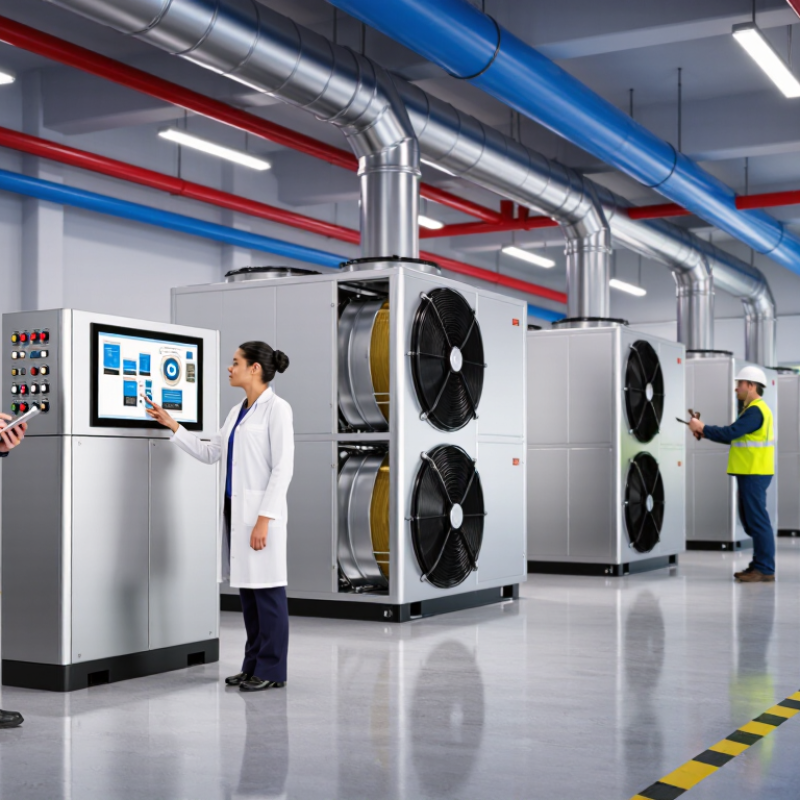
Cooling systems are not interchangeable. Direct-expansion units suit smaller rooms and localized loads, such as server closets or shop floors. Chilled-water systems serve larger buildings, hospitals, and factories where several zones need steady temperature control. For buyers, the application matters more than the equipment label. Fit matters more.
Demand is growing. The International Energy Agency’s The Future of Cooling (2018) estimates that global air-conditioner stock could rise from 1.6 billion units to 5.6 billion by 2050, while cooling energy demand could more than triple. Those projections cover space cooling, not every industrial process. Still, they underline why efficiency and operating conditions deserve close attention. Air-cooled chillers can simplify installation where water is scarce. Water-cooled systems may perform well in large facilities, but require dependable water supply and maintenance.
Evaporative cooling can reduce energy use in suitable dry climates, yet high humidity limits its effectiveness. A rule of thumb can mislead. Compare systems at the site’s actual outdoor temperatures, required supply-water or air temperatures, and yearly load profile. Ask for performance data at partial load, not only peak capacity. Check noise near work areas, service access around the unit, and how downtime affects production. One overlooked detail: a technically efficient system may still be a poor choice if local technicians cannot maintain it.
| # | Buying Tip | System Type | Common Applications | What to Check |
|---|---|---|---|---|
| 1 | Size the system for the actual heat load. Avoid selecting equipment from floor area alone. | Any system type | Commercial buildings, factories, process lines, and data rooms | Peak and typical loads, operating hours, heat gains, required temperatures, and likely future capacity needs. |
| 2 | Compare air-cooled and water-cooled chillers. Consider the full site requirements, not just the chiller price. | Air-cooled or water-cooled chiller | Central cooling for commercial buildings and industrial processes | Air-cooled units reject heat to outdoor air and avoid a condenser-water system. Water-cooled units typically require a cooling tower, water treatment, and make-up water; compare efficiency at the intended operating conditions. |
| 3 | Match the system to zoning and control needs. Independent zones can benefit from systems designed for variable loads. | Direct expansion (DX) or variable refrigerant flow (VRF) | Offices, hotels, and other buildings with multiple rooms or zones | Zone count, simultaneous heating and cooling requirements, indoor-unit placement, piping limits, and local installation rules. |
| 4 | Assess climate before choosing evaporative cooling. Its performance depends on the outdoor air’s moisture conditions. | Direct or indirect evaporative cooling | Ventilated spaces and facilities in relatively dry climates | Local wet-bulb conditions, required indoor humidity, ventilation needs, water quality, and water use. Direct evaporative cooling adds moisture to the air. |
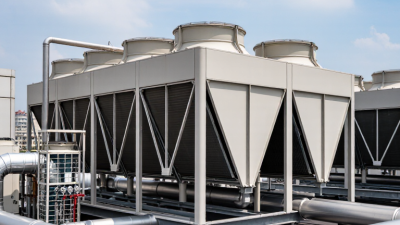
| 5 | Treat the cooling tower as part of a heat-rejection system. A tower does not provide chilled water by itself. | Cooling tower with a water-cooled chiller or process system | Large buildings and industrial sites with heat to reject | Water availability, treatment and blowdown arrangements, plume and noise constraints, freeze protection, access, and maintenance requirements. |
| 6 | Check fluid compatibility in liquid-cooling applications. The cooling loop must suit the equipment and process materials. | Closed-loop liquid cooling with a heat exchanger | Industrial machinery, electronics, and some data-center equipment | Required supply temperature, flow and pressure, fluid chemistry, filtration, leak detection, and separation between process and facility water where needed. |
| 7 | Verify refrigerant and regulatory requirements for the destination market. Rules can vary by country and application. | Refrigerant-based systems, including chillers, DX, and VRF | Buildings and processes using vapor-compression cooling | Permitted refrigerants, safety classification, charge limits, service availability, applicable efficiency rules, and import or installation requirements. |
| 8 | Compare efficiency at your actual operating conditions. A single rating may not represent performance across the year. | Chillers, heat pumps, and packaged cooling equipment | Sites with long operating hours or variable cooling demand | Use comparable test standards and check part-load performance, ambient conditions, leaving-water temperature, and auxiliary power such as pumps and fans. |
| 9 | Confirm site utilities and installation constraints early. Equipment capacity alone does not ensure a workable installation. | All system types | New-build and retrofit projects | Electrical supply, water and drainage, ventilation, structural loading, equipment access, service clearances, noise limits, and local building codes. |
| 10 | Plan for maintenance, controls, and continuity of service. Include operating needs over the system’s lifetime. | Central plants and critical cooling systems | Hospitals, production facilities, server rooms, and multi-building sites | Local technician and parts availability, maintenance intervals, monitoring and building-control interfaces, commissioning support, and whether backup capacity is required. |