How to Choose Cooling Systems for Global Sourcing in 2026?
Choosing Cooling Systems for global sourcing in 2026 requires more than comparing catalog prices. A system that performs well in a factory showroom may struggle inside a 40-foot container at 38°C. Procurement teams must connect cooling capacity, power quality, climate, noise, and maintenance access before approving suppliers. Small details matter. A blocked filter can raise energy use and shorten compressor life. Real sourcing experience shows that the lowest quotation rarely represents the lowest operating cost.
This guide explains how to evaluate manufacturers through documented performance data, verified references, and practical factory evidence. Look for clear test conditions, seasonal efficiency figures, warranty boundaries, spare-parts plans, and trained service partners near the installation site. Independent certifications and consistent technical drawings can strengthen confidence, but paperwork alone is not proof. Request a witnessed test or a video showing controls, airflow, drainage, and alarm behavior. Ask how the unit responds after a power interruption.
Global projects also face changing energy standards, refrigerant requirements, import procedures, and local installation rules. Requirements differ by market. They deserve early review. A reliable supplier should explain these differences without hiding limitations. No shortlist is perfect. Forecasts may be wrong, and site data may be incomplete. Therefore, buyers should record assumptions, compare total cost over several years, and leave room for corrective testing. The right choice is not simply the coldest machine; it is a supportable system that remains efficient, serviceable, and credible across borders.
Define Cooling Requirements by Product, Climate, and Operating Conditions
How to Choose Cooling Systems for Global Sourcing in 2026?
Cooling requirements should begin with the product, not the equipment catalogue. Electronics may need stable airflow and low thermal resistance. Fresh food may require narrow temperature and humidity limits. Vaccines commonly require 2–8°C storage, according to World Health Organization guidance. Heat-sensitive materials need different protection during transport and loading.
Climate changes the specification. A system tested at 25°C may struggle in a humid warehouse at 38°C. The International Energy Agency reports that cooling already uses about 10% of global electricity. The IEA also expects cooling demand to triple by 2050 without stronger efficiency measures. Global Cooling Watch 2023 warns that cooling-related emissions could double by 2050 under business-as-usual conditions.
Operating conditions deserve equal attention. Record ambient temperature, door-opening frequency, dust levels, voltage variation, and available maintenance skills. Ask suppliers for capacity at real entering-air conditions, not only nominal ratings. Request noise, refrigerant, efficiency, and part-replacement data. Cold-chain systems should include temperature logging and alarm testing. Small details matter.
Do not over-specify blindly. Oversized equipment can cycle poorly and waste energy. I have also seen attractive efficiency figures fail in dusty sites. That mistake is expensive. Validate with a seasonal load study, a site trial, and independent test documents. Weather files and supplier claims may still be imperfect. Recheck them before placing a global order.
How to Choose Cooling Systems for Global Sourcing in 2026?
Define Cooling Requirements by Product, Climate, and Operating Conditions
The chart shows indicative cooling capacity requirements for a 100 m² facility with a 3 m ceiling, 10-hour operating periods, typical internal heat gains, and a 30% design margin. Chilled food staging requires substantially more capacity because of low product temperatures, door opening, and infiltration loads. Precision electronics require tighter temperature and humidity control than light assembly.
Planning benchmarks: representative peak outdoor conditions of 32°C for temperate, 40°C for hot-dry, and 35°C for hot-humid climates. Final equipment selection should use a local heat-load calculation, product temperature limits, humidity requirements, ventilation, solar gains, and actual operating schedules.
Compare Cooling System Types, Technologies, and Energy Performance
Global cooling demand is rising sharply. The IEA’s The Future of Cooling report projects space-cooling electricity use could reach 6,200 TWh by 2050, over three times 2016 demand. Global sourcing teams should compare lifetime performance, not only purchase price.
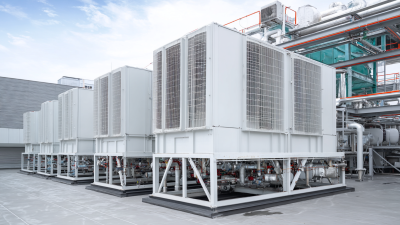
Air-cooled chillers simplify installation and water management. Water-cooled systems often deliver better efficiency, but they need cooling towers, treatment, and skilled maintenance.
Direct-expansion units suit smaller zones, while variable-refrigerant systems provide flexible control across rooms.
Technology changes the energy profile.
Compare COP, EER, SEER, and integrated part-load values under equivalent test conditions. A high full-load rating can hide weak performance during mild weather. Look closely at controls, inverter operation, standby power, and fan energy. The U.S. Department of Energy’s 2024 Buildings Energy Consumption Survey shows space cooling remains a major commercial electricity load, although exact shares vary by building type. Data matters.
Refrigerant choice also affects future risk. UNEP’s 2022 Kigali Amendment report links refrigerant transitions with climate protection and improved equipment efficiency. Ask suppliers for refrigerant charge, global-warming potential, service procedures, and recovery plans. Request measured noise, water use, and performance at 35°C ambient temperature.
Real factories are dusty. Filters clog. Maintenance assumptions can be optimistic. Country-specific voltage, technician availability, spare-part lead times, and seasonal climate data should shape the specification. A cheaper unit may become expensive when local servicing is slow. Good procurement still needs a second review.
Evaluate Suppliers, Manufacturing Standards, and Global Certifications
Choosing a cooling system for global sourcing requires more than comparing prices. Supplier evaluation should begin with a documented factory review. Check production capacity, technician training, quality records, and after-sales response times. Ask for evidence.
Request process details for compressors, heat exchangers, electrical panels, and refrigerant circuits. During a factory visit, inspect weld seams, insulation joints, calibration labels, and pressure-test records. A clean showroom proves little. Production consistency matters more.
Manufacturing standards provide a useful baseline, but certificates need careful verification. Confirm whether the supplier maintains relevant ISO quality and environmental systems. Check the certificate number, validity period, issuing body, and covered facility. The document must match the actual production site. For electrical and refrigeration safety, request test reports for the exact model, not a similar unit. Requirements can differ by voltage, climate, refrigerant, and destination market.
Global certifications should support, not replace, technical investigation. Ask whether the supplier can provide conformity documents, energy-performance data, material declarations, and traceable serial numbers. Test a production sample under realistic conditions, including high ambient temperatures and unstable power. Details matter.
I have seen low quotations hide weak packaging and incomplete manuals. That mistake is expensive. Build a scorecard covering efficiency, noise, service parts, lead time, certification status, and warranty handling. Leave room for uncertainty. A supplier may pass an audit yet fail during peak-season demand, so independent inspection before shipment remains a sensible safeguard.
Select the Best System Through Testing, Risk Review, and Future Planning
Global cooling sourcing in 2026 should begin with measured performance, not catalogue promises. The IEA’s Energy and AI report estimates that data centres used about 415 TWh of electricity in 2024. Cooling efficiency now affects both operating cost and grid exposure. Request factory acceptance testing at full and partial loads. Record supply-air temperature, water flow, power draw, vibration, and noise. Test the unit under realistic outdoor conditions.
Numbers need context. A reported coefficient of performance may exclude pumps, fans, controls, or heat rejection equipment. That gap matters. Use a common test boundary and require witnessed results. The U.S. Department of Energy’s 2024 report projects American data-centre electricity demand could reach 325–580 TWh by 2028. This supports modular systems, but modularity alone is not resilience. Check lead times for compressors, controllers, valves, filters, and replacement boards. A cheap spare is useless if it arrives six months late.
Risk reviews should examine water quality, refrigerant availability, local service skills, customs delays, and seasonal temperature extremes. Request failure-mode analysis and a site acceptance test before final payment. Plan for higher heat density and future low-carbon refrigerants, while verifying safety and compliance requirements in each destination. ASHRAE thermal guidance can support temperature and humidity limits, but local engineering conditions still require judgment. Some assumptions will be wrong. Revisit them annually. A spreadsheet can still lie.