Leave Your Message
Cooling Systems are no longer a niche purchase for buildings, factories, or data centers. Rising temperatures and expanding access to air conditioning are increasing pressure on buyers to choose equipment that performs reliably, not merely looks competitive on a quotation. The International Energy Agency’s 2018 report, The Future of Cooling, projected that global energy demand for space cooling could reach 6,200 terawatt-hours by 2050, more than three times its 2016 level. That is a projection, not a guarantee. Still, it signals why efficiency, operating costs, and dependable service deserve close attention.
China offers global buyers a broad supplier landscape, from component makers to manufacturers of complete chillers, heat pumps, and commercial air-conditioning systems. But a polished catalog proves little. A buyer comparing suppliers should examine product test records, capacity data, refrigerant options, factory quality controls, spare-parts availability, and export experience. Ask for performance figures under conditions close to your actual site: a rooftop unit facing humid coastal air has different demands from a process chiller serving a dusty workshop. Small details matter. So does after-sales support.
This guide explores how to identify China’s best-fit Cooling Systems suppliers for different projects and markets. “Best” is not universal; the lowest price may carry higher energy or maintenance costs later. Supplier claims also need independent verification. Buyers should request current technical documents and clarify what testing supports each published figure. A careful shortlist takes time. It can prevent expensive surprises.
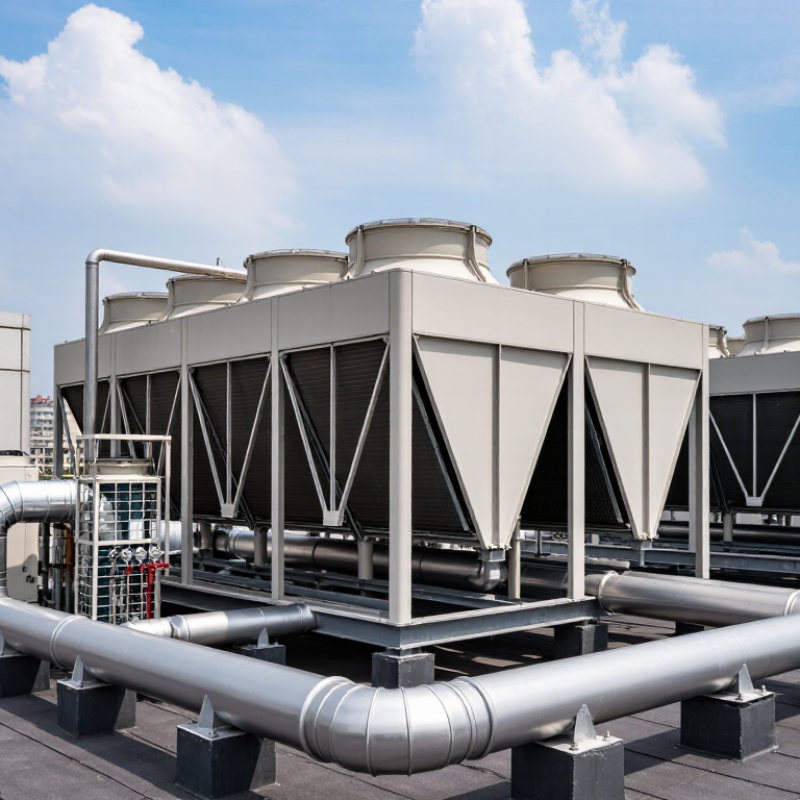
A cooling system removes unwanted heat and transfers it somewhere safer, such as outdoor air or water. In a workshop, that heat may come from motors, production equipment, or warm indoor air. Typical components include a heat exchanger, fans or pumps, sensors, and a controller. Some systems use chilled water; others move heat with refrigerant through an evaporator and condenser. It is not magic. Heat follows a physical path, and every component helps keep it moving.
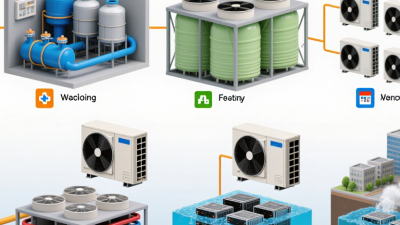
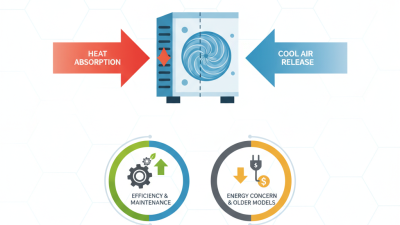
Air-cooled equipment passes air across hot surfaces, while liquid systems circulate water or another coolant through pipes. In a refrigeration cycle, the evaporator absorbs heat indoors, and the condenser releases it outside. Cooling towers can reject heat from circulating water through contact with air. During routine inspections, technicians check filters, coil surfaces, flow rates, and temperature readings. A clogged filter or weak pump can reduce performance, even when the main unit still runs. Small details matter. System choice depends on heat load, space, water access, and maintenance skills. These factors are easy to underestimate; real operating conditions may not match a neat design estimate.
| Cooling System Type | What It Includes | How It Works | Common Applications | Key Considerations for Buyers |
|---|---|---|---|---|
| Air-Cooled Chiller | Compressor, refrigerant circuit, evaporator, air-cooled condenser, fans, controls, and pumps where included. | Refrigerant absorbs heat from a circulating water or glycol loop in the evaporator. Fans move outdoor air across the condenser to release that heat. | Commercial buildings, light industrial processes, and sites where cooling-tower water is unavailable or undesirable. | Check cooling capacity at the actual design conditions, ambient-temperature limits, sound levels, power supply, and service access. |
| Water-Cooled Chiller System | Chiller, cooling tower, condenser-water pumps, chilled-water pumps, piping, filtration, and water-treatment equipment. | The chiller transfers heat from chilled water to condenser water. The cooling tower then releases heat to the outdoor air, partly through water evaporation. | Large commercial buildings, campuses, hospitals, and industrial facilities with suitable space and water infrastructure. | Evaluate the complete system, including tower, pumps, water consumption, water treatment, maintenance access, and local water regulations. |
| Direct Expansion (DX) Air Conditioning | Refrigerant compressor, indoor evaporator coil, outdoor condensing unit, expansion device, fans, and controls. | Refrigerant evaporates in the indoor coil and absorbs heat from room air. It then releases heat through the outdoor coil as it condenses. | Homes, offices, retail spaces, and smaller or zoned cooling applications. | Confirm capacity, airflow, refrigerant requirements, climate suitability, electrical compatibility, and installation constraints. |
| Evaporative Cooling | Fan, water distribution system, wetted media or pads, sump, pump, and controls. | Water evaporates into a moving air stream, reducing the air's dry-bulb temperature while increasing its moisture content. | Well-ventilated spaces, workshops, warehouses, and outdoor or semi-outdoor areas, especially in dry climates. | Performance depends strongly on outdoor humidity. Assess ventilation, water quality, hygiene, maintenance, and indoor moisture limits. |
| Cooling Tower | Fill or heat-transfer surface, fans or natural-draft structure, water basin, drift eliminators, and water-distribution equipment. | Warm water contacts moving air. A portion evaporates, carrying heat away and cooling the remaining circulating water. | Heat rejection for water-cooled chillers and industrial process systems. | Consider heat-rejection duty, local climate, water use, drift control, noise, corrosion protection, and water-treatment requirements. |
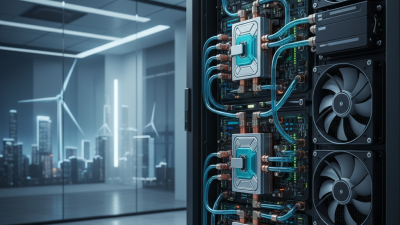
| Liquid Cooling for Electronics | Cold plates or cooling plates, coolant loop, pump, heat exchanger or radiator, tubing, fittings, and monitoring controls. | Coolant flows through components or cold plates, absorbs heat, and transfers it to a heat exchanger for removal to air or another cooling loop. | Data centers, power electronics, battery systems, and high-heat-density equipment. | Check heat load, flow and pressure requirements, coolant compatibility, leak management, filtration, redundancy, and maintenance procedures. |
| Heat Exchanger | Heat-transfer surfaces and separate fluid passages; common designs include plate, shell-and-tube, and finned-tube exchangers. | Heat moves from a warmer fluid to a cooler fluid through a separating surface, typically without the fluids mixing. | HVAC systems, industrial processes, refrigeration, and heat recovery applications. | Specify fluid type, inlet and outlet temperatures, flow rates, pressure drop, materials, fouling risk, and cleaning access. |
| Refrigeration System | Compressor, condenser, expansion device, evaporator, refrigerant piping, sensors, and control equipment. | A refrigeration cycle absorbs heat at the evaporator and rejects it at the condenser as refrigerant circulates through pressure and phase changes. | Cold rooms, food processing, refrigerated transport, supermarkets, and process cooling. | Match the system to the required temperature range, heat load, refrigerant rules, defrost needs, insulation, and operating schedule. |
| Key Performance Measures | Cooling capacity, coefficient of performance (COP), energy efficiency ratio (EER), airflow or water flow, and operating conditions. | Capacity describes the rate of heat removal. COP and EER compare cooling output with energy input; ratings are meaningful only with their stated test conditions and units. | Useful for comparing equipment and estimating operating requirements across cooling applications. | Compare like-for-like test conditions, full and part-load performance, local energy costs, and the whole-system energy use. |
Buyer note: A cooling system's design and performance depend on the required heat load, climate, operating temperatures, installation conditions, utilities, and applicable codes. Request technical data for the complete system and verify ratings against the stated test conditions.