Leave Your Message
Cooling Systems have moved from a facilities choice to a strategic buying decision. Factories, hospitals, warehouses, data centers, and homes all reject heat differently. The International Energy Agency reports that space-cooling electricity demand could more than triple by 2050. That trajectory changes the buyer’s question. Lowest price is not always lowest cost. Water use, refrigerant regulations, grid reliability, maintenance access, and local climate all matter. Small details become large invoices.
This guide examines ten major Cooling Systems used across international markets. They include air-cooled chillers, water-cooled chillers, evaporative cooling, VRF, direct expansion units, cooling towers, heat exchangers, immersion cooling, and district cooling. Each option creates different installation and operating demands. ASHRAE guidance stresses proper load calculations, airflow design, equipment selection, and maintenance planning. The UNEP-led Global Cooling Watch 2023 report also warns that cooling demand could more than triple by 2050 under business-as-usual conditions. Efficiency is no longer a cosmetic advantage.
For global buyers, capacity, energy performance, climate resilience, noise, water availability, and service support deserve equal attention. A coastal warehouse may face corrosion, while a dry factory may lack reliable process water. A data center needs redundancy that a small retail store may not require. No ranking is universal. Field experience often exposes weaknesses that brochures hide. Therefore, this overview compares applications, strengths, limitations, and purchasing risks across ten system types. Some conclusions will remain conditional. That is intentional. Real projects are messier than product catalogs. Use the comparison as a technical starting point, not a substitute for site-specific engineering and qualified professional review.
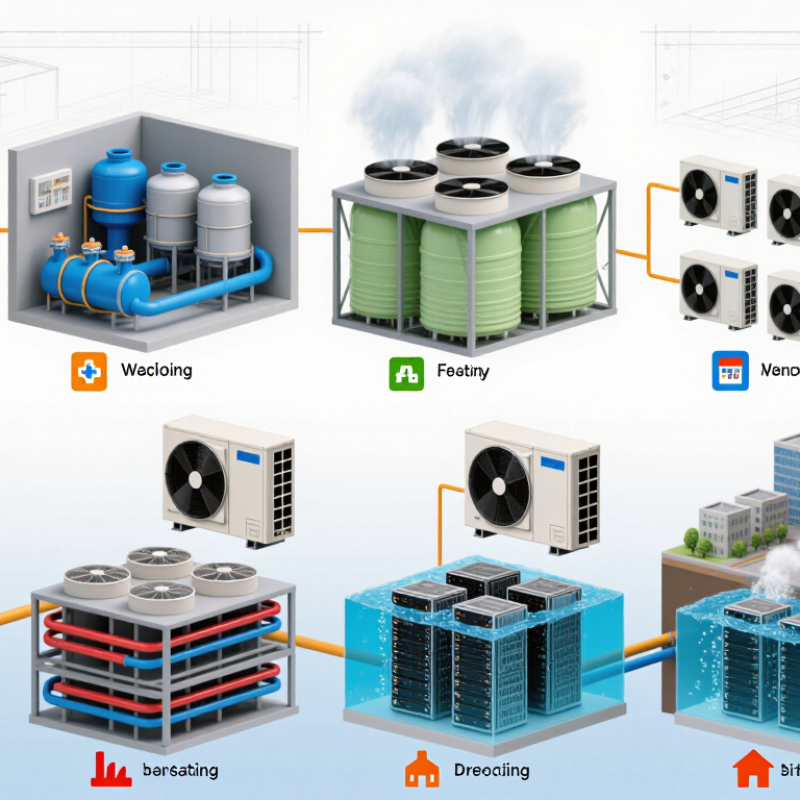
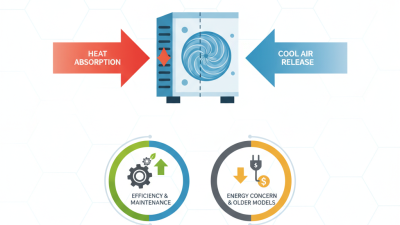
Cooling systems remove heat, not simply “make air cold.” They transfer indoor heat to another location through a controlled refrigeration cycle. The compressor raises refrigerant pressure, while the condenser releases heat outdoors. The expansion device lowers pressure, and the evaporator absorbs heat indoors. Fans, filters, sensors, coils, piping, and controls support this process.
Global buyers may compare air-cooled, water-cooled, evaporative, split, packaged, rooftop, VRF, chiller, precision, and hybrid systems. Each type suits different loads and environments. A warehouse may need strong airflow and dust control. A server room needs stable temperature, humidity management, and quick fault response. Coastal sites also require corrosion-resistant materials. Small details matter.
Cooling capacity is usually measured in kilowatts or tons of refrigeration. COP, EER, and SEER indicate efficiency under stated conditions. Higher values can reduce operating costs, but testing conditions may differ from real sites. Sensible cooling lowers air temperature; latent cooling removes moisture. Both affect comfort. Check airflow, water quality, pressure limits, noise, and service access before purchasing. I have seen excellent equipment perform poorly after blocked filters reduced airflow. The specification looked convincing. The installation was not. Performance also changes with outdoor temperature, maintenance habits, and partial-load operation. No single rating tells the whole story.
| No. | Cooling System Type | Basic Operating Principle | Primary Cooling Medium | Main Components | Main Functions | Key Performance Terms | Typical Applications | Advantages | Limitations |
|---|---|---|---|---|---|---|---|---|---|
| 1 | Air-Cooled Condensing System | A refrigerant rejects heat directly to outdoor air through a finned condenser coil. | Refrigerant and ambient air | Compressor, condenser coil, condenser fan, expansion device, evaporator | Removes heat from an enclosed or conditioned space and releases it outdoors. | Cooling capacity, EER, SEER, COP, condensing temperature, airflow | Residential air conditioners, packaged units, small commercial rooms | Simple installation, no cooling-water circuit, relatively low initial cost | Performance decreases at high outdoor temperatures; outdoor fan and coil require maintenance |
| 2 | Water-Cooled Chiller | A refrigeration circuit cools chilled water, while condenser water carries rejected heat to a cooling tower or dry cooler. | Chilled water and condenser water | Compressor, evaporator, condenser, expansion valve, pumps, cooling tower | Produces chilled water for air-handling units, process equipment, or fan-coil units. | COP, IPLV, leaving-water temperature, flow rate, approach temperature | Large commercial buildings, hospitals, factories, district cooling systems | High efficiency at large scale; compact central plant arrangement | Requires water treatment, pumps, cooling-tower maintenance, and more complex installation |
| 3 | Air-Cooled Chiller | A refrigeration circuit cools water or a water-glycol mixture, and condenser coils reject heat to ambient air. | Chilled fluid and ambient air | Compressor, evaporator, air-cooled condenser, fans, expansion device, pumps | Supplies temperature-controlled fluid to building or process cooling circuits. | COP, EER, leaving-fluid temperature, ambient-temperature range, part-load efficiency | Medium commercial buildings, manufacturing processes, remote facilities | No cooling tower or condenser-water loop; easier water management | Higher outdoor-air noise and generally lower efficiency than comparable water-cooled systems |
| 4 | Evaporative Cooling System | Water evaporation absorbs sensible heat from an air stream, reducing its dry-bulb temperature. | Water and air | Water pump, distribution pipes, wetted media or spray nozzles, fan, sump, controls | Provides ventilation and cooling with low compressor energy or without mechanical refrigeration. | Effectiveness, wet-bulb temperature, humidity ratio, airflow, water consumption | Dry climates, warehouses, workshops, agricultural buildings, outdoor air pre-cooling | Low electrical consumption and relatively simple equipment | Limited performance in humid climates; adds moisture and requires water hygiene control |
| 5 | Cooling Tower System | Warm condenser water is distributed over fill material and cooled as a portion evaporates into an air stream. | Water and air | Fill, fan, basin, spray nozzles, drift eliminators, water-treatment equipment | Rejects heat from chillers, industrial processes, or power-generation equipment. | Range, approach, evaporation loss, cycles of concentration, drift rate | Central cooling plants, industrial processes, power and utility facilities | Efficient heat rejection, especially in large systems and warm climates | Consumes water, produces a visible plume in some conditions, and requires scale and biological control |
| 6 | Direct-Expansion (DX) System | Refrigerant evaporates directly inside the indoor coil, absorbing heat from air or a process stream. | Refrigerant and air | Compressor, evaporator coil, condenser, metering device, blower, refrigerant piping | Delivers direct air cooling without an intermediate chilled-water loop. | Superheat, subcooling, cooling capacity, airflow, refrigerant pressure, COP | Split systems, rooftop units, precision cooling, small process applications | Fast response, fewer heat-transfer stages, and broad equipment availability | Refrigerant piping length can affect performance; leakage prevention and servicing are important |
| 7 | Absorption Cooling System | Heat, rather than a large electric compressor, drives the refrigerant-absorbent cycle. | Water, refrigerant, absorbent solution, and cooling water or air | Generator, absorber, evaporator, condenser, solution pump, heat exchangers | Converts available waste heat, steam, or direct heat into chilled water. | Thermal COP, chilled-water temperature, heat input, solution concentration, cooling-water temperature | Industrial sites, combined-heat-and-power plants, facilities with surplus heat | Low electrical demand and useful recovery of otherwise wasted heat | Lower thermal efficiency, larger footprint, slower response, and higher system complexity |
| 8 | Free Cooling System | Uses favorable outdoor-air or water conditions to provide cooling with reduced or no mechanical compressor operation. | Outdoor air, chilled water, or condenser water | Air dampers, heat exchangers, pumps, valves, sensors, control system | Reduces compressor runtime when outdoor conditions can meet the cooling load. | Economizer hours, approach temperature, outdoor-air enthalpy, fan and pump power | Data centers, office buildings, industrial facilities in cool or seasonal climates | Significant energy savings and reduced mechanical-equipment wear | Weather-dependent; humidity, air quality, and filtration requirements can restrict operation |
| 9 | Thermoelectric Cooling | The Peltier effect transfers heat across semiconductor modules when direct current is applied. | Solid-state thermoelectric modules and air or liquid heat sinks | Thermoelectric modules, cold plate, heat sink, fans, power supply, temperature controller | Provides localized, precise temperature control without compressors or refrigerant lines. | Coefficient of performance, temperature differential, heat load, current, heat rejection | Electronics, optical instruments, laboratory devices, portable coolers | Compact, quiet, vibration-free, and capable of heating or cooling by reversing polarity | Lower efficiency for large heat loads; hot-side heat rejection is essential |
| 10 | Liquid Cooling System | A circulating liquid absorbs heat at a cold plate or heat exchanger and transfers it to a radiator, chiller, or cooling tower. | Water, water-glycol solution, dielectric fluid, or process liquid | Cold plate, pump, reservoir, tubing, heat exchanger, radiator, valves, sensors | Removes high heat flux from equipment where air cooling is insufficient or space is limited. | Heat flux, flow rate, pressure drop, inlet temperature, thermal resistance, coolant concentration | Data centers, power electronics, battery systems, lasers, industrial machinery | High heat-transfer capacity, compact design, and effective temperature uniformity | Potential leakage, fluid compatibility issues, pump energy, and more demanding maintenance |