Choosing an Air Cooled Oil Cooler manufacturer in China takes more than comparing catalog prices. The right unit must match the machine, operating environment, and required heat rejection. A compact cooler on a hydraulic excavator, for example, faces different airflow, vibration, and space limits than one used in an industrial power pack. Small details matter.
This guide introduces leading Chinese manufacturers and explains what buyers should verify before requesting a quotation. We look at product range, engineering support, customization, material choices, and quality controls. Ask for performance data at stated oil flow, inlet temperature, and ambient conditions; a headline cooling figure alone may not tell the whole story. Check pressure drop, fan specifications, connection sizes, and how the cooler is tested. Request drawings and references for applications similar to yours. Useful evidence beats polished claims.
There is no single best supplier for every project. A large factory may offer broad capacity, while a smaller specialist could provide closer technical support. Both possibilities deserve scrutiny. Confirm who handles design changes, spare parts, and warranty questions after delivery. And leave room for doubt: published specifications can omit the exact conditions behind a test result. Comparing suppliers against the same duty requirements gives a clearer, more reliable shortlist. This overview is a starting point, not a substitute for application-specific engineering review.
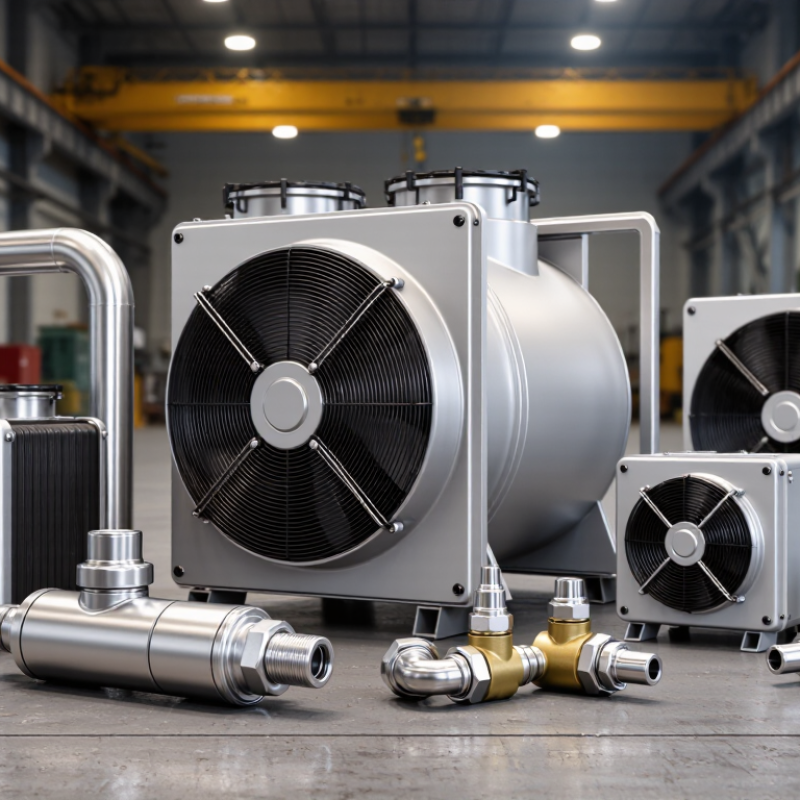
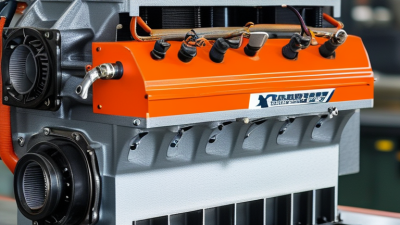
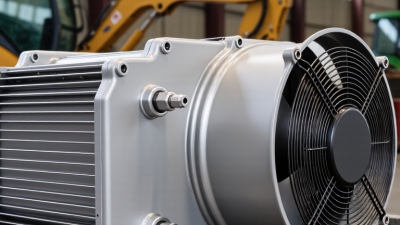
Air-cooled oil coolers remove heat from circulating oil without a cooling-water circuit. Hot oil passes through tubes, while fans push ambient air across the finned surfaces. Heat moves from the oil to the tube walls, then through the fins into the passing air. The cooled oil returns to the machine. Simple, but not effortless.
The IEA’s Energy Efficiency 2023 report estimates that industry accounted for about 37% of global final energy consumption in 2022. That figure is not a cooler-performance rating, but it highlights why reliable thermal control matters. In practice, cooler capacity changes with air temperature, airflow, fin cleanliness, and oil flow. On a hot afternoon, a unit may struggle to reach its target temperature; dust between the fins makes things worse. Fan control and thermostatic bypass valves can help maintain stable oil temperatures, though the best setup depends on the equipment and operating conditions.
Tips: Check that fans turn freely and fins remain clear. Measure oil temperature at both inlet and outlet under normal load. Record ambient temperature too; otherwise, readings can be misleading. A small detail, but useful.
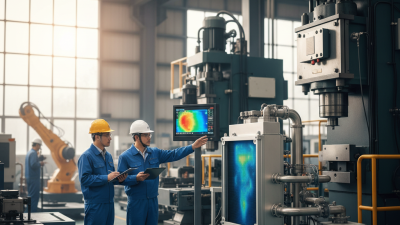
China’s air-cooled oil cooler industry is shaped by a broad manufacturing base, from component workshops to large production facilities. Many manufacturers work with aluminum cores, formed fins, welded tanks, and compact fan assemblies. The right design depends on operating temperature, oil flow, available space, and exposure to dust or vibration. Small details matter.
Production often combines automated brazing or welding with hands-on inspection. Core alignment, fin spacing, and clean oil passages affect heat transfer and pressure drop. Reliable evaluation should include leak testing and checks against the buyer’s flow and pressure requirements. A polished sample alone proves little. Ask how production batches are inspected, and review test records where available.
China’s supplier landscape offers varied levels of customization, production capacity, and technical support. Some factories are better suited to standard units; others can adapt mounting points, hose connections, or fan configurations. Buyers should compare drawings, material specifications, sample performance, and communication quality—not just quoted price. Export experience can help with packaging and documentation, but it does not replace technical verification. Specifications can still be incomplete, and that deserves a second look before approving a production run.
| Industry Dimension | Manufacturing Landscape | What Buyers Should Evaluate |
|---|---|---|
| Product function | Air-cooled oil coolers transfer heat from oil to ambient air. A fan moves air across a heat-exchanger core, avoiding the need for a separate cooling-water circuit. | Confirm the oil type, required heat-rejection capacity, oil flow, inlet temperature, ambient temperature, and allowable pressure drop. |
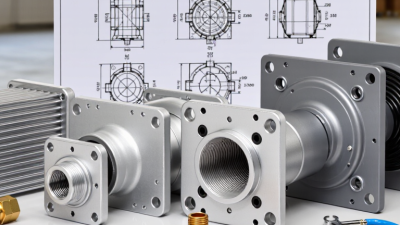
| Common construction | Typical assemblies combine a finned heat-exchanger core, headers or manifolds, a fan and motor, a protective frame, and connection ports. Designs vary by application and duty. | Request drawings and specifications for the complete assembly, including dimensions, port details, mounting points, fan guard, and electrical requirements. |
| Core and materials | Aluminum is commonly used for lightweight finned cores; other material choices may be used where pressure, corrosion, temperature, or application requirements call for them. | Check material specifications, corrosion protection, compatibility with the oil and operating environment, and any stated limits on temperature and pressure. |
| Fan and airflow | Axial fans are commonly used to move air through or across the cooler core. Fan selection and airflow arrangement affect cooling performance, noise, and power consumption. | Compare the stated airflow and fan operating conditions. Verify voltage, frequency, protection rating, noise data, and whether airflow direction suits the installation. |
| Application sectors | Air-cooled oil coolers are used in equipment such as hydraulic power units, industrial machinery, mobile equipment, and lubrication systems, subject to suitable sizing. | Provide the equipment duty cycle and installation conditions. A cooler selected for one operating environment may not be suitable for another. |
| Manufacturing capabilities | Production may involve core fabrication, fin and tube processing, brazing or other joining methods, fan and motor sourcing, frame fabrication, assembly, and inspection. | Ask which processes are performed in-house, how components are traced, and how changes to materials or suppliers are controlled. |
| Testing and quality control | Relevant checks can include leak or pressure testing, dimensional inspection, electrical checks for fan motors, and verification of product specifications. Test methods depend on the design. | Request the applicable test procedure, acceptance criteria, inspection records, and product-specific test documentation rather than relying on general claims. |
| Customization | Options may include different core sizes, port arrangements, mounting configurations, fan types, protective finishes, and control accessories, subject to engineering review. | Confirm whether a proposed change affects cooling performance, pressure loss, compatibility, delivery schedule, or validation requirements. |
| Supplier comparison | Manufacturers and suppliers can differ in engineering support, production scope, documentation, customization, and quality-control practices. Product suitability cannot be established by location alone. | Compare offers using the same operating conditions and specification sheet; verify references, sample quality, warranty terms, and after-sales support. |
| Selection principle | There is no single cooler configuration that is best for every system. Correct selection depends on heat load, oil flow, ambient conditions, installation space, and system constraints. | Use application data and a documented thermal selection. Treat performance figures as comparable only when their test conditions are clearly stated. |
This table summarizes general product and manufacturing considerations; it does not rank or identify individual companies. Specifications and capabilities vary by model and supplier.
Choosing an oil cooler manufacturer takes more than comparing prices and catalog photos. Start with the operating conditions: oil type, flow rate, inlet temperature, ambient heat, and available installation space. Ask how the supplier calculates heat rejection and pressure drop. A cooler that fits neatly may still perform poorly under your actual duty cycle. Check whether materials, fin spacing, and core construction suit dust, vibration, and corrosion risks at your site.
Review test records, inspection procedures, and technical documents for the specific model—not just general company certificates. Ask for pressure-test results and performance data, then confirm how those figures were measured. A factory visit can show how cores are assembled and inspected, though a tidy production line alone proves little. I would not treat a polished sample as proof of long-term reliability; that judgment needs test evidence and clear warranty terms. Some details are easy to overlook.
Tips: Send a real duty profile, including peak temperatures and operating hours. Ask who handles engineering changes, spare parts, and fault analysis. Check response times with specific questions. If an answer is vague, request a drawing or test report. Compare like with like, and leave room for uncertainty when data is incomplete.
For buyers assessing China’s air-cooled oil cooler manufacturers, technology starts with heat transfer and ends with repeatable production. ASM Handbook property tables report room-temperature thermal conductivity near 400 W/m·K for copper, 235 for aluminum, and 50 for carbon steel. These are approximate values; alloy, temperature, and fin geometry change real performance. Aluminum fins keep assemblies light, while brazed joints must withstand pressure cycles and vibration. Small details matter.
A useful factory review checks fin spacing, tube-wall thickness, braze coverage, and airflow uniformity. Ask for thermal test curves at stated oil flow, inlet temperature, and ambient conditions. Without those conditions, capacity figures are hard to compare.
That is not the whole story. A cooler that performs well in a laboratory may foul quickly in dusty service, so test conditions should resemble the installation.
Quality evidence should connect materials to production records. ISO 9001 supports process control, but it does not certify a cooler’s heat-transfer capacity. ISO 9227 salt-spray testing can help compare corrosion resistance; it cannot predict field life by itself. For pressure-containing designs, applicable codes and customer specifications should define proof testing.
Review calibrated gauges, leak-test records, and traceability for each production lot. A perfect report still deserves scrutiny. Check how failures are recorded and corrected.
China’s air-cooled oil cooler manufacturers should be compared by application, not catalogue size alone. For hydraulic power packs, ask for cooling capacity at the stated oil flow, inlet temperature, and ambient temperature. Excavators and mobile machinery need compact cores that tolerate vibration and dust. Stationary presses may favor easier cleaning and fan replacement. MarketsandMarkets’ 2023 Hydraulic Equipment Market report estimated the sector at USD 42.2 billion in 2023, with a forecast of USD 52.9 billion by 2028. This signals broad demand, but it does not measure cooler sales or prove any supplier’s capacity.
When comparing factories, request performance curves, test conditions, noise data, and evidence of repeatable production testing. A large rated capacity means little if it assumes cool air and clean fins. Check whether the supplier can adapt ports, mounting points, and fan controls, then confirm lead times for replacement cores. Service matters after delivery: ask about response times, spare-part availability, and technical support across your operating region. A polished quotation can still miss a difficult detail.
Tips: Send each shortlisted manufacturer the same duty cycle and oil-temperature limits. Compare like with like. Ask for a written selection basis, and check it against your actual ambient conditions. One imperfect assumption can change the result.