What Is a Radiator Brazed Plate Heat Exchanger?
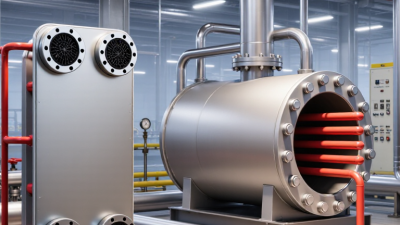
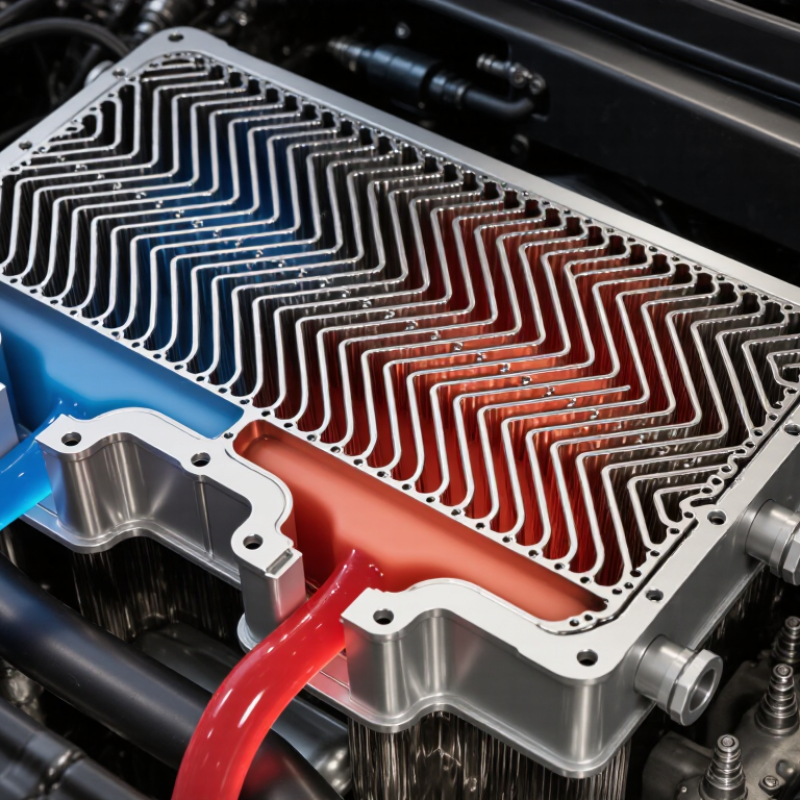
A radiator brazed plate heat exchanger is a compact device that transfers heat between separate fluid circuits. It uses thin, corrugated metal plates, joined through a controlled brazing process. These plates create narrow channels for coolant, water, or another compatible fluid. Heat crosses the metal surface while the fluids remain physically separated. This design can support efficient temperature control in vehicle cooling systems, industrial equipment, and heating applications.
Small, but powerful. A typical unit may fit into a tight engine compartment, yet provide a large heat-transfer area. The plate pattern creates turbulence, helping fluids contact more surface area. In a radiator system, this can improve cooling performance without requiring a bulky shell-and-tube assembly. However, performance depends on flow rate, fluid quality, pressure, temperature, and correct sizing. A compact exchanger is not automatically the best choice.
Understanding the Radiator Brazed Plate design requires more than reading a product label. Engineers should check material compatibility, brazing quality, working pressure, port arrangement, and expected thermal load. Copper-brazed models may offer strong heat transfer, while stainless-steel options can suit demanding environments. Actual service conditions matter more than catalog claims. That detail matters. Installation errors, trapped air, restricted flow, or neglected filtration can reduce service life. Even experienced users may overlook fouling inside narrow channels. Therefore, this article examines the structure, working principle, benefits, limitations, and selection considerations of radiator brazed plate heat exchangers. Some assumptions may need review, because real systems rarely behave exactly like laboratory examples.
What Is a Radiator Brazed Plate Heat Exchanger?
What Is a Radiator Brazed Plate Heat Exchanger?
A radiator brazed plate heat exchanger transfers heat between two separate water circuits. Thin, corrugated metal plates create alternating channels for hot and cooler fluids. Copper or nickel brazing seals the plate pack without traditional gaskets. This design produces a compact unit with strong heat transfer performance.
In a radiator system, the primary circuit may carry water from a boiler, heat pump, or district heating loop. The secondary circuit supplies radiators in another zone. The fluids stay separated, while heat moves through the plates. This separation can protect older radiator pipes from contaminated system water. It also helps manage different pressures and fluid qualities. However, choosing the correct exchanger is not always obvious. It sounds simple. Flow rate, inlet temperature, pressure drop, and required heating capacity all affect performance.
Tips: Check the manufacturer’s technical data before installation. Match connections carefully, and install a strainer upstream when debris is possible. Keep the exchanger upright if the design requires it. Air trapped inside can reduce circulation and create uneven radiator temperatures. Cleaning may require a controlled flushing procedure. An undersized unit may leave rooms cold, while an oversized unit can increase unnecessary pressure loss. That trade-off is easy to overlook. Temperature measurements during commissioning provide more reliable evidence than assumptions based only on pipe size.
How 0.4–0.8 mm Plates Create Compact Heat Transfer Surfaces
What Is a Radiator Brazed Plate Heat Exchanger?
How 0.4–0.8 mm Plates Create Compact Heat Transfer Surfaces
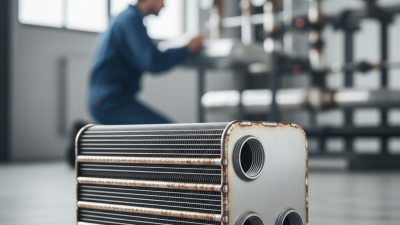
A radiator brazed plate heat exchanger uses thin metal plates to transfer heat between separate fluid circuits. Each plate is typically 0.4–0.8 mm thick. Corrugated patterns press against neighboring plates and form narrow channels. These ridges increase turbulence and enlarge the active heat transfer area. Hot coolant can then warm water efficiently within a compact metal body.
The thin plates reduce material use and shorten the distance heat must cross. A brazed joint also creates a sealed, rigid assembly without traditional gaskets. However, thinner does not always mean better. Poor water quality, excessive pressure, or incorrect flow rates can reduce service life. Thermal cycling may also expose weaknesses in design. Engineers should verify pressure ratings, fluid compatibility, fouling risk, and operating temperatures before selection. Small channels are efficient, but they can block more easily.
Tips:
Keep both circuits clean. Install suitable strainers and allow access for inspection. Check the temperature difference during operation. An unexpectedly small difference may indicate low flow, air pockets, or internal scaling. Plate thickness should match the duty, not simply the lowest purchase cost. A compact exchanger can save space, yet maintenance access still matters. That detail is often overlooked.
Why Turbulent Flow Produces 3–5× Higher Heat Transfer Rates
What Is a Radiator Brazed Plate Heat Exchanger?
Why Turbulent Flow Produces 3–5× Higher Heat Transfer Rates
A radiator brazed plate heat exchanger transfers heat through thin, corrugated metal plates. The plates are stacked and brazed at contact points, creating separate channels for coolant and the heated fluid. Unlike a bulky shell-and-tube unit, this design offers a compact footprint and a large surface area. It can fit inside a tight engine bay or heating cabinet.
The major performance gain comes from turbulence. Corrugated plates force the fluid to change direction repeatedly. This movement breaks up the thin thermal boundary layer beside each plate. Fresh fluid reaches the surface, while warmer fluid moves away. Under comparable flow conditions, turbulent operation can produce heat transfer rates three to five times higher than gentle, mostly laminar flow. The result is faster cooling with a smaller exchanger.
Small details matter. Plate angle, channel spacing, fluid viscosity, flow rate, and fouling all affect the real result. The 3–5× figure is useful, but it is not universal. That claim needs care. A poorly sized pump may create pressure loss without delivering useful heat transfer. I have also seen performance estimates fall short when water quality, air pockets, or seasonal temperatures were ignored. Engineers should verify the design with measured inlet and outlet temperatures, pressure readings, and the actual coolant mixture. That practical check often reveals what a catalogue calculation misses.
Which Pressure and Temperature Ratings Govern Safe Operation
What Is a Radiator Brazed Plate Heat Exchanger?
A radiator brazed plate heat exchanger transfers heat between two sealed fluid circuits. Thin metal plates create alternating channels, while brazed joints keep the assembly compact and leak-resistant. In a heating system, hot water may warm cooler radiator water without mixing the fluids.
Safe operation depends on the lower pressure and temperature limits shown on the exchanger nameplate. These ratings govern each fluid side separately. Do not treat them as target values. A unit rated for 30 bar and 200°C still needs suitable system controls, pipework, and safety devices.
Pressure can rise during pump starts, valve closure, or fluid expansion. A pressure-relief valve should protect the circuit before the exchanger’s maximum allowable working pressure is reached. Differential pressure also matters. One side may be rated for a different limit than the other. Check both values.
Temperature ratings include continuous service conditions and, sometimes, short-term limits. Frequent thermal cycling can stress brazed joints, especially when cold water suddenly enters a hot exchanger. That detail is easy to miss. I would inspect the nameplate, installation manual, fluid compatibility, and relief settings before commissioning.
Glycol concentration, water quality, and corrosion can change real service life. Fouling also raises pressure drop and reduces heat transfer. In practice, engineers should record inlet temperature, outlet temperature, and pressure on both circuits during startup. Small errors become expensive leaks. Ratings guide safe design, but actual operating data deserves equal attention.
How to Select Plate Count, Port Size, and Thermal Capacity
A radiator brazed plate heat exchanger transfers heat between two sealed water circuits through thin, corrugated plates. It has no removable gasket pack, so its compact construction suits boiler rooms and small plant rooms. The correct selection begins with thermal duty, not plate count. Calculate capacity with Q = m × cp × ΔT. For water, ASHRAE Handbook data uses a specific heat of about 4.18 kJ/kg·K. A 30 kW load with a 20°C temperature difference requires roughly 21.5 litres per minute.
Plate count depends on heat-transfer area, fluid temperatures, allowable pressure drop, and fouling risk. More plates usually increase capacity, but they can also raise cost and hydraulic resistance. A practical selection should check the logarithmic mean temperature difference and retain a modest design margin, often around 10%. That margin is not a universal rule. Poor flow balancing can waste it.
Port size should follow actual flow velocity and pressure-drop limits, not the radiator pipe diameter alone. For example, a 21.5 L/min circuit may require a different connection than a low-temperature circuit carrying twice that flow. Eurovent technical guidance emphasizes verified performance data and declared operating conditions when comparing heat exchangers. I would also check water quality, glycol concentration, start-up temperature, and pump head. A neat spreadsheet can still mislead when the return temperature is assumed rather than measured.