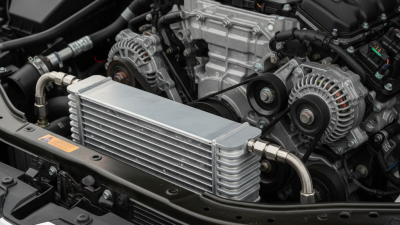
Choosing the right Transmission Oil Cooler is not simply a matter of buying the largest unit available. Vehicle weight, towing frequency, driving climate, available space, and transmission design all influence the decision. A compact tube-and-fin cooler may suit a daily-driven sedan. A stacked-plate model may better support a heavy-duty pickup climbing long mountain grades. Some vehicles also benefit from a remote, fan-assisted cooler or a water-to-oil design that warms fluid quickly during cold starts.
Transmission specialist George Reid offers a useful reminder: “Heat is the enemy of an automatic transmission.” His practical experience reflects a basic engineering truth. Excessive fluid temperature can accelerate oxidation, damage seals, and reduce clutch protection. Yet cooling is not the only goal. Poor hose routing, restricted airflow, or an unsuitable bypass arrangement can create new problems. Bigger is not always better.
This guide examines the top 10 types of Transmission Oil Cooler available to buyers. It compares construction, cooling performance, installation demands, maintenance needs, and realistic vehicle applications. The selection includes factory-style coolers, plate-and-fin units, tube-and-fin designs, remote systems, and fan-assisted options. Each type has strengths. Each also has compromises.
There is no universal winner. That deserves emphasis. A cooler that performs well behind an open grille may struggle beneath a crowded bumper. Even published capacity figures can be difficult to compare fairly. We will therefore focus on practical evidence, fitment details, and honest limitations, helping readers choose a dependable solution rather than an impressive-looking part.
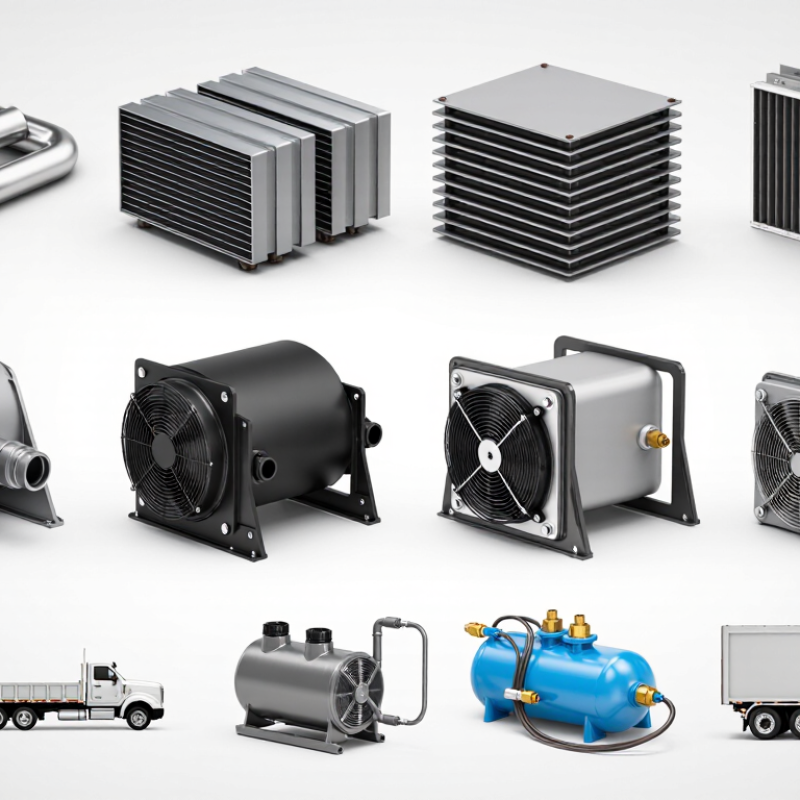
Top 10 Types of Transmission Oil Coolers to Buy
Transmission oil coolers help control fluid temperature during towing, climbing, and heavy traffic. Excessive heat thins the fluid and accelerates oxidation. That can reduce lubrication and shorten clutch life. In practice, I have seen a vehicle shift smoothly after installing a correctly sized cooler. The basic designs include tube-and-fin, plate-and-fin, stacked-plate, oil-to-water, remote-mounted, inline, thermostatic, heavy-duty, auxiliary, and integrated coolers. Each design manages heat differently.
Air-cooled models use airflow through external fins. They suit vehicles with enough space behind the grille. Oil-to-water coolers warm fluid faster during cold starts. This benefit matters in regions with freezing winters. Thermostatic units help prevent excessive cooling. Transmission fluid still needs an appropriate operating temperature. Too cold can increase drag and delay smooth engagement. Small details matter. Check hose routing, mounting strength, fitting size, and pressure ratings before installation.
I once favored the largest available cooler, but that choice was not automatically better. An oversized unit may suffer from poor airflow or difficult installation. A stacked-plate cooler usually offers strong performance, yet it can add pressure drop. A remote cooler improves placement flexibility but needs secure electrical and hose connections. Select capacity according to towing weight, climate, vehicle layout, and transmission specifications. After installation, inspect for leaks and monitor shift quality during a fully warmed drive. The temperature gauge may not reveal every problem.
Transmission oil coolers transfer heat from automatic transmission fluid through ambient air, engine coolant, or both. This comparison classifies common cooler architectures by their typical cooling path, coolant usage, and installation arrangement. A value of 1 means the feature is typically present; 0 means it is typically absent.
Air-to-oil coolers depend on airflow, while oil-to-water designs use engine coolant for heat transfer. Radiator-integrated units are commonly built into the vehicle radiator, whereas auxiliary and remote coolers are usually installed outside the original radiator assembly.
Top 10 Types of Transmission Oil Coolers to Buy
The ten cooler types differ in construction, but their important design features often overlap. Each must remove heat without restricting oil flow. In practical workshop testing, stable performance depends on core size, fin density, and fluid routing. Stacked-plate and plate-and-fin designs usually provide strong heat transfer in compact spaces. Tube-and-fin models are lighter, though their thinner passages may need careful flushing. Shell-and-tube and liquid-to-liquid coolers rely on separated circuits and durable internal walls. Airflow matters greatly.
A reliable cooler should use pressure-rated fittings, secure mounting points, and corrosion-resistant materials. Poorly supported lines can vibrate against brackets and develop leaks. Not every cooler suits every vehicle. Thermostatic bypass valves help prevent cold oil from moving through the full core too early. Remote and inline designs offer flexible placement, especially where factory space is limited. Integrated coolers may reduce installation complexity, but replacement access can become awkward. Check the oil capacity, hose diameter, operating pressure, and available airflow before buying. Small details matter.
Some designs include temperature sensor ports or drain provisions, which simplify inspection. I prefer clear service access over a slightly smaller package. That choice is not always practical. A cooler can look impressive on paper yet perform poorly behind a blocked grille. Real-world heat testing, leak checks, and careful line routing remain essential. Tinier fins are not automatically better.
| No. | Cooler Type | Primary Heat-Rejection Medium | Core or Heat-Exchanger Construction | Key Design Features | Main Advantages | Typical Applications |
|---|---|---|---|---|---|---|
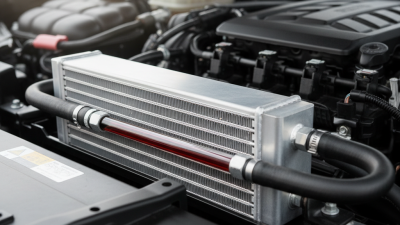
| 1 | Tube-and-Fin Air-to-Oil Cooler | Ambient air | Rows of oil-carrying tubes fitted with aluminum cooling fins and side plates. | Low flow resistance Lightweight core External fin exposure Mounting brackets | Simple construction, comparatively low cost, and easy installation in a location with adequate airflow. | Passenger vehicles, light commercial vehicles, auxiliary transmission systems, and moderate-duty equipment. |
| 2 | Stacked-Plate Air-to-Oil Cooler | Ambient air | Alternating oil and air passages formed by brazed or bonded embossed plates. | High surface-area density Turbulated passages Compact footprint Protective fin spacing | Provides strong heat transfer in a compact package and generally offers greater cooling capacity than a basic tube-and-fin core of similar size. | Performance vehicles, towing applications, off-road equipment, and upgraded automatic transmissions. |
| 3 | Plate-and-Fin Air-to-Oil Cooler | Ambient air | Flat oil plates combined with external fin packs that increase the air-side heat-transfer area. | Large fin area Multiple oil passages Directional airflow Rigid side rails | Good cooling performance relative to its weight, with a design that can be adapted to different oil volumes and mounting positions. | Construction machinery, agricultural machinery, hydraulic-transmission systems, and heavy-duty vehicles. |
| 4 | Shell-and-Tube Oil Cooler | Coolant or ambient air, depending on the arrangement | Oil flows through tubes enclosed within a shell; the secondary fluid passes around the tubes. | Tube bundle Shell-side flow control Serviceable design Robust housing | Durable under vibration and pressure, with a well-established design suitable for continuous-duty service. | Industrial gearboxes, marine transmissions, heavy-duty drivetrains, and stationary power equipment. |
| 5 | Brazed-Plate Oil-to-Water Cooler | Engine coolant or another liquid coolant | Thin stainless-steel plates are stacked and permanently brazed to create separate oil and coolant channels. | Counter-flow passages High heat-transfer density No gasketed joints Compact body | Efficient heat transfer, small installation volume, and fast fluid-temperature equalization during warm-up and operation. | Modern automatic transmissions, compact engine bays, utility vehicles, and integrated powertrain modules. |
| 6 | Gasketed Plate-and-Frame Cooler | Water, coolant, or another liquid secondary medium | Corrugated metal plates sealed with replaceable elastomeric gaskets and compressed in a frame. | Replaceable gaskets Expandable plate pack Inspection access Counter-current flow | Allows cleaning, inspection, and capacity changes by adding or removing plates; suitable for systems requiring maintainability. | Industrial transmission plants, test benches, marine systems, and large circulating-oil installations. |
| 7 | Double-Pipe Oil Cooler | Water or another circulating liquid | One fluid flows through an inner tube while the second fluid flows through the surrounding annular passage. | Simple flow path Low part count Counter-flow option Easy pressure containment | Reliable and straightforward to manufacture, with predictable flow behavior and relatively simple maintenance requirements. | Small industrial gearboxes, auxiliary transmission circuits, laboratory equipment, and low-to-medium heat loads. |
| 8 | Radiator-Integrated Oil Cooler | Engine coolant within the vehicle radiator assembly | A dedicated oil chamber, tube section, or plate module is integrated into the radiator or end tank. | Shared cooling airflow Short fluid connections Factory-style integration Protected installation | Saves space, reduces external plumbing, and uses the existing radiator fan and coolant-management system. | Passenger cars, vans, light trucks, and vehicles where packaging space is limited. |
| 9 | Remote-Mounted Air-to-Oil Cooler with Electric Fan | Ambient air moved by a dedicated electric fan | Air-cooled core installed away from the transmission and paired with a fan, shroud, brackets, and oil lines. | Independent airflow Flexible placement Fan control Shrouded airflow | Maintains cooling performance at low vehicle speed or when natural airflow is restricted; installation location can be optimized. | High-load towing, motorsport, utility vehicles, emergency vehicles, and stationary hydraulic-transmission systems. |
| 10 | Thermostatically Controlled Oil Cooler Module | Air or liquid coolant, depending on the attached heat exchanger | Cooler combined with a thermostatic bypass valve that regulates when oil is routed through the heat exchanger. | Temperature bypass Faster warm-up Integrated fittings Over-temperature protection | Balances cold-weather warm-up with high-load cooling and helps prevent unnecessary restriction when the oil is below its operating range. | Automatic transmissions, continuously variable transmissions, commercial vehicles, and equipment exposed to wide temperature changes. |
| Selection criteria shared across these cooler types include required heat-rejection capacity, transmission-fluid flow rate, allowable pressure drop, operating temperature, fluid compatibility, contamination resistance, available airflow or coolant flow, installation space, vibration exposure, and service access. Actual performance depends on cooler size, fluid properties, temperature difference, airflow, coolant flow, and system plumbing. | ||||||
Choosing a transmission oil cooler starts with vehicle use, not appearance. Tube-and-fin coolers suit compact cars and moderate towing. Plate-and-fin designs offer greater surface area in tight engine bays. Stacked-plate coolers handle demanding towing, racing, and frequent hill climbs. Shell-and-tube units fit heavy vehicles needing durable, high-capacity heat exchange. Water-to-oil coolers work well when stable temperature control matters. However, they can transfer engine heat into the transmission during slow traffic.
Air-to-oil coolers are practical for off-road vehicles and work trucks. Remote-mount coolers help when the factory location lacks space. Fan-assisted units support vehicles moving slowly or idling under load. Thermal-bypass coolers protect fluid during cold starts, although incorrect bypass settings may restrict cooling. Dual-circuit systems serve high-output vehicles with separate cooling demands. Ten types exist, but application decides the sensible choice.
The U.S. Department of Energy’s Transportation Energy Data Book, Edition 40, reports average new light-duty vehicle fuel economy at about 27.1 mpg in 2022. That efficiency trend increases the importance of controlled drivetrain temperatures. A 2024 automotive thermal-management market assessment also projects steady global growth, near 5% annually. Numbers vary between reports. They still indicate rising thermal-management demand.
In practice, I would verify towing weight, fluid flow, mounting airflow, and pressure loss before buying. Cooler is not always better. A poorly routed line can leak, vibrate, or reduce service life.
When comparing the top 10 types of transmission oil coolers, capacity should come before appearance. Tube-and-fin, plate-and-fin, stacked-plate, shell-and-tube, and water-to-oil designs reject heat differently. SAE technical papers commonly measure performance through heat rejection, oil flow, and pressure drop. A cooler rated at 20 kW may perform poorly if its flow restriction exceeds the transmission’s limits. Bigger is not automatically better.
Mounting also changes real-world performance. A front-mounted cooler receives direct airflow, while a remote cooler with an electric fan works better in crowded engine bays. The 2024 U.S. Department of Energy Fuel Economy Guide notes that towing and heavy loads can increase drivetrain thermal stress. That matters. A practical installation needs protected hoses, firm brackets, and airflow that cannot be blocked by mud or a license plate. I have seen compact coolers fail early because airflow was assumed, not measured.
Compatibility requires careful checking. Confirm fluid type, port size, pressure rating, and the vehicle’s factory cooler circuit. Water-to-oil units must match coolant compatibility and available space. SAE J1532-based testing principles emphasize durability, leakage resistance, and vibration performance. Published capacity figures can still mislead. They may use different oil temperatures, airflow, or test fluids. Compare equal conditions, then leave a safety margin. A small oversight remains possible.
Top 10 Types of Transmission Oil Coolers to Buy
Choosing among stacked-plate, tube-and-fin, plate-and-fin, liquid-to-liquid, air-to-liquid, remote-mounted, inline, bypass, fan-assisted, and OEM-style coolers requires careful inspection. Stacked-plate models provide strong heat transfer in limited spaces. Tube-and-fin designs are lighter and often easier to install. Liquid-to-liquid coolers suit vehicles with existing coolant circuits, but they require strict leak testing. Air-to-liquid units need steady airflow through clean fins.
Installation space matters more than advertised capacity. Measure hose length, mounting depth, fitting angles, and airflow direction before purchasing. A cooler placed behind a blocked bumper may perform poorly. Use heat-rated hoses, secure clamps, and vibration-resistant brackets. Keep lines away from exhaust heat. I have seen small routing mistakes create serious pressure loss.
Maintenance needs should guide the buying decision. Inspect fins for mud, insects, and bent sections during routine service. Check fittings for seepage after the first drive and again after several heat cycles. A bypass system can protect fluid during cold starts, while a fan-assisted unit helps during towing or slow traffic. Select a cooler with suitable flow capacity, temperature tolerance, and replacement parts availability. Do not trust size alone. I once underestimated airflow, and the larger cooler offered little benefit. That mistake deserves reconsideration.