Top Transmission Oil Cooler Manufacturers Worldwide
Choosing the right Transmission Oil Cooler manufacturer can influence vehicle reliability, operating temperature, and long-term maintenance costs. This guide examines leading manufacturers worldwide through practical industry criteria. These include cooling efficiency, material quality, production experience, testing procedures, and technical support.
A dependable supplier should understand different transmission designs, fluid pressures, mounting limits, and environmental conditions. Heavy-duty trucks may require larger stacked-plate systems. Passenger vehicles often need compact tube-and-fin solutions. Some manufacturers provide custom engineering, while others focus on standardized products. Both approaches can work, but only when specifications match the application.
Details matter here.
We consider heat-transfer performance, corrosion resistance, pressure testing, warranty clarity, and supply consistency. Independent certifications and documented quality systems can strengthen a manufacturer’s credibility. However, certification alone does not guarantee perfect field performance. Installation quality, fluid selection, airflow, and maintenance can change results significantly.
This overview is designed for buyers, engineers, distributors, and fleet professionals comparing global options. It does not treat market visibility as proof of technical superiority. A familiar brand may offer excellent support, yet a smaller specialist could provide better customization. That comparison deserves careful review. Our assessment may not capture every regional supplier or recent product update. Manufacturers also change materials, factories, and service policies over time.
Readers should verify current specifications directly with suppliers before making purchasing decisions. The strongest choice is rarely the cheapest unit. It is the cooler that delivers stable performance, verified quality, and practical support under real operating conditions.
Transmission Oil Coolers: Purpose, Design, and Operating Principles
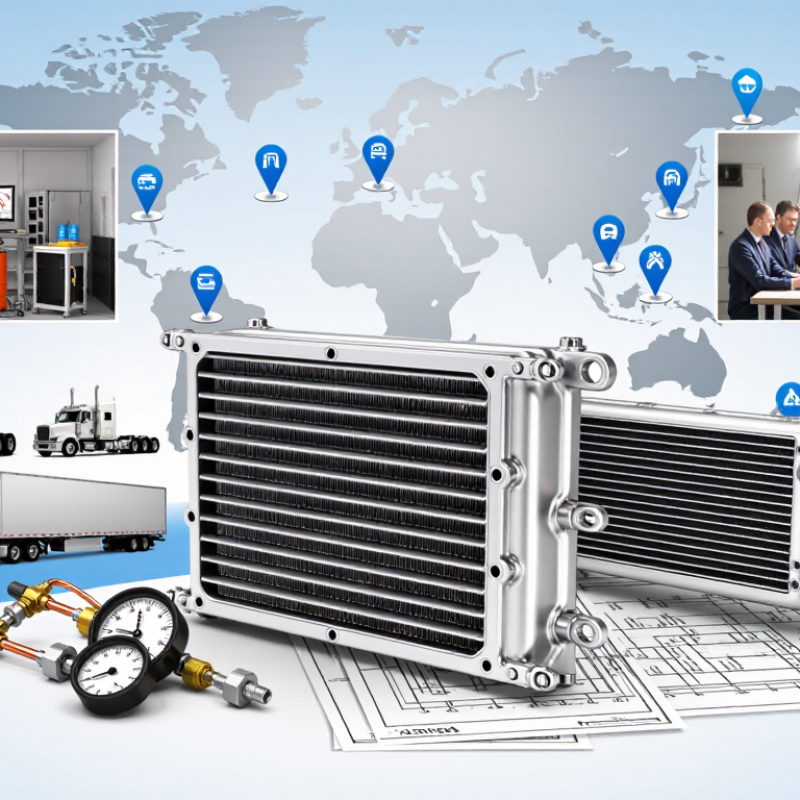
Transmission oil coolers protect automatic and heavy-duty gearboxes from heat. Fluid carries friction heat away from clutches, bearings, and gears. Without control, oxidation increases and shift quality may deteriorate. In workshop inspections, dark fluid and a sharp burnt odor often signal thermal stress. Yet temperature alone is not the whole story. Flow rate, pressure, ambient air, and towing load interact continuously. A cooler works best as part of a complete thermal system.
Most units use aluminum plates, fins, or tubes. Stacked-plate designs provide high surface area in compact spaces. Tube-and-fin designs can offer lower restriction and simpler servicing. The transmission fluid passes through internal channels, while air removes heat across external surfaces. Some systems use a liquid-to-liquid exchanger near the radiator. This arrangement warms fluid during cold starts and stabilizes temperature later. Engineers must match fittings, core volume, pressure limits, and mounting clearance. Too much restriction can reduce lubrication flow. Too little cooling can shorten fluid life. Fit matters. The choice is less obvious than a catalog size suggests.
During installation, keep hoses away from exhaust heat and sharp brackets. Secure them against vibration. A thermostatic bypass can prevent excessive cooling in cold weather. Testing should include leak checks, pressure readings, and temperature measurements before and after the cooler. I have seen impressive temperature drops disappear when airflow was blocked by dirt. That detail is easy to miss. Cooler selection also deserves periodic review, because vehicle loads and driving conditions change. A technically correct design can still fail through poor routing, neglected cleaning, or an underestimated duty cycle.
Key Types of Transmission Oil Coolers and Their Applications
Top Transmission Oil Cooler Manufacturers Worldwide
Transmission oil coolers are not interchangeable parts.
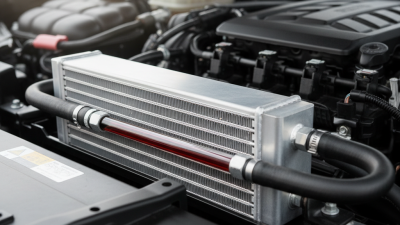
Tube-and-fin units are compact and affordable, making them suitable for passenger cars and light-duty vehicles. Plate-and-fin coolers provide greater surface area and stronger heat transfer. They fit towing vehicles, commercial vans, and performance applications. Stacked-plate designs are efficient under heavy thermal loads, although pressure loss can increase. Water-to-oil coolers use engine coolant to warm transmission fluid quickly during cold starts. They also stabilize temperatures in crowded engine bays.
According to a 2024 automotive transmission market report, automatic transmissions still represent the largest demand segment globally, driven by urban traffic and vehicle electrification trends. SAE technical literature commonly places transmission fluid operating temperatures near 80–120°C, while sustained temperatures above this range can accelerate oxidation and seal wear. The U.S. Department of Energy also identifies thermal management as a key factor in vehicle efficiency and durability. These figures are useful, but real towing conditions are less predictable. Sizing from catalogue data alone can be a mistake.
Tips:
Match the cooler to vehicle weight, towing load, fluid flow, and available airflow. Check pressure ratings carefully. Use a thermostat when cold-weather operation matters. Measure inlet and outlet temperatures after installation. Bigger is not always better. A poorly routed line may create more trouble than a smaller cooler. Test again after several driving cycles.
How to Evaluate Global Transmission Oil Cooler Manufacturers
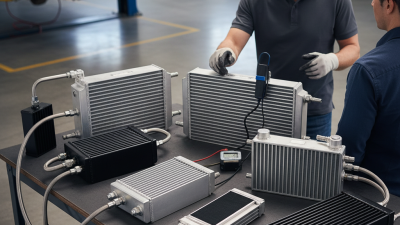
Evaluating global transmission oil cooler manufacturers requires more than comparing catalog prices. Start with evidence from the factory floor. Ask how cores are brazed, cleaned, and pressure-tested. Request test conditions, not only maximum ratings. A credible supplier can show oil type, flow rate, inlet temperature, and pressure-drop data. Photos help, but witnessed testing is stronger. Inspect samples for uneven fins, blocked passages, and rough ports. Small defects can become expensive failures.
Engineering fit matters.
Check thermal capacity during towing, stop-and-go traffic, and cold starts. Review materials against road salt, humidity, vibration, and fluid additives. Confirm dimensions, mounting loads, hose compatibility, and bypass-valve behavior. Independent validation adds weight for fatigue, burst pressure, and corrosion resistance. Quality systems and batch records improve confidence, but certificates alone do not prove field performance. Ask for failure reports and corrective actions. Some manufacturers resist this question. That response is informative.
Global supply capability should be judged through lead times, packaging, spare parts, and technical communication.
A reliable partner explains design changes before shipment and supports local compliance documents. Compare warranty terms carefully; exclusions often matter more than duration. Visit or audit the production site when volumes justify the cost. I have found that polished presentations can hide weak process control. Conversely, a smaller facility may provide better engineering access. That is not a rule. Use pilot orders, incoming inspection, and measured vehicle tests before approving full production. Keep the decision evidence-based, even when familiarity feels safer.
Manufacturing Standards, Materials, and Quality Control
Top Transmission Oil Cooler Manufacturers Worldwide
Reliable transmission oil cooler production depends on controlled standards, suitable materials, and repeatable inspection. Quality systems such as ISO 9001 support documented procedures and traceable production records. Automotive suppliers may also follow IATF 16949 principles, especially when supplying high-volume vehicle programs. Each cooler should pass pressure, leak, flow, and thermal performance tests before shipment. Records should identify the material batch, operator, test equipment, and inspection result.
Material selection affects durability under heat, vibration, and chemical exposure. Aluminum alloys offer low weight and efficient heat transfer. Brazed plate designs require clean surfaces and carefully controlled furnace temperatures. Tube-fin coolers need consistent tube thickness and reliable fin attachment. Stainless steel can improve corrosion resistance, but it may increase cost and weight. Seals and fittings also deserve attention. A strong core cannot compensate for a weak connection.
Small details matter.
Experienced manufacturers use calibrated gauges, automated visual checks, and destructive sample testing. They inspect brazed joints for voids, oxidation, and incomplete bonding. However, no inspection plan is flawless. A production line can drift after maintenance, material changes, or operator turnover. That risk requires layered checks rather than one final test. Some factories still depend too heavily on end-of-line inspection. That approach needs reconsideration. Process data, supplier audits, and periodic field feedback provide a more honest view of cooler quality.
Installation, Maintenance, and Performance Considerations
Top Transmission Oil Cooler Manufacturers Worldwide
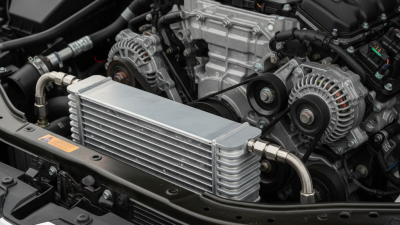
Installation quality often decides whether a transmission oil cooler performs well. Mount the cooler where it receives steady airflow, but avoid placing it behind a sealed bumper panel. Use reinforced hoses, secure clamps, and gentle bends. Sharp bends restrict flow and may create hidden pressure losses. SAE technical literature identifies fluid temperature control as a major factor in automatic transmission durability. A cooler cannot repair a failing pump or contaminated fluid.
During servicing, inspect hose surfaces for swelling, abrasion, and hardened ends. Check fittings after the first heat cycle, because clamps can loosen as materials expand. The American Petroleum Institute stresses using the correct fluid specification, not simply a similar-looking product. Fluid level must be checked at the specified temperature. Too little oil causes aeration; too much can foam. Both conditions reduce lubrication.
Tips: Measure temperatures before and after installation. A digital infrared thermometer helps, but probe sensors are more reliable. Record ambient temperature, vehicle load, and highway speed. A 10°C rise can sharply accelerate lubricant oxidation, according to widely cited tribology research. That rule is useful, though not universal. Cooler is not always better. Excessive cooling may delay efficient shifting in cold climates. I have seen clean installations fail because airflow was blocked by a decorative grille. Recheck the design under real driving conditions.
Transmission Fluid Temperature and Relative Service Life
Higher transmission fluid temperatures accelerate oxidation, seal degradation, and additive depletion.
The relative service-life index uses 175°F (79°C) as a practical baseline of 100. Actual results vary with transmission design, fluid type, vehicle load, airflow, cooler sizing, installation quality, and maintenance intervals.