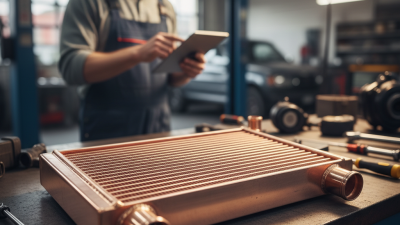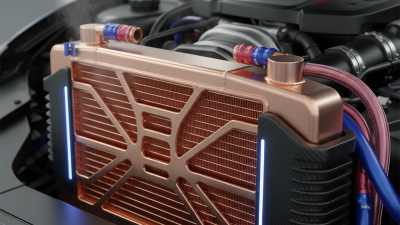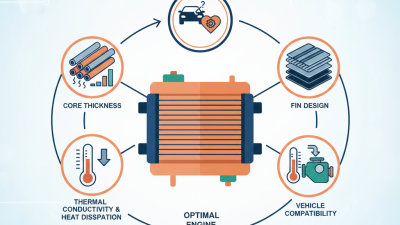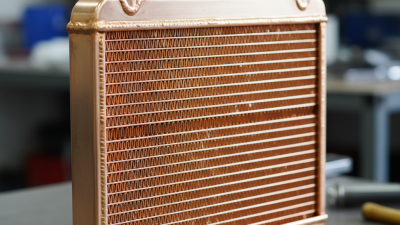
The global Copper Engine Radiator market combines traditional craftsmanship with precise thermal engineering. Leading manufacturers serve trucks, construction equipment, agricultural machines, racing vehicles, and industrial power systems. Their products may look similar, but performance depends on tube design, fin density, coolant flow, brazed joints, and pressure resistance.
Frank P. Incropera, a respected heat-transfer scholar, states, “Heat transfer is thermal energy in transit due to a spatial temperature difference.” This principle explains why copper remains valuable. Copper transfers heat efficiently, while skilled manufacturers can repair, customize, and reinforce radiator cores for demanding applications. In real workshops, details matter. A poorly sealed joint can undermine an otherwise excellent radiator.
This overview examines the Top 10 Copper Engine Radiator Manufacturers Worldwide through practical and technical criteria. These include manufacturing experience, material quality, cooling performance, customization, testing procedures, export capability, and after-sales support. Public company information provides useful evidence, but it is not always complete. Some rankings may change with new contracts, factory upgrades, or regional demand.
Buyers should compare more than catalog claims. They should review pressure-test records, alloy specifications, warranty terms, and field feedback. A radiator designed for a mining truck may not suit a vintage engine. That distinction is easy to miss.
The list is therefore a carefully informed guide, not an absolute verdict. Real-world results still depend on installation, coolant maintenance, airflow, and operating temperature.
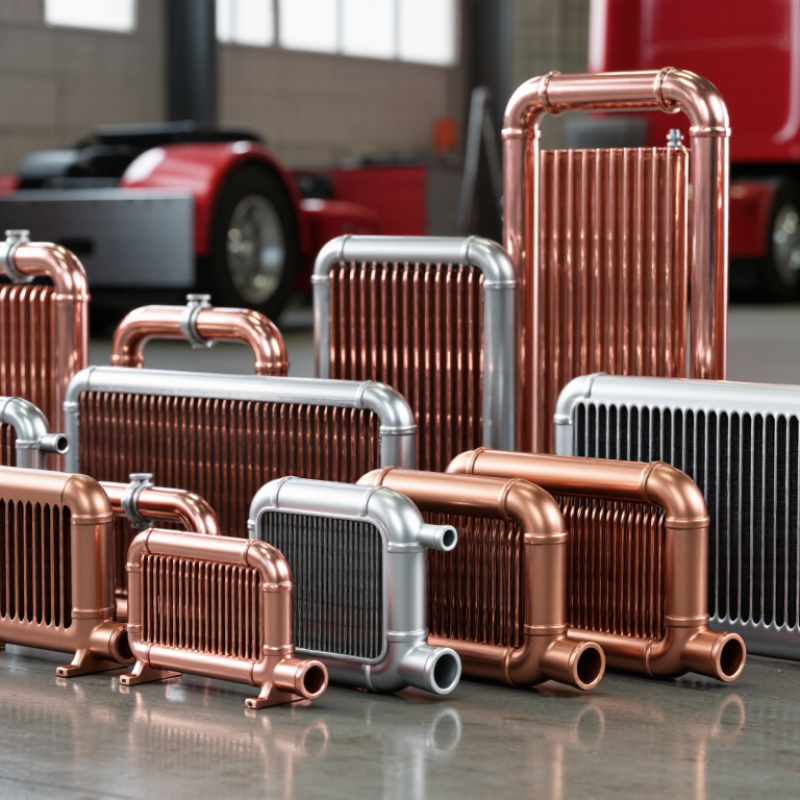
Copper engine radiators transfer heat from coolant to moving air. Their structure is simple but highly engineered.
A typical unit uses copper tubes, thin cooling fins, headers, side tanks, and a filler neck. The tubes carry hot coolant through the core. Fins expand the contact area around each tube. Air then removes heat as it passes through the fin pack. Soldered joints create sealed connections, while mounting brackets support the radiator against vibration. Copper conducts heat efficiently and allows practical repairs in many workshops. However, solder quality and joint preparation strongly affect service life.
During operation, the water pump circulates coolant through the engine and radiator. The thermostat regulates flow as temperatures change. A fan increases airflow when vehicle speed is low. Radiators of this type serve construction machinery, agricultural equipment, generator sets, commercial vehicles, and some marine engines. They are useful where repairability and thermal performance matter.
Field inspections often reveal blocked fins, crushed passages, weak solder joints, or incorrect coolant mixtures. Small defects can become serious under pressure. A clean core matters.
Technicians should check fin condition, cap pressure, coolant color, and visible leakage. Pressure testing can expose faults that inspection misses. Copper also reacts poorly to neglected coolant chemistry and electrical grounding problems. No design is perfect. In dusty sites, even a well-sized radiator may lose performance quickly. Manufacturers must balance tube density, airflow resistance, cooling demand, weight, and maintenance access for each application.
Top 10 Copper Engine Radiator Manufacturers Worldwide
Ranking global copper engine radiator manufacturers requires more than counting production volume. The strongest evaluation begins with material quality, thermal performance, and manufacturing control. Copper tubes should provide efficient heat transfer, while fins need consistent spacing and secure bonding. Independent laboratory testing can verify cooling capacity under varied engine loads and ambient temperatures.
Real-world durability matters equally. A reliable manufacturer should show evidence from construction, agricultural, marine, or industrial equipment applications. Inspectors should examine solder joints, pressure resistance, vibration tolerance, and corrosion protection. Certification records, traceable materials, and documented quality procedures strengthen credibility. Clear warranty terms also reveal how seriously a manufacturer supports its products after delivery.
Supply capability deserves careful attention. A high-ranking producer should maintain stable lead times, spare-part access, and responsive technical communication. Custom dimensions can be important when engines operate in tight compartments or dusty environments. Energy use, recyclable copper content, and responsible waste handling should also influence the score. No ranking is flawless. A polished factory audit may not reflect field failures after several seasons. Customer feedback, repair records, and repeated performance testing can expose those gaps. The best assessment combines measurable data with practical experience, while admitting where evidence remains incomplete.
Independent evaluation framework for comparing manufacturers of copper-brass engine radiators
| Rank | Evaluation Criterion | Weight | Assessment Dimension | Evidence and Measurement Basis | Why It Matters |
|---|---|---|---|---|---|
| 1 | Product Quality and Reliability | 20% | Durability, leak resistance, thermal stability and consistency | Verified quality records, warranty-return ratios, pressure-test procedures, brazing or soldering controls, and documented corrective-action systems | Reliable radiators reduce engine overheating risk, service interruptions and lifecycle replacement costs. |
| 2 | Thermal Performance | 15% | Heat-transfer capability under defined operating conditions | Laboratory or customer test data covering coolant flow, air velocity, inlet temperature, outlet temperature, pressure drop and rated heat-rejection capacity | Thermal performance directly affects engine operating temperature and cooling-system efficiency. |
| 3 | Manufacturing Capacity | 12% | Production scale, process stability and delivery capability | Audited production facilities, documented monthly capacity, equipment list, process-control plans and on-time delivery performance | Capacity and process stability are essential for original-equipment, aftermarket and fleet requirements. |
| 4 | Engineering and Customization | 10% | Ability to design application-specific copper-brass radiator assemblies | CAD capability, prototype development, dimensional inspection, vibration assessment, tank and core configuration options, and sample approval procedures | Different engines, vehicles and operating environments require precise fitment and application-specific cooling designs. |
| 5 | Material Traceability | 10% | Control of copper, brass, solder, tubes, fins and auxiliary components | Material certificates, supplier qualification records, batch identification, incoming inspection and documented chemical or dimensional verification | Traceable materials help control corrosion, joint quality, thermal conductivity and long-term service performance. |
| 6 | Testing and Compliance | 10% | Conformity with recognized quality, environmental and product-testing requirements | Applicable ISO 9001 quality systems, ISO 14001 environmental systems, IATF 16949 where applicable, plus pressure, vibration, corrosion and dimensional tests | Independent standards and repeatable testing improve confidence in manufacturing control and product conformity. |
| 7 | Global Market Coverage | 8% | International service reach and ability to support multiple market requirements | Documented export experience, regional logistics coverage, multilingual technical documentation, distributor support and market-specific product references | Global coverage supports customers operating across different climates, regulations and supply-chain environments. |
| 8 | After-Sales and Technical Support | 6% | Responsiveness during installation, troubleshooting and warranty handling | Published warranty terms, technical manuals, response procedures, spare-part support, failure-analysis capability and customer-service performance records | Effective support reduces downtime and improves the total ownership experience. |
| 9 | Sustainability and Resource Efficiency | 5% | Environmental management, material efficiency and responsible production | Recycled-metal content policies, scrap-recovery procedures, wastewater controls, energy-management practices and environmental certification where available | Copper and brass are highly recyclable materials, making resource recovery and responsible processing important ranking factors. |
| 10 | Commercial Competitiveness | 4% | Total value rather than purchase price alone | Comparable quotations, minimum-order requirements, tooling charges, lead times, warranty coverage, packaging standards and total landed-cost analysis | A competitive supplier balances price, quality, delivery reliability and lifecycle value. |
Top 10 Copper Engine Radiator Manufacturers Worldwide
Leading Copper Engine Radiator Manufacturers by Region
The world’s leading copper engine radiator manufacturers serve different operating conditions. In North America, established producers focus on heavy trucks, agricultural equipment, and industrial engines. Their radiators often use thick brass tanks, repairable copper cores, and documented pressure testing. Some factories still depend on skilled hand-brazing. That improves flexibility but may create inconsistent joints. Buyers should check leak-test records, fin density, and dimensional accuracy.
Western and Central European manufacturers usually emphasize compact designs, corrosion control, and strict production traceability. Their products suit construction machinery, commercial vehicles, and older diesel platforms. East Asian manufacturers lead in automated tube forming, furnace brazing, and large-volume production. Consistent output is a major advantage. However, rapid production can hide small defects unless sampling procedures remain strong. South Asian manufacturers compete through customization and practical aftermarket support. They often produce replacement radiators for engines with unusual mounting points or limited technical drawings.
Manufacturers in Latin America commonly adapt copper radiators to hot climates, dusty roads, and remote repair conditions. In the Middle East and Africa, suppliers often prioritize strong cooling capacity and accessible maintenance. Regional rankings should consider more than production volume. Copper purity, core thickness, weld quality, cooling tests, and spare-part availability reveal real capability. Independent inspection is still wise, because published specifications do not always match field performance. Temperature records from actual engine testing provide the clearest evidence.
Copper engine radiator manufacturers are judged by process control, not polished catalogs. The IEA’s Global Critical Minerals Outlook 2024 reports that clean-energy copper demand may rise from about 6.3 million tonnes in 2023 to 10.2 million tonnes by 2035. This pressure encourages thinner tubes, tighter tolerances, and higher material recovery. Yet thinner is not automatically better. A 0.2-millimeter wall can reduce weight, but it also leaves less room for corrosion and forming errors.
Modern factories combine high-frequency tube forming, controlled atmosphere brazing, and automated fin assembly. Copper sheets and tubes should meet relevant ASTM or EN material requirements, with certificates linked to each production batch. Automotive suppliers commonly use IATF 16949 systems, while ISO 9001 supports traceability, calibration, and corrective actions. ISO 14001 also matters, especially where recycling and chemical control affect environmental performance. These standards create discipline, but paperwork alone cannot repair a poorly brazed joint.
Reliable inspection includes dimensional measurement, metallographic checks, pressure cycling, vibration testing, and helium or air leak testing. For a radiator core, a small leak may appear only after thermal expansion, not during a quick water test. Manufacturers should record furnace temperature curves and brazing atmosphere levels. The numbers matter. Still, testing can miss real-world dirt, coolant chemistry, and repeated engine vibration. That weakness deserves more attention. Buyers comparing the top ten global manufacturers should request failure data, sampling plans, and independent audit records, rather than accepting compliance logos as proof of long-term performance.
Selecting a copper engine radiator from the world’s leading ten manufacturers requires more than comparing prices. In workshop inspections, I examine tube thickness, fin density, solder quality, and pressure-test records. A polished radiator can still fail under vibration. Match core size to engine output, coolant flow, mounting space, and operating climate. Copper offers strong heat transfer and repairability, but added weight may matter in mobile equipment. No selection method is perfect.
Market demand is moving toward compact cores, recycled copper, and lower coolant volumes. Manufacturers are improving fin geometry through simulation and automated brazing or soldering. Energy costs also push buyers toward radiators that maintain performance with smaller fans. Supply volatility remains a concern. Copper prices, energy use, and regional transport can change total cost faster than a catalogue suggests. Verify traceability, warranty terms, and service capability before purchase.
Future designs will combine copper cores with corrosion-resistant coatings, smart temperature sensors, and modular repair sections. Digital monitoring may reveal blocked passages before overheating occurs. That sounds promising, though sensor failure adds another maintenance task. I would request endurance data from hot, dusty, and salty environments, not only laboratory results. Independent testing, documented tolerances, and accessible spare parts will separate dependable manufacturers from merely visible suppliers.
Material performance remains a central consideration when selecting engine radiators. At approximately 20°C, copper offers higher thermal conductivity than aluminum, while aluminum provides a substantially lower density and can support lighter radiator designs. These engineering differences help explain the continued use of copper-brass solutions in heavy-duty, industrial, vintage, and high-repairability applications.
Indicative material properties at approximately 20°C: thermal conductivity values are expressed in W/m·K and density values in g/cm³. Values are representative data for commercially pure copper and aluminum; actual radiator performance also depends on tube geometry, fin design, coolant flow, manufacturing quality, corrosion protection, and operating conditions.