| 1 |
Air-Cooled Aftercooler |
Ambient air |
Reciprocating, rotary screw, and portable air compressors |
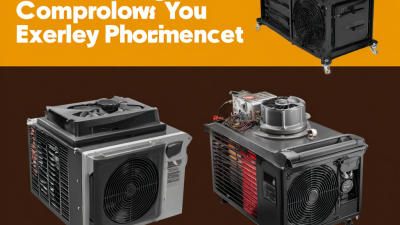
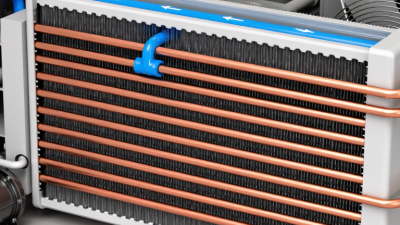
Compressed air passes through tubes or passages while a fan moves ambient air across external fins. |
- No cooling-water supply or treatment is required.
- Simple installation and generally easy maintenance.
- Suitable for remote or water-scarce locations.
|
- Cooling performance decreases when ambient temperature is high.
- Requires clean airflow and periodic fin cleaning.
- Fan power and noise must be considered.
|
- Airflow and compressed-air flow rate
- Maximum ambient temperature
- Allowable pressure drop, commonly specified by the system designer
- Target outlet temperature and moisture separation requirement
|
Outdoor installations, mobile compressors, dry climates, and sites without reliable cooling water |
★★★★★ |
| 2 |
Water-Cooled Aftercooler |
Cooling water |
Stationary industrial compressors with an available cooling-water circuit |
Compressed air and cooling water flow through separate channels, transferring heat through metal walls. |
- Stable performance in hot ambient conditions.
- Usually more compact than an equivalent air-cooled unit.
- Good temperature control when water flow is consistent.
|
- Needs water filtration, flow control, and drainage.
- Scaling, corrosion, or biological fouling can reduce performance.
- Operating cost includes water and treatment requirements.
|
- Cooling-water inlet temperature and flow
- Water quality and hardness
- Design pressure on both circuits
- Required approach temperature and pressure drop
|
Large fixed installations, humid or hot regions, and facilities with closed-loop cooling water |
★★★★★ |
| 3 |
Intercooler for Multi-Stage Compressors |
Air or water, depending on the design |
Two-stage and multi-stage reciprocating or centrifugal compression systems |
Heat is removed between compression stages to lower the temperature before the next stage. |
- Reduces the work required by the next compression stage.
- Improves volumetric efficiency and can reduce discharge temperature.
- Supports higher overall pressure ratios.
|
- Incorrect sizing can increase pressure loss between stages.
- Condensed moisture may require an interstage separator and drain.
- Requires accurate matching to each compression stage.
|
- Interstage pressure and temperature
- Mass flow at each stage
- Required cooling-duty calculation
- Allowable pressure drop and condensate load
|
High-pressure air or gas compression where efficiency and controlled interstage temperature are critical |
★★★★★ |
| 4 |
Shell-and-Tube Cooler |
Cooling water, glycol solution, or process liquid |
Industrial air, gas, lubricant, and process-gas compressor packages |
One fluid flows through tubes while the other flows through the shell side, with heat transferred across tube walls. |
- Durable construction for demanding industrial service.
- Suitable for relatively high pressure and temperature duties.
- Can be designed with removable bundles for maintenance.
|
- Usually larger and heavier than plate-type alternatives.
- May require more installation space.
- Cleaning access depends on the selected configuration.
|
- Heat duty and logarithmic mean temperature difference
- Tube material compatibility
- Design pressure, temperature, and fouling allowance
- Required service clearance for inspection
|
Heavy industry, process plants, high-pressure systems, and applications requiring robust service life |
★★★★☆ |
| 5 |
Brazed Plate Heat Exchanger Cooler |
Water, glycol, or another compatible liquid |
Compact compressor skids, oil cooling, air cooling, and closed-loop systems |
Thin corrugated plates create turbulent flow channels that transfer heat between two fluids. |
- High heat-transfer efficiency in a compact footprint.
- Low fluid volume and relatively low weight.
- Well suited to packaged equipment.
|
- Internal cleaning is difficult because the plates are permanently brazed.
- Requires clean fluids and suitable filtration.
- Not ideal where frequent disassembly is necessary.
|
- Fluid cleanliness and filtration level
- Design pressure and temperature
- Required flow rate and pressure drop
- Material compatibility with water chemistry and glycol
|
Space-limited compressor packages and clean closed-loop cooling systems |
★★★★☆ |
| 6 |
Gasketed Plate-and-Frame Cooler |
Water, treated water, glycol, or process liquid |
Large compressor stations, central utilities, and systems requiring regular inspection |
Multiple corrugated plates transfer heat between alternating fluid channels; gaskets seal the channels. |
- High thermal efficiency and a relatively small footprint.
- Can be opened for cleaning and inspection.
- Capacity can often be adjusted by adding or removing plates.
|
- Gaskets require periodic inspection and eventual replacement.
- Not suitable for every high-temperature or aggressive-fluid duty.
- Needs correct tightening and alignment during maintenance.
|
- Gasket material and fluid compatibility
- Plate material and corrosion allowance
- Cleaning frequency and maintenance access
- Design pressure, temperature, and flow arrangement
|
Facilities with planned maintenance programs and variable cooling capacity requirements |
★★★★☆ |
| 7 |
Finned-Tube Oil Cooler |
Ambient air or cooling water |
Lubricated rotary screw, vane, and reciprocating compressors |
Compressor lubricant flows through tubes while heat is released through fins to air or transferred to water. |
- Maintains lubricant viscosity within the intended operating range.
- Can be integrated into air-cooled compressor packages.
- Available in air-cooled and liquid-cooled configurations.
|
- Oil-side fouling can restrict flow and reduce cooling.
- Air-cooled versions are affected by ambient temperature and dust.
- Excessive pressure drop can affect lubricant circulation.
|
- Oil flow, viscosity, and maximum oil temperature
- Heat rejection requirement
- Oil-side pressure drop
- Ambient temperature or cooling-water conditions
|
Oil-injected compressors where lubricant temperature directly affects reliability and service intervals |
★★★★☆ |
| 8 |
Air-to-Air Heat Exchanger |
Ambient or facility air |
Oil-free compressors, enclosed compressor rooms, and systems requiring heat recovery or ventilation |
Hot compressed air or enclosure air transfers heat to a separate air stream through plates, tubes, or a heat wheel. |
- Does not require process water.
- Can recover useful heat for space heating or ventilation air.
- Separates the two air streams without mixing when properly designed.
|
- Performance depends on airflow and temperature differences.
- Usually less compact than liquid-cooled solutions for high heat duties.
- Filters and air passages require regular cleaning.
|
- Both air-stream flow rates and temperatures
- Required heat-recovery effectiveness
- Air-side pressure drop
- Dust level, filtration, and freeze protection
|
Energy-conscious facilities, compressor-room ventilation, and locations where water use must be minimized |
★★★☆☆ |
| 9 |
Evaporative Compressor Cooler |
Air cooled by the evaporation of water |
Large air-cooled compressor packages in dry or low-humidity climates |
Water evaporation lowers the temperature of air before or during heat exchange with the compressor cooler. |
- Can improve cooling performance in hot, dry weather.
- May reduce compressor discharge temperature compared with dry air cooling alone.
- Useful where cooling-water circulation is not practical.
|
- Consumes water and requires water-quality management.
- Effectiveness decreases as relative humidity rises.
- Needs controls for drift, scaling, corrosion, and freeze conditions.
|
- Design dry-bulb and wet-bulb temperatures
- Relative humidity and seasonal climate
- Water quality, consumption, and drainage
- Required control strategy and hygiene provisions
|
Hot, dry regions where improved air cooling justifies controlled water consumption |
★★★☆☆ |
| 10 |
Closed-Loop Liquid Cooler or Chiller Package |
Water, water-glycol mixture, or refrigerant-cooled liquid circuit |
Precision cooling of compressor oil, compressed gas, bearings, or multiple auxiliary circuits |
A pump circulates a controlled liquid loop; heat is rejected through an air-cooled or refrigerant-based chiller. |
- Provides stable cooling independent of short-term ambient fluctuations.
- Can serve several compressor components from one controlled loop.
- Useful for high-value equipment requiring precise temperature control.
|
- Higher purchase cost and greater system complexity.
- Requires pumps, controls, expansion management, and electrical power.
- Needs freeze protection and planned service for the refrigeration circuit when applicable.
|
- Total cooling load and required leaving-liquid temperature
- Flow rate, fluid concentration, and heat-capacity data
- Ambient design conditions and available electrical supply
- Redundancy, alarm, and remote-monitoring requirements
|
Precision industrial systems, hot climates, critical compressors, and multi-circuit cooling applications |
★★★★☆ |