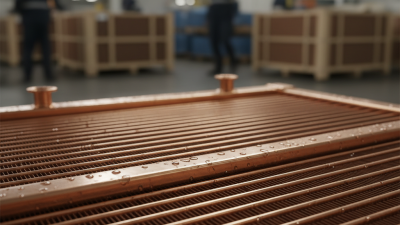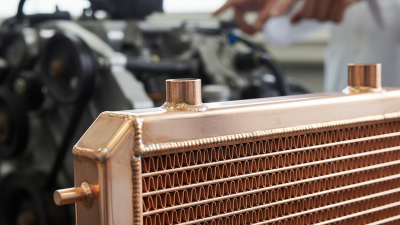
A Copper Radiator is a heat exchanger designed to move heat away from a fluid. In many vehicles, that fluid is engine coolant. The radiator receives hot coolant from the engine and passes it through narrow copper tubes. Thin metal fins surround those tubes. Air moves across the fins, carrying heat into the atmosphere.
The process is simple, but the engineering is precise. A water pump sends heated coolant into the radiator’s upper tank. The coolant travels through the tubes and gradually loses heat. Copper transfers heat efficiently because it conducts thermal energy very well. The fins increase the surface area exposed to moving air. A fan helps maintain airflow when the vehicle moves slowly or stands still.
That is the basic cycle.
In practical maintenance, technicians inspect tube joints, fins, soldered areas, and mounting points. A blocked fin may restrict airflow. Internal scale can also reduce coolant movement. These small problems can create noticeable temperature increases. However, copper construction does not guarantee perfect cooling. Radiator size, airflow, coolant condition, pressure, and engine load all matter. That distinction is easy to miss.
Reliable radiator performance depends on regular inspection and correct coolant servicing. Industry guidance generally supports using the manufacturer’s recommended coolant mixture and service intervals. A copper radiator may be repairable in some situations, but repairs require proper tools and experienced workmanship. A careful explanation should also acknowledge its limits. Copper can be heavier than aluminum, and exposed fins can bend easily. Understanding these details makes the radiator’s operation clearer and supports better maintenance decisions.
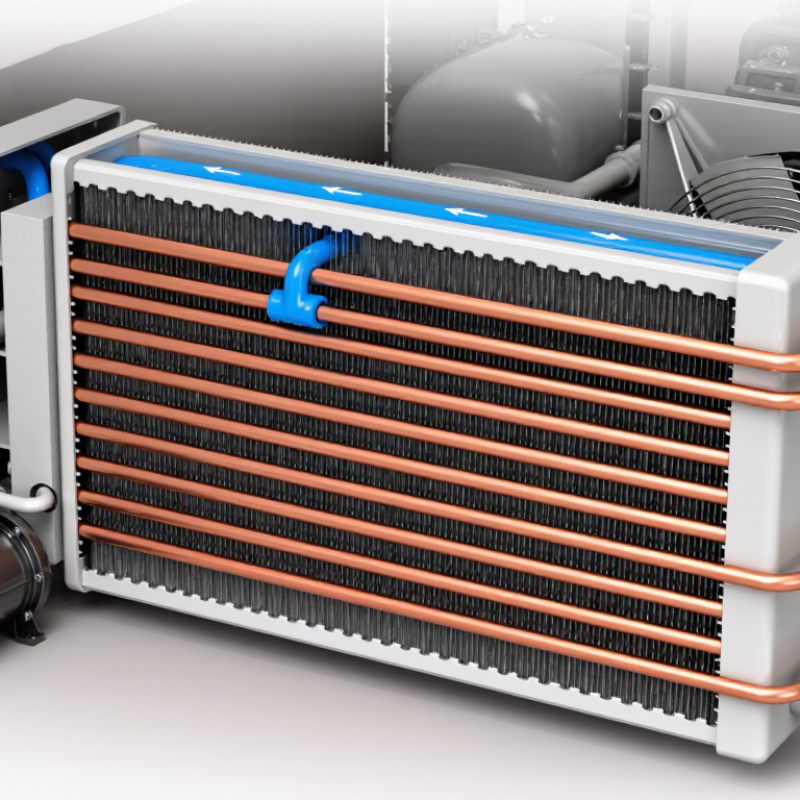
A copper radiator is a heat exchanger built mainly from copper tubes, fins, headers, and side tanks. Coolant enters through an inlet tank and flows across the tube network. Heat moves from the coolant into the tube walls. Thin fins then spread that heat into passing air. The cooled liquid returns through the outlet tank and circulates again.
Its material choice has a clear engineering reason. The Copper Development Association reports copper thermal conductivity at about 401 W/m·K near room temperature. Aluminium measures roughly 237 W/m·K under similar conditions. This difference helps copper transfer heat quickly. However, conductivity alone can mislead. Fin spacing, airflow, tube diameter, coolant velocity, and radiator size also control performance. A dense core may hold more fins, yet restrict airflow. Real workshop results can differ from laboratory figures.
Tips: Inspect soldered joints, mounting points, and the radiator cap regularly. Use the specified coolant mixture. Plain water may encourage corrosion and scale. Keep fins clean, but avoid bending them with high-pressure air. The U.S. Geological Survey’s Mineral Commodity Summaries identifies copper as a major industrial metal with extensive recycling value. That supports copper’s long service potential. Still, recycled material quality and manufacturing tolerances deserve attention. A copper radiator is efficient, but it is not maintenance-free.
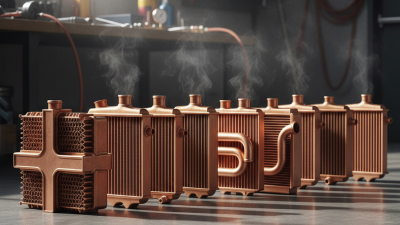
What Is a Copper Radiator and How Does It Work?
A copper radiator removes heat from the engine coolant through a controlled transfer process. Combustion raises engine temperatures quickly. The water pump then moves heated coolant through narrow radiator tubes. Copper walls conduct heat toward the outer fins. Moving air carries that heat away, either through vehicle motion or fan operation.
The Copper Development Association’s Copper Tube Handbook lists copper’s thermal conductivity at about 386 W/m·K at room temperature. This high value helps copper spread heat rapidly across the core. ASHRAE Handbook—Fundamentals explains that heat-transfer performance also depends on surface area, temperature difference, airflow, and fluid velocity. Copper alone cannot guarantee better cooling. A blocked fin, weak pump, or trapped air can reduce performance badly. That detail is easy to miss.
Tips: Inspect fins for mud and bent sections. Check coolant concentration with a tester, not guesswork. Keep the radiator cap sealed and replace damaged hoses promptly. A temperature gauge that rises during slow traffic deserves attention. Cooling systems are practical, but not forgiving.
Thermal conductivity of common cooling-system materials at approximately 20–25°C
In a cooling system, coolant absorbs heat from the engine and flows through the radiator tubes. Copper transfers heat efficiently from the tubes to the attached fins, while airflow carries that heat away. The cooled liquid then returns to the engine to repeat the cycle. Thermal conductivity values shown are representative figures measured in watts per metre-kelvin (W/m·K).
A copper radiator uses copper tubes and fins to move heat from a hot fluid into surrounding air. Copper conducts heat quickly, so thin walls can transfer energy without adding excessive weight. In many designs, brass headers and tanks connect the tube rows. Brass is less conductive than copper, but it offers useful strength and stable joints.
The core design controls performance. Flat tubes create broad contact with the fins, while round tubes can tolerate pressure well. Fins are usually folded into dense, repeating layers. More fins may increase surface area, but overly tight spacing can restrict airflow and collect dust. That trade-off is easy to overlook. A well-designed radiator balances fin density, tube spacing, airflow, and coolant movement.
Manufacturers commonly join copper parts through soldering or brazing. Brazed joints can withstand higher temperatures, while properly soldered joints remain practical for many repairable systems. The header design also matters. Parallel-flow layouts reduce pressure loss, while serpentine paths can improve contact time inside compact cores.
Copper can corrode when coolant chemistry is neglected, especially near mixed metals. Regular inspection should check green deposits, damp seams, blocked fins, and uneven temperatures. Small leaks matter. No radiator design is perfect. Performance depends on installation, airflow, maintenance, and the actual heat load.
A copper radiator transfers heat through conductive metal tubes and thin fins. Hot coolant enters the tubes, while surrounding air removes heat from the fins. Copper conducts heat at roughly 390–400 W/m·K near room temperature, according to engineering data compiled by the Copper Development Association. This high conductivity allows compact cores to respond quickly. In vehicle cooling systems, that can mean faster temperature control after startup. In buildings, copper tubes can also distribute heat efficiently through water-based heating systems.
The benefits become clearer in demanding applications. Copper is easy to braze, repair, and reshape on site. That matters when a radiator suffers a small leak in an older workshop or remote facility. Copper also resists many forms of corrosion when water chemistry is controlled. The International Copper Study Group reports that recycled material supplies a substantial share of global copper use, often around one-third in recent market assessments. This supports copper’s circularity, though recycling does not erase manufacturing impacts.
There are limitations. Copper costs more than many steel or aluminum alternatives, and its weight can complicate large installations. Soft tubes may deform under careless handling. Poorly treated water can cause pinhole corrosion. Real-world performance depends on airflow, fin spacing, coolant quality, and maintenance. A 2023 U.S. Geological Survey report also highlights copper’s exposure to supply and mining constraints. I have seen compact copper radiators cool effectively, yet undersized airflow still caused overheating. Material choice alone is not enough.
Copper Radiator Maintenance: Common Problems and Service Considerations
A copper radiator transfers engine heat through thin tubes and cooling fins. Its performance depends on clean surfaces, steady coolant flow, and proper pressure. Check the coolant level only when the engine is cold. Hot coolant can cause severe burns. Inspect hose connections, the radiator cap, and the tank for dried stains. Green, white, or rusty residue may indicate a small leak.
Dust and insects can block airflow between the fins. Use low-pressure water from the rear side, not a hard jet from the front. Straighten bent fins carefully with a fin comb. Flush the cooling system at the interval recommended by the vehicle or equipment maker. Incorrect coolant mixtures may encourage corrosion inside copper tubes. This is often overlooked. I once treated a minor leak as harmless; the repair later became more expensive.
Common symptoms include overheating, uneven temperature, a sweet coolant smell, and repeated fluid loss. A blocked tube may leave some sections cool while others feel excessively hot. Do not rely on touch alone. A technician should test pressure, inspect circulation, and check the thermostat and water pump. Soldered repairs can work on limited damage, but badly corroded metal usually needs radiator replacement. Service records, coolant type, and previous repairs should be shared before any work begins. Even a clean-looking radiator can hide internal scale.
| Data Dimension | Typical Information | Why It Matters | Maintenance or Service Consideration |
|---|---|---|---|
| Basic definition | A heat exchanger that uses copper tubes, copper fins, or both to transfer heat between a fluid and air. | Copper conducts heat efficiently and can transfer heat rapidly through thin tube walls and fins. | Confirm the radiator type and construction before selecting cleaning methods, repair materials, or replacement parts. |
| Main operating principle | Hot coolant or another heated fluid flows through internal tubes while air passes over external fins. | Heat moves from the fluid into the copper, then from the copper fins into the surrounding air. | Keep both the fluid passages and air passages open and free of deposits or obstructions. |
| Common applications | Vehicle cooling systems, industrial equipment, electronics cooling, heating systems, and some air-conditioning equipment. | The design, coolant, pressure, and service procedure vary substantially by application. | Use the equipment maker’s specifications for coolant type, pressure limits, access procedures, and service intervals. |
| Key material property | Copper has a thermal conductivity of approximately 390–400 W/m·K at room temperature, depending on purity and condition. | High thermal conductivity helps move heat efficiently from the fluid to the fins. | Good heat transfer does not compensate for blocked fins, low coolant flow, air pockets, or an undersized radiator. |
| Heat-transfer surfaces | Internal tubes carry the fluid; external fins increase the surface area exposed to air. | A larger clean fin area generally improves air-side heat dissipation. | Straighten severely bent fins carefully and remove dust, insects, and debris without crushing the fin pack. |
| Coolant or working fluid | Automotive systems commonly use a water-and-antifreeze mixture; other systems may use water, oil, refrigerant, or a specified process fluid. | Fluid chemistry affects corrosion protection, freezing protection, boiling resistance, and seal life. | Never mix incompatible coolants. Check concentration, condition, and the required replacement interval. |
| Normal heat-transfer limits | Performance depends on fluid temperature, flow rate, air temperature, airflow, fin condition, and radiator size. | A radiator cannot remove more heat than the system’s design and operating conditions allow. | Evaluate the complete cooling system instead of replacing the radiator based on temperature symptoms alone. |
| External contamination | Dust, mud, oil, leaves, insects, and road debris can accumulate on the fins. | Contamination restricts airflow and creates an insulating layer over the heat-transfer surface. | Inspect regularly and clean with low-pressure air or water in the direction that minimizes fin damage. |
| Internal blockage | Rust, scale, degraded coolant, solder debris, or chemical deposits may restrict internal passages. | Reduced flow lowers heat transfer and may create uneven temperatures across the radiator. | Use an approved flushing procedure and assess whether professional cleaning or replacement is safer than aggressive flushing. |
| Typical leak locations | Tube-to-header joints, soldered seams, hose connections, drain points, damaged tubes, and corroded sections. | Leaks reduce fluid level and pressure, which can lead to overheating or loss of system operation. | Locate the source with a suitable pressure test when the system is cool; do not rely only on visible residue. |
| Corrosion risk | Copper can corrode when exposed to unsuitable coolant chemistry, oxygen, moisture, salts, or galvanic contact with dissimilar metals. | Corrosion can thin the metal, create leaks, and contaminate the cooling circuit. | Maintain correct fluid chemistry, avoid unapproved additives, and inspect areas where different metals are joined. |
| Soldered-joint failure | Repeated thermal expansion, vibration, corrosion, or mechanical stress may weaken a soldered joint. | A small joint failure can develop into a significant leak under operating pressure. | Repair requires proper surface preparation, compatible solder or brazing material, controlled heat, and a post-repair pressure test. |
| Overheating symptoms | High temperature readings, coolant loss, reduced heating or cooling performance, odor, or visible steam may indicate a problem. | These symptoms can also result from a faulty thermostat, pump, fan, cap, sensor, hose, or trapped air. | Stop operation if overheating is severe and diagnose the entire system before condemning the radiator. |
| Pressure testing | A controlled pressure test can reveal leaks that are not visible during normal operation. | Testing helps distinguish radiator leaks from hose, fitting, pump, or connection leaks. | Use the equipment’s specified test pressure and never exceed the lowest-rated component. |
| Airflow inspection | Check fans, shrouds, louvers, filters, ducting, and clearance around the radiator. | Insufficient airflow can produce overheating even when the radiator is clean and leak-free. | Verify fan direction, fan control, shroud condition, and unobstructed air entry and exit paths. |
| Routine inspection frequency | Visual checks are commonly performed during scheduled equipment maintenance and whenever temperature or fluid-level changes occur. | Early detection can prevent fluid loss, secondary damage, and unplanned downtime. | Follow the application-specific service schedule; severe dust, vibration, or heat may require more frequent inspections. |
| Cleaning precautions | Thin fins can bend easily, and chemical cleaners may attack copper, solder, coatings, seals, or nearby materials. | Improper cleaning can reduce airflow or create new corrosion and leakage problems. | Use compatible cleaners, moderate pressure, eye protection, and adequate ventilation; follow disposal requirements for contaminated fluid. |
| Repair versus replacement | Repair may suit localized damage, while extensive corrosion, multiple leaks, blocked passages, or damaged fins may justify replacement. | The most economical option depends on condition, accessibility, labor, pressure rating, and expected service life. | Have repaired units cleaned and pressure-tested before installation or return to service. |
| Safety considerations | Hot coolant may be pressurized, and antifreeze or other working fluids may be hazardous if inhaled, swallowed, or released improperly. | Opening a hot system can cause serious burns and sudden fluid release. | Allow the system to cool, wear suitable protective equipment, capture fluids, and dispose of them according to local requirements. |