How to Choose the Best Compact Heat Radiator for Your Needs?
When selecting a compact heat radiator, it's essential to consider various factors that affect efficiency and performance. James Atkinson, a leading expert in heating solutions, once stated, "The right compact heat radiator can make a world of difference in a small space." This insight highlights the importance of making informed choices based on your unique needs.
Compact heat radiators offer versatile heating solutions for limited spaces. Many factors influence this selection, including size, energy efficiency, and design. The market is flooded with options, which can feel overwhelming at times. Reflecting on your specific heating requirements can aid in focusing your search.
Additionally, product reliability and brand reputation play pivotal roles in the decision-making process. Experts suggest checking user reviews and performance ratings. It’s vital to choose a well-reviewed compact heat radiator that fits your lifestyle. Don't underestimate the importance of expert opinions and real user experiences; they often reveal critical details that marketing may overlook.
Understanding the Different Types of Compact Heat Radiators
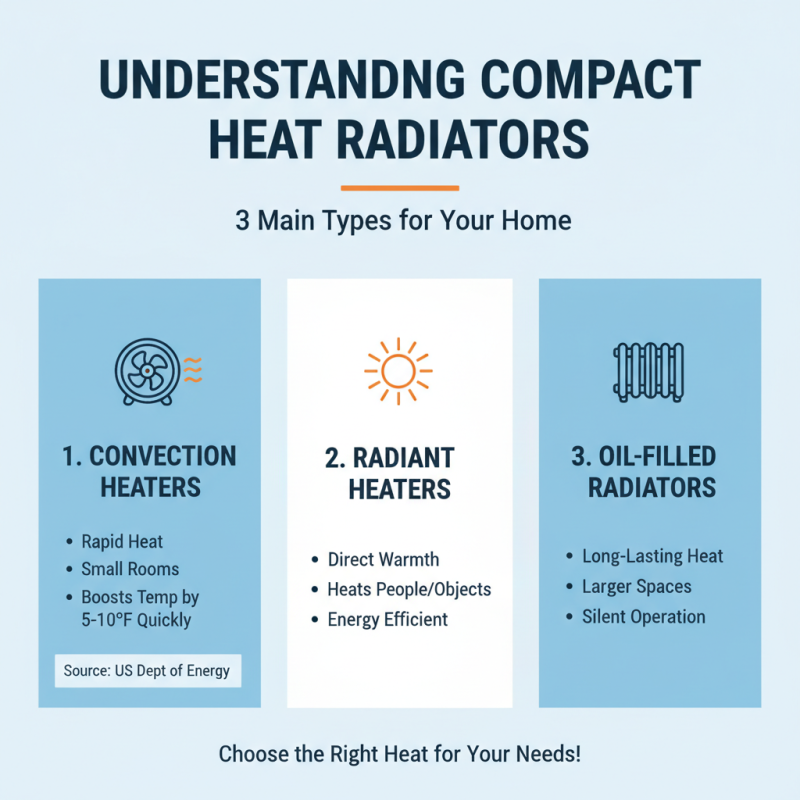
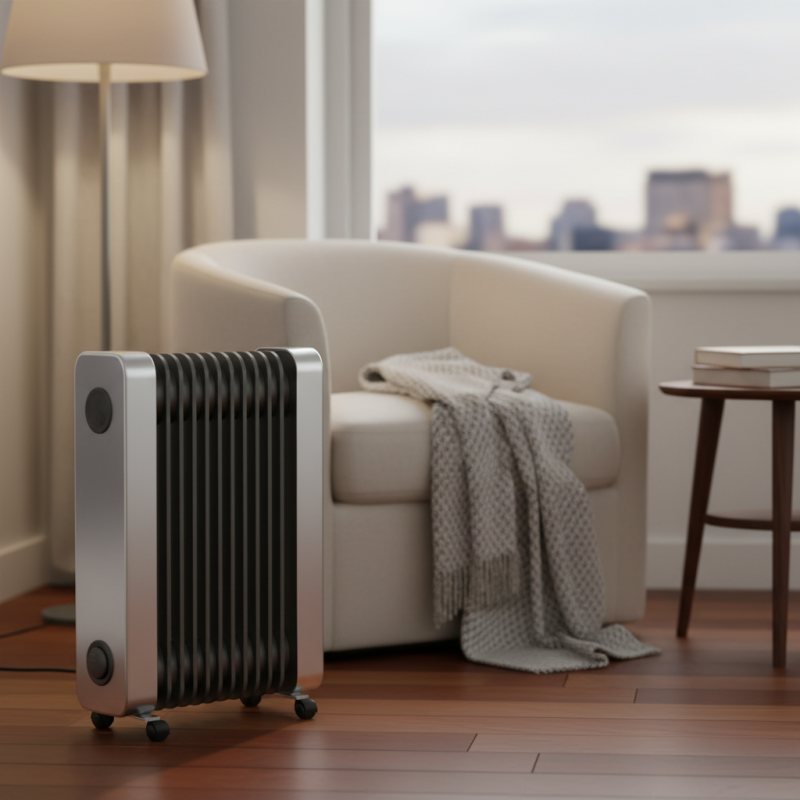
When selecting a compact heat radiator, understanding the different types is crucial. Compact radiators usually fall into three categories: convection heaters, radiant heaters, and oil-filled radiators. Each type offers unique benefits based on your heating needs. For instance, convection heaters provide rapid heat distribution and are often ideal for small spaces. According to the U.S. Department of Energy, they can increase room temperature by about 5-10 degrees Fahrenheit quickly.
Radiant heaters emit infrared heat, which warms objects and people directly. This type can be more efficient in spaces where people gather. Data suggests they can be up to 20% more energy-efficient than other types. However, their limited area of effect requires careful positioning. Oil-filled radiators maintain heat longer, offering consistent warmth, especially in drafty areas. Still, they can take longer to heat up initially.
Each type of radiator has strengths and weaknesses. Some may find convection heaters less effective in larger rooms. Radiant options may not warm the air effectively if too far from occupants. An informed choice involves assessing both your space and personal preferences. Customizing your heat solution matters. Understanding these distinctions leads to better satisfaction and efficiency in heating your environment.
Evaluating the Heating Capacity and Efficiency of Radiators
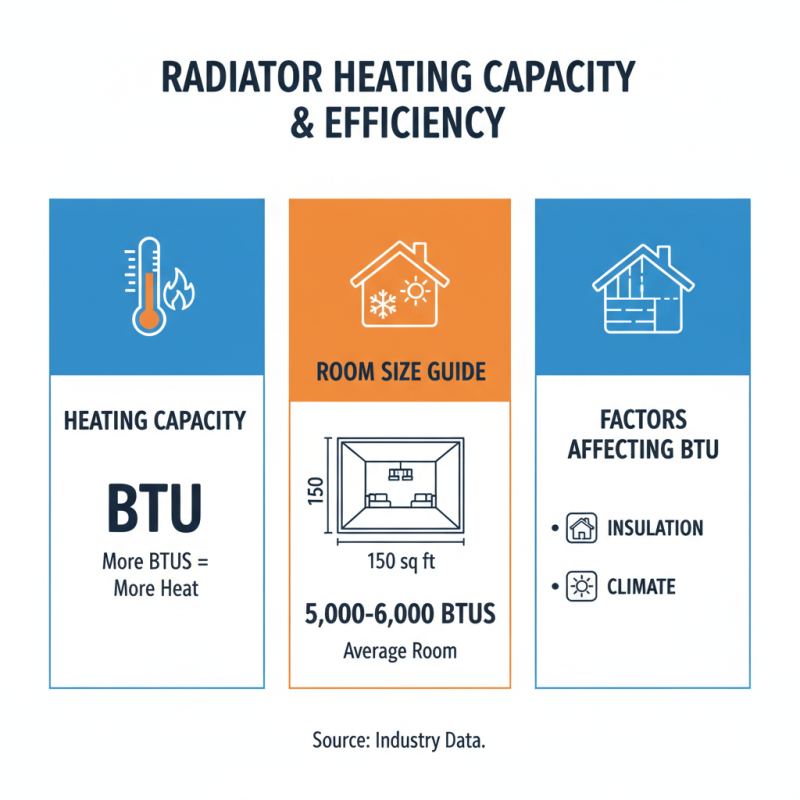
When selecting a compact heat radiator, understanding its heating capacity and efficiency is crucial. The heating capacity typically measures in BTUs (British Thermal Units). A higher BTU rating means more heat is produced. According to industry data, an average room of 150 square feet requires around 5,000-6,000 BTUs for effective heating. This ratio varies, depending on insulation and climate.
Efficiency is equally important, often represented by energy efficiency ratings (EER). An EER of 10 or higher indicates better efficiency. Most modern radiators achieve at least this level. This can lead to significant savings on heating bills. Additionally, look for units with features like thermostats or timers. These features can optimize energy use and enhance comfort.
Tips: Consider your space layout when choosing a radiator. Compact models fit well in tight areas but ensure proper heat distribution. Always read energy labels and check for reviews. If a model is consistently noted for low efficiency, think twice. Observing these details can lead to a more informed purchase, ultimately saving energy and costs.
Assessing Your Space and Installation Requirements
When assessing your space for a compact heat radiator, the size and layout are crucial. According to the U.S. Department of Energy, the average home requires about 30 BTUs per square foot for efficient heating. This means you need to calculate the total BTU requirement based on your room dimensions. For example, a 200-square-foot room would need around 6000 BTUs. Many people overlook this step, leading to underheated or over-heat situations.
Placement is another important factor. Radiators should be installed near external walls or windows to combat drafts. They need at least a foot of clearance on all sides for optimal airflow. An improperly placed radiator can result in decreased efficiency and higher energy costs. A study by Energy Star shows that poorly positioned heating devices can lead to energy waste up to 20%.
Consider the type of installation as well. Wall-mounted options save space but require careful measurement. Free-standing models offer flexibility but may take up more room. Reflecting on your specific space will ensure you choose a model that meets your heating needs effectively.
Comparing Energy Sources: Electric vs. Hydronic Radiators
When choosing a compact heat radiator, the energy source is critical. Electric radiators are often favored for their ease of use and installation. They can heat rooms quickly and don’t require complex plumbing. However, they may lead to higher energy costs, especially in colder climates. The immediacy of warmth is appealing, but reliance on electricity can be a concern.
On the other hand, hydronic radiators use water heated by a boiler or water heater. They distribute heat more evenly and can be more energy-efficient. Though installation can be more time-consuming, they often provide longer-lasting warmth. Still, the initial setup may require structural changes, which can be a hassle.
Both options have merits and downsides. Consider your space, energy costs, and installation preferences. Reflect on the efficiency and longevity of each system. Your needs will guide the right choice, but it's essential to weigh these factors carefully. Ultimately, it's about finding a balance that suits your lifestyle best.
Energy Efficiency Comparison of Electric vs. Hydronic Radiators
Considering Safety Features and User-Friendliness in Radiator Design
When selecting a compact heat radiator,
safety features and user-friendliness are crucial.
A radiator should have an automatic shut-off feature.
This helps prevent fires if it tips over or overheats.
Look for units with protection against overheating.
A built-in thermostat is beneficial for maintaining desired room temperature.
User-friendliness is equally important. Controls should be intuitive.
Some radiators offer remote control, enhancing convenience.
A lightweight design allows for easy relocation between rooms.
However, some units are not as portable due to their weight.
This could limit their usefulness in larger spaces where mobility is needed.
Additionally, consider the noise levels of the radiator.
Some models can be quite loud, disrupting your comfort.
If you are sensitive to noise, look for options labeled as
"whisper-quiet."
Also, check for easy-to-clean designs, as maintenance can become cumbersome with complex models.
These factors contribute to overall satisfaction with your choice.