How to Choose the Right Heat Exchanger Technology for Your Needs?
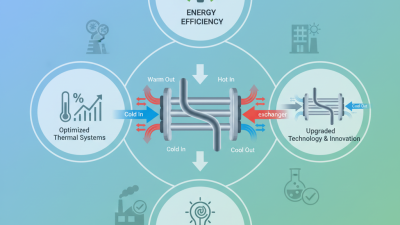
When it comes to selecting the right Heat Exchanger Technology, the choices can be overwhelming. Expert Dr. Sarah Thompson, a renowned thermal systems engineer, emphasizes, "Understanding your specific needs is crucial in optimizing heat transfer efficiency." This statement resonates deeply with industry professionals tasked with enhancing energy management.
Heat exchangers are critical in various applications, from HVAC systems to process industries. Each technology has its unique strengths and weaknesses. For example, shell-and-tube heat exchangers excel in high-pressure situations, while plate heat exchangers are ideal for compact spaces. However, selecting the right type requires a careful analysis of several factors.
Balancing efficiency, cost, and maintenance needs can be tricky. Many engineers often overlook long-term operational costs. A wrong decision can lead to performance issues and increased downtime. Ultimately, the goal is to implement a reliable solution that meets specific operational demands. Taking the time to explore each option thoroughly can lead to better outcomes in heat transfer performance.
Understanding the Basics of Heat Exchanger Technologies
Choosing the right heat exchanger technology can seem complex. Understanding the various types is crucial. Each technology has its strengths and challenges. For example, shell-and-tube heat exchangers are widely used. They are robust and versatile but can be tricky to clean. They also take up more space.
Plate heat exchangers are another option. They are more compact and efficient. However, they may not handle high-pressure applications well. So, a careful assessment is necessary. Users need to consider the specific conditions of their operation. The fluid characteristics, temperature range, and pressure must be analyzed.
In some cases, a hybrid solution can be beneficial. Combining technologies can optimize performance. Yet, this requires careful design and planning. It's essential to consult experts for guidance. Their experience can help transform initial challenges into effective solutions.
Heat Exchanger Technologies Comparison
Identifying Your Specific Heat Transfer Requirements
When selecting a heat exchanger technology, start by identifying your specific heat transfer requirements. Consider the temperature range, pressure levels, and materials involved. Different applications demand unique solutions. For example, in a chemical processing plant, high temperatures and corrosive fluids necessitate robust designs.
Evaluating your fluid properties is crucial. Viscosity, flow rate, and thermal conductivity directly affect heat transfer efficiency. High-viscosity fluids may require larger surface areas or alternative designs, like plate heat exchangers. Pay attention to maintenance requirements, too. Some systems may demand frequent cleaning, impacting overall efficiency.
Reflect on your operational goals. Is energy efficiency a top priority? Are there space constraints in your setup? These factors will guide your decision. For instance, compact designs are ideal for limited spaces, but may compromise on cooling capacity. Each choice comes with trade-offs. Prioritize your needs carefully to select a suitable heat exchanger technology.
Comparing Common Types of Heat Exchangers: Pros and Cons
When selecting a heat exchanger, understanding the various technologies is crucial. Each type has its own advantages and disadvantages. For instance, shell and tube heat exchangers are widely used in industrial applications. They have a robust design and can handle high pressures. However, maintenance can be challenging. Their complexity often leads to higher operational costs.
Plate heat exchangers offer a compact design and high efficiency. They are ideal for applications where space is limited. These exchangers are easy to maintain and can be disassembled for cleaning. On the downside, they may not be suitable for very high-temperature applications. Their design might limit operational flexibility in certain settings.
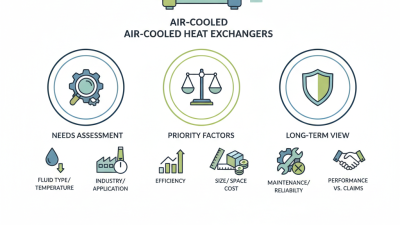
Air-cooled heat exchangers use ambient air to cool fluids, which can save energy. They are often simpler to install and operate. Still, they are affected by environmental conditions. Their performance can decline on hot or humid days. Evaluating these aspects helps in making an informed decision tailored to specific needs.
How to Choose the Right Heat Exchanger Technology for Your Needs? - Comparing Common Types of Heat Exchangers: Pros and Cons
| Type of Heat Exchanger |
Pros |
Cons |
Best Applications |
| Shell and Tube |
High pressure resistance, large heat transfer area |
Bulky, difficult to clean |
Oil and gas, chemical processes |
| Plate Heat Exchanger |
Compact, easy to clean, efficient |
Limited pressure capacity, susceptible to corrosion |
Food processing, HVAC |
| Air Cooled Heat Exchanger |
No water source needed, low maintenance |
Less efficient in high humidity, larger footprint |
Power plants, industrial cooling |
| Double-Pipe Heat Exchanger |
Simple design, easy to operate |
Limited heat transfer area, less efficient |
Small industrial applications, laboratories |
Evaluating Material and Design Considerations for Durability
When choosing a heat exchanger, material and design are crucial for durability. The right material impacts efficiency and lifespan. Options like stainless steel and titanium offer corrosion resistance. However, they may not be necessary for all applications. Assessing your environment helps in making the best choice.
Design considerations also matter. Shell-and-tube designs are robust and good for high pressures. Plate heat exchangers are compact, enhancing heat transfer efficiency. Each design has strengths and weaknesses. Manufacturers sometimes overlook the importance of maintenance access. A design that’s hard to maintain can lead to costly repairs later.
Long-term reliability depends on both material and design. Regular evaluation and smart choices can mitigate risks. It’s essential to question every aspect—are you choosing the best for your specific needs? Balancing quality with cost is challenging but necessary. Keep in mind that ongoing assessments are part of effective heat exchanger management.
Assessing Cost and Efficiency for Long-Term Performance
When selecting a heat exchanger technology, efficiency and cost are key factors. A heat exchanger's design directly affects energy consumption. Higher efficiency generally leads to lower operational costs. However, initial investment can be substantial. Users must balance upfront costs with potential savings.
Operating conditions impact performance. Different applications may require unique designs, such as shell-and-tube or plate heat exchangers. Each design has its strengths and weaknesses regarding heat transfer efficiency and pressure drops. It's vital to analyze these aspects to ensure long-term effectiveness.
Long-term performance hinges on regular maintenance and operational practices. Neglect can lead to reduced efficiency and increased expenses. Some users may overlook this, thinking initial selection is enough. Regular audits can help identify areas for improvement, ensuring that the chosen technology continues to meet evolving needs.