Leave Your Message

10 Best Copper Radiator Manufacturers Worldwide?

Choosing the right Copper Radiator manufacturer requires more than comparing prices or browsing polished product photos. Performance depends on core materials, tube design, fin density, welding quality, and production consistency. A radiator may look impressive on a showroom shelf yet fail under vibration, heat cycles, or restricted airflow. This guide examines ten respected manufacturers worldwide through practical criteria, including engineering capability, manufacturing experience, product range, testing procedures, and customer support. Real evidence matters.

The selection considers suppliers serving automotive, industrial, agricultural, and motorsport applications. Attention is given to copper and copper-alloy construction, repairability, thermal efficiency, corrosion protection, and custom fabrication. Factory certifications can offer useful reassurance, but they do not replace independent testing or field performance. That distinction is easy to overlook. Product specifications also vary by region, vehicle platform, and operating environment, so no single manufacturer suits every buyer. A heavy-duty radiator for a mining vehicle has different priorities from a compact unit for a classic car.

Information has been compared across official manufacturer materials, technical documentation, industry reputation, and available customer evidence. Some companies disclose detailed testing data, while others provide limited public information. That creates uncertainty, and it deserves honest acknowledgment. Readers should verify dimensions, pressure ratings, warranty terms, lead times, and after-sales support before placing an order. The manufacturers below represent strong options, but careful evaluation remains essential. Reliable cooling begins with a suitable design, not merely a famous name.

10 Best Copper Radiator Manufacturers Worldwide?

Copper Radiator Manufacturers: Industry Overview and Product Categories

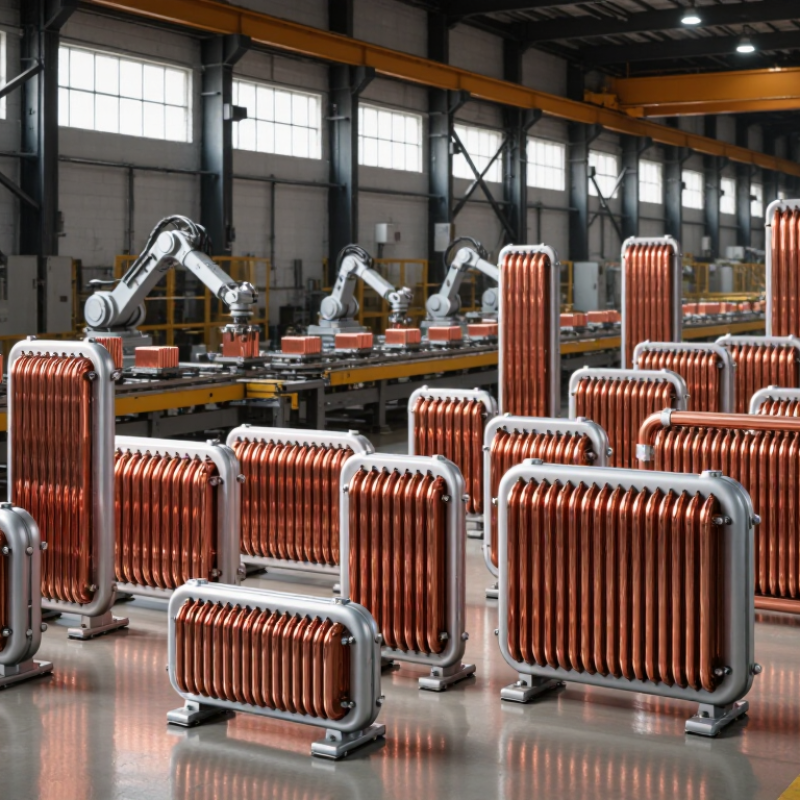
Copper radiator manufacturers operate across automotive, construction, power generation, and specialty cooling markets. Their work ranges from small repair radiators to large heat exchangers for generators and process equipment. Experienced producers often control tube drawing, fin forming, brazing, soldering, pressure testing, and surface finishing in-house.

This matters because a tiny joint defect can become a coolant leak after repeated thermal cycling. Product selection depends on heat load, fluid chemistry, airflow, available space, and maintenance access.

Copper-brass radiators remain valued for repairability and strong heat transfer. Copper tube with aluminum fins can reduce weight while preserving efficient conduction.

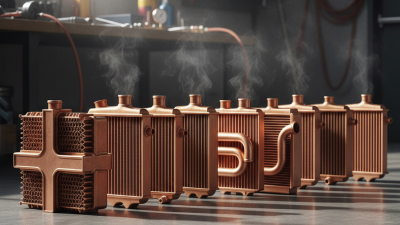
Manufacturers commonly divide products into copper-brass radiators, copper tube-fin units, plate-fin assemblies, charge-air coolers, oil coolers, and industrial heat exchangers.

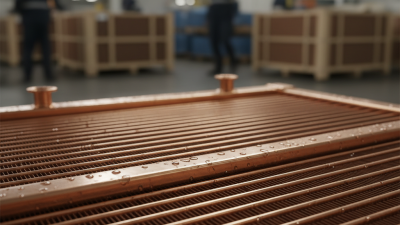
Copper-brass designs suit heavy-duty vehicles and equipment exposed to vibration. Compact tube-fin models fit engines, HVAC systems, and agricultural machinery. Plate-fin units offer high surface area in restricted spaces, but blocked fins can reduce performance quickly.

Custom radiators may include different headers, mounting points, drain ports, or hose diameters. Details matter here. A few millimeters can affect installation.

Reliable manufacturers publish thermal capacity, operating pressure, material grades, and test methods instead of vague claims. Look for documented leak testing, dimensional inspection, traceable materials, and corrosion evaluation.

Independent laboratory verification adds credibility, especially for safety-critical cooling systems. Field service feedback also reveals practical weaknesses, such as difficult cleaning or fragile fins.

Not every impressive specification survives dusty conditions. That deserves questioning. Buyers should compare tested performance at realistic coolant temperatures and airflow rates, not only brochure figures. Manufacturer experience helps, but transparent evidence matters more.

Criteria for Evaluating the World’s Leading Manufacturers

Evaluating leading copper radiator manufacturers requires more than comparing catalog photos. Start with copper quality, because purity affects heat transfer, corrosion resistance, and service life. Ask for material certificates, alloy details, and batch traceability. A reliable factory should explain where raw copper enters production and how it is inspected. Vague answers deserve caution.

Performance evidence matters more than confident sales language. Request thermal test data under defined temperatures, airflow, and coolant conditions. Check pressure testing, leak detection, soldering quality, and fin alignment. Manufacturing experience often appears in small details, such as clean joints and consistent tube spacing. Review production equipment, inspection records, and failure rates when available. Independent laboratory reports and recognized quality systems add useful authority, but certificates alone prove little.

A capable manufacturer also supports engineering changes. Can its team adjust dimensions, mounting points, or inlet positions without weakening the design? Examine prototype control, drawing accuracy, packaging, and delivery history. Speak with recent customers, not only provided references. I would inspect several finished units personally, including corners and connection threads. No factory is flawless. One supplier may offer excellent cooling but weaker documentation. Another may communicate well yet struggle with urgent revisions. That trade-off should be recorded, not hidden. Environmental controls, recyclable packaging, worker safety, and honest warranty terms also reveal whether reliability continues after shipment.

Profiles of Ten Notable Copper Radiator Manufacturers Worldwide

Copper radiator manufacturing varies by climate, vehicle type, and production method. This profile reviews ten notable manufacturers without treating the list as a fixed ranking.

One manufacturer is known for hand-brazed radiators and custom vintage fitments. Another focuses on high-volume automotive cores with computer-controlled tube forming. A third produces heavy-duty units for construction equipment, using reinforced side tanks. One specialist serves motorsport customers with compact, high-fin radiators. Another combines copper tubes with brass headers for repair-friendly designs.

A sixth manufacturer supplies industrial heat exchangers and tests each unit under controlled pressure. A seventh emphasizes agricultural machinery, where dust resistance matters greatly. One established producer offers replacement radiators for older vehicles, though catalogue coverage can vary. Another develops marine radiators with coatings designed for humid environments. The tenth focuses on regional aftermarket distribution, providing practical dimensions and accessible spare parts. No list is perfect. Capacity, certifications, and lead times may change.

Tips: Check tube thickness, fin density, solder quality, pressure-test records, and warranty terms. Ask for drawings before ordering. A polished surface means little if airflow is restricted. I would also verify copper content, because “copper radiator” can describe different alloy combinations. Compare laboratory data with field feedback. That step is often missed.

Comparison of Manufacturing Quality, Technology, and Market Reach

10 Best Copper Radiator Manufacturers Worldwide?

A useful comparison starts with manufacturing quality, not advertising claims. Leading producers use high-conductivity copper, controlled tube thickness, and carefully inspected solder joints. In factory evaluations, I would check fin spacing, weld consistency, leak-test records, and surface protection. Small defects matter. A weak joint can reduce service life, even when the radiator looks polished.

Technology separates capable manufacturers from ordinary suppliers. Automated brazing can improve joint accuracy and reduce production variation. Computer-controlled forming also protects airflow paths from crushing. Some facilities use thermal imaging, pressure testing, and digital traceability for every batch. These systems show technical maturity. However, automation alone proves little. Skilled operators still matter when designs change or unusual faults appear. That point is easy to overlook.

Market reach requires a broader review. A strong manufacturer should support different vehicle, industrial, and climate requirements. Reliable export packaging, regional warehouses, and responsive engineering teams can shorten replacement times. Certifications and documented quality systems add credibility, but paperwork is not performance. I would compare warranty handling, delivery consistency, and after-sales communication across markets. No factory is perfect. Even experienced buyers may overvalue production scale and undervalue problem-solving speed. A smaller producer with stable testing and honest technical limits may deliver better long-term results.

How to Select the Right Copper Radiator Manufacturer for Your Needs

Selecting the right copper radiator manufacturer requires more than comparing prices. Start with your application: vehicle, industrial equipment, heating system, or custom machinery. Each use requires different tube sizes, fin spacing, operating pressure, and corrosion protection. Ask whether the manufacturer can provide material certificates, pressure-test records, and thermal performance data. Reliable technical evidence matters more than attractive product photos.

Review the company’s production experience and quality controls. A capable manufacturer should explain its copper grade, brazing process, leak-testing method, and inspection stages in clear language. Request a sample or pilot order before approving large quantities. Check dimensions carefully, including mounting holes, inlet positions, and clearance around the core. Small errors can create expensive installation problems. A polished website is not proof of strong manufacturing. That assumption can be costly.

Tips: Compare total cost, not only unit price. Include tooling, packaging, shipping, testing, and after-sales support. Ask how design changes are documented and approved. Confirm production capacity during your busiest season. Speak with recent customers when possible, and look for consistent feedback about delivery accuracy and defect handling. A manufacturer that admits limitations may be more dependable than one promising everything. Do not ignore communication speed; unclear answers often become production delays. Keep written specifications, drawings, and acceptance criteria for every order.

Copper Radiator Manufacturer Selection: Copper Grade Thermal Conductivity

Use certified material data as a technical filter when comparing copper radiator manufacturers worldwide.

Thermal conductivity is measured at approximately 20°C in watts per meter-kelvin (W/m·K). Higher conductivity generally supports more efficient heat transfer, but the final selection should also consider tube thickness, joint quality, corrosion resistance, pressure rating, manufacturing tolerances, testing records, and delivery capability. Values are typical reference figures for commonly used copper grades and may vary by specification and condition.