Top Heat Exchanger Types You Need to Know for Efficient Performance?
Understanding heat exchangers is crucial for any industry relying on thermal management. Dr. Emily Carter, a renowned expert in heat transfer, once stated, "Choosing the right heat exchanger can significantly impact energy efficiency and operational costs." This emphasizes the importance of selecting appropriate types for various applications.
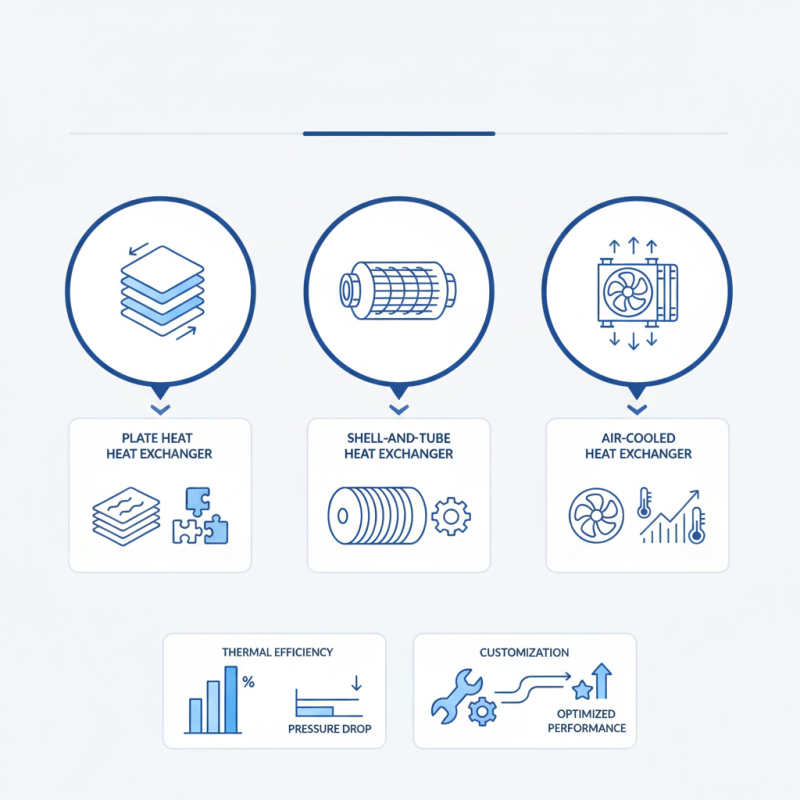
Heat exchangers come in diverse forms. Each type serves specific functions across industries, from power plants to HVAC systems. Plate, shell-and-tube, and air-cooled models are among the main types. Yet, many overlook their unique benefits and limitations. Not every design suits every need.
It’s essential to evaluate performance metrics like thermal efficiency and pressure drop. Simple assumptions can lead to inefficient systems. For instance, a shell-and-tube heat exchanger may be overkill for a small application. A tailored approach often yields better results in managing heat transfer effectively.
Understanding Heat Exchangers: Definition and Functionality
Heat exchangers play a critical role in many industrial processes. They transfer heat from one medium to another, often without mixing the two. This functionality is vital in applications like cooling systems, power generation, and chemical processing. The basic principle involves hot fluid passing over a cooler fluid, thereby exchanging heat efficiently.
Different types of heat exchangers exist, each designed for specific functions. Shell and tube heat exchangers are widely used in industries. They consist of multiple tubes, allowing for an efficient heat transfer area. Plate heat exchangers, on the other hand, provide increased surface area in a compact design. They can be challenging to maintain. The choice of heat exchanger depends on the application and operating conditions.
Understanding how these systems work can enhance performance. However, unexpected challenges may arise during operation, such as fouling or corrosion. Regular monitoring and maintenance are essential. Users should be aware that each type has limitations. No design is without flaws. Balancing efficiency with practicality often requires a thoughtful approach.
Top Heat Exchanger Types Performance Comparison
Key Types of Heat Exchangers for Optimal Thermal Performance
Heat exchangers are vital for numerous applications, enhancing thermal efficiency across various industries. Each type serves unique requirements. For instance, shell and tube heat exchangers are widely used in oil and gas due to their robust design and high thermal performance. According to the latest industry report, they can achieve up to 85% efficiency in energy transfer.
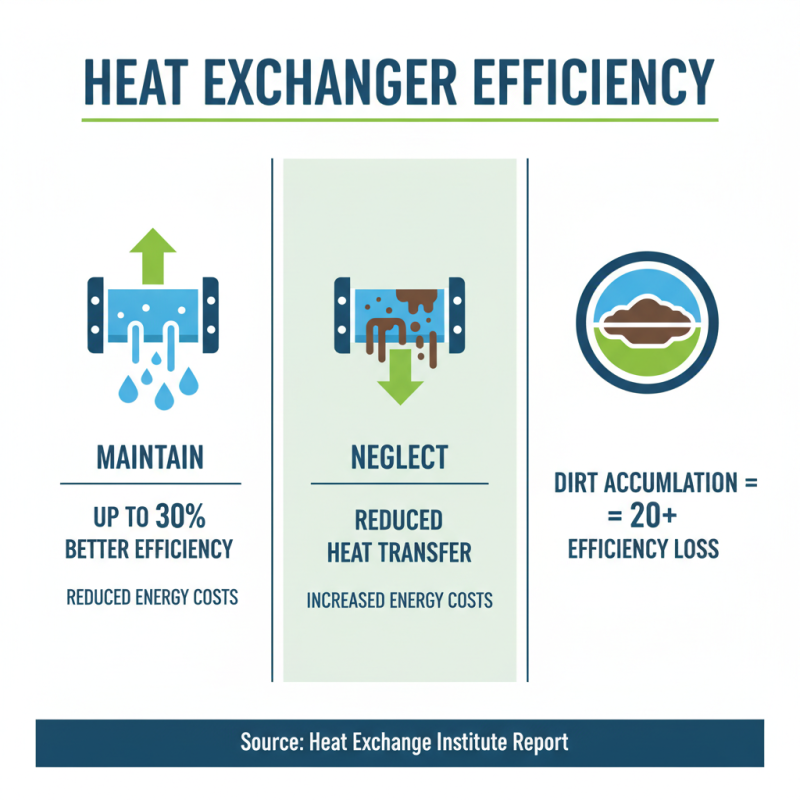
Plate heat exchangers, known for their compact design, are often favored in food processing and HVAC systems. They provide excellent thermal performance while saving space. An industry analysis highlighted that these exchangers can reduce energy costs by up to 30% in certain applications.
Tips: Always consider the fluid properties when selecting a heat exchanger. In some cases, corrosion or fouling can diminish efficiency. Regular maintenance is crucial to ensure sustained performance. Another factor is the operating temperature range. Different types handle varying conditions, influencing your choice significantly.
Error in choice can lead to inefficiencies. Make sure to analyze your specific requirements carefully. Even a small mismatch can cause serious losses. Stay informed about evolving technologies and their impacts on performance and efficiency.
Top Heat Exchanger Types You Need to Know for Efficient Performance
| Heat Exchanger Type |
Description |
Application |
Efficiency |
Cost |
| Shell and Tube |
Consists of a series of tubes, one set carries the hot fluid, while the other set carries the cold fluid. |
Oil refineries, chemical processing. |
High |
$$$ |
| Plate |
Made up of multiple thin plates stacked together, providing a large surface area for heat transfer. |
HVAC applications, food processing. |
Very High |
$$ |
| Air-Cooled |
Uses air as the cooling medium, often equipped with fans. |
Power plants, refrigeration systems. |
Moderate |
$ |
| Double Pipe |
Simple design with two pipes, one inside the other, for the fluids to flow through. |
Chemical and oil industries. |
Low to Moderate |
$ |
| Finned Tube |
Includes fins to increase surface area and improve heat transfer efficiency. |
Oil cooling, district heating. |
High |
$$$ |
Comparative Analysis: Shell-and-Tube vs. Plate Heat Exchangers
When deciding between shell-and-tube and plate heat exchangers, several factors come into play.
Shell-and-tube exchangers consist of a series of tubes, with one fluid flowing through the tubes and another fluid in the shell.
They are robust and can handle high pressure. However, cleaning these exchangers can be cumbersome. Maintenance often requires disassembly,
which can lead to downtime.
On the other hand, plate heat exchangers feature thin plates, allowing for improved heat transfer efficiency.
They can handle smaller space requirements compared to shell-and-tube models. However, they are not always suitable for high-pressure applications,
which can limit their use. Over time, plates can accumulate deposits, affecting performance.
Each type has its advantages and disadvantages. The shell-and-tube is well-regarded for its durability, but may fall short in efficiency.
In contrast, plate exchangers shine in compactness but may not withstand extreme conditions. It's essential to weigh these aspects carefully when making a choice.
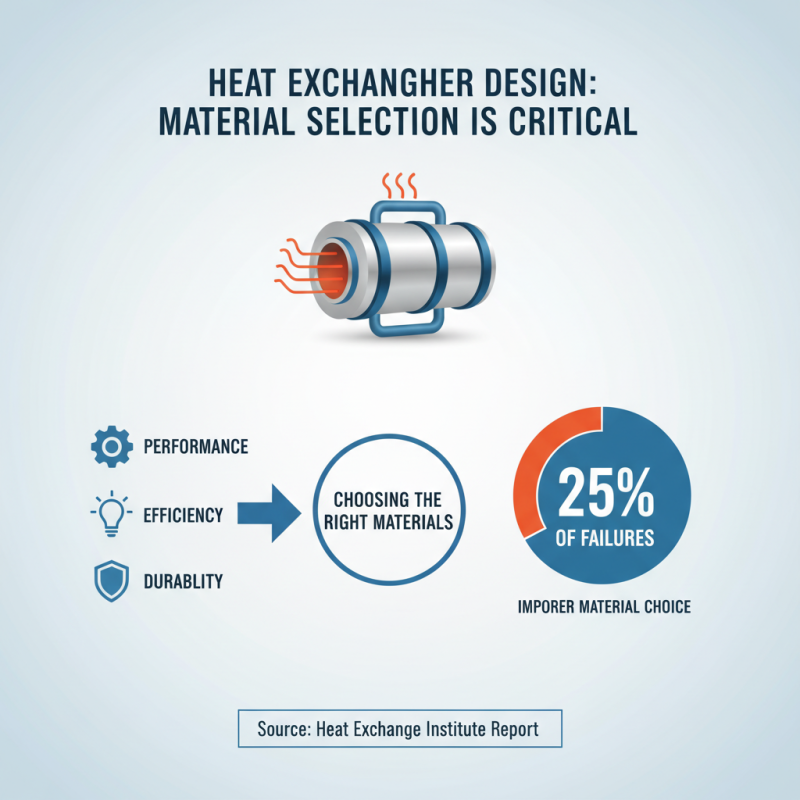
Importance of Material Selection in Heat Exchanger Design
Material selection plays a crucial role in heat exchanger design. Choosing the right materials affects performance, efficiency, and durability. According to a report by the Heat Exchange Institute, nearly 25% of heat exchanger failures result from improper material choice. This statistic highlights the importance of understanding the conditions your heat exchanger will face.
For instance, corrosion resistance is vital in many applications. Stainless steel and titanium are popular choices due to their durability. In contrast, aluminum excels in lightweight applications. Yet, not all projects justify the higher costs associated with premium materials. Balancing cost and performance is a constant challenge for engineers.
Thermal conductivity is another critical factor. Copper, while very effective, may not always be the most practical choice. Sometimes, more cost-effective materials can achieve acceptable performance levels. Engineers must evaluate each option carefully. Even small decisions in material selection can lead to significant long-term impacts, affecting overall system efficiency.