Top 5 Heat Exchanger Technology Tips You Need to Know?
In the rapidly evolving field of Heat Exchanger Technology, staying informed is crucial for professionals and companies alike. Dr. Emily Walker, a renowned expert in thermal management systems, once said, "Embracing innovation in heat exchanger design can drive efficiency and sustainability." This statement highlights the importance of adapting to new technologies.
Understanding the latest trends can yield significant benefits. For example, improvements in materials can enhance performance and reduce costs. Also, innovative designs can provide better thermal efficiency. However, many companies still rely on outdated methods, risking lost opportunities.
It’s essential to challenge conventional practices in Heat Exchanger Technology. By reflecting on existing systems, teams can identify weaknesses. Adopting newer solutions may seem daunting, but the potential rewards are substantial. Staying informed and flexible can lead to remarkable advancements.
Understanding the Basics of Heat Exchanger Technology
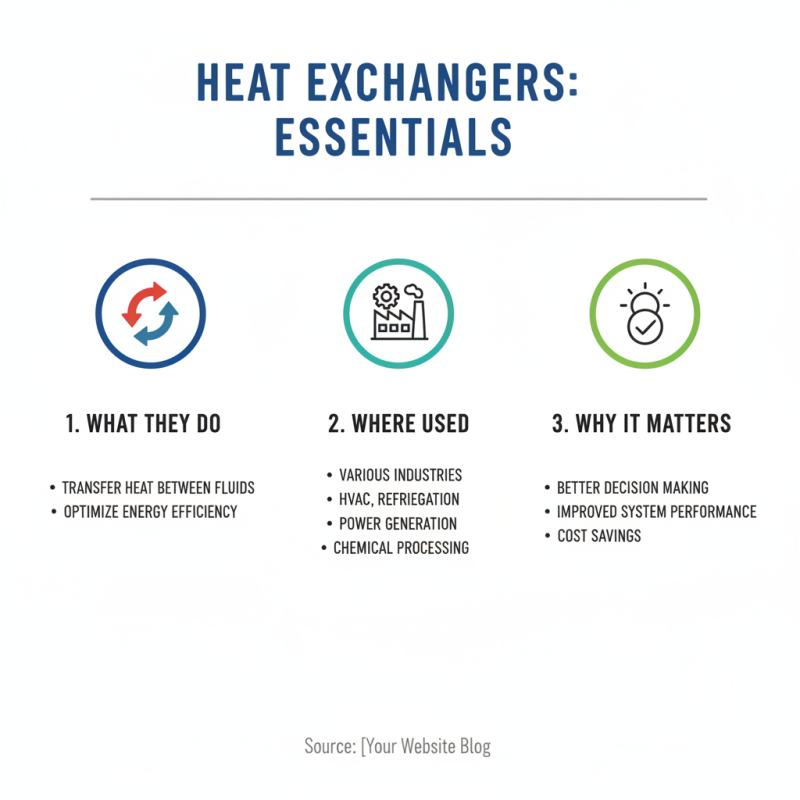
Heat exchangers are essential in various industries. They transfer heat between fluids, optimizing energy efficiency. Understanding the basics can help you make better decisions.
There are different types of heat exchangers, such as shell-and-tube and plate designs. Each has unique benefits and downsides. For example, shell-and-tube units tend to be robust but require more maintenance. In contrast, plate heat exchangers are compact and efficient but may need careful handling. Knowing these differences can guide your choice.
One common mistake is assuming all heat exchangers are the same. They are not; selection should match your specific needs. Pay attention to material compatibility too. Ignoring this can lead to costly failures. A deeper understanding can save you time and resources in the long run. Embrace the learning process and improve your heat exchange strategies.
Key Performance Metrics for Evaluating Heat Exchanger Efficiency
When evaluating heat exchanger efficiency, key performance metrics are essential. One important metric is the overall heat transfer coefficient (U). This coefficient reflects how well the heat exchanger performs. A high U value usually indicates efficient heat transfer. However, it can vary due to fouling or changes in fluid properties.
Another crucial metric is the effectiveness of the heat exchanger. This measures the actual heat transfer compared to the maximum possible. Understanding effectiveness helps identify potential issues. If effectiveness is low, it could indicate design flaws or operational inefficiencies. Regular maintenance is vital to maintain effectiveness.
Fluid velocity also plays a significant role. Higher fluid velocities can enhance heat transfer but may increase pressure drops. It's a balance that requires careful thought. Sometimes, achieving the right velocity involves trial and error. Moreover, temperature differences across the heat exchanger impact performance as well. If the inlet temperatures are not optimal, efficiency can significantly drop. Regular monitoring helps ensure that systems operate efficiently.
Common Types of Heat Exchangers and Their Applications
Heat exchangers are crucial in numerous industries. They facilitate efficient thermal energy transfer between fluids. Common types include shell-and-tube, plate, and finned-tube heat exchangers. Each type has unique applications and operational efficiency levels.
Shell-and-tube heat exchangers are popular in oil refineries. They consist of a series of tubes, enabling high-pressure applications. According to a recent industry report, this type makes up about 45% of the heat exchanger market. Plate heat exchangers are favored in food processing due to their compact design and easy cleaning. They enhance surface area, allowing for more efficient heat transfer while occupying less space.
Finned-tube heat exchangers are often used in HVAC systems. The fins increase the heat transfer area, maximizing efficiency. Despite their advantages, they can suffer from fouling issues, which may reduce performance. This is an ongoing challenge in heat exchanger maintenance, affecting energy consumption and operational costs. Regular inspections and cleaning are necessary for optimal performance, highlighting the importance of diligent maintenance practices.
Top 5 Heat Exchanger Technology Tips You Need to Know
Emerging Trends in Heat Exchanger Technology and Energy Savings
Heat exchangers are evolving. New technologies focus on efficiency and energy savings. According to a report by the International Energy Agency (IEA), heat exchangers can improve energy efficiency by up to 30%. This makes them crucial in reducing operational costs.
Emerging trends include compact designs and advanced materials. For instance, plate heat exchangers are increasingly popular due to their smaller size. They occupy less space and offer better heat transfer efficiency. Moreover, the use of polymer materials is rising. These materials can withstand corrosive environments, thus extending the lifespan of the equipment.
However, the industry faces challenges. Not all facilities are adopting these new technologies. In many cases, outdated systems remain in use. This can lead to inefficiencies. A study from the U.S. Department of Energy shows that nearly 50% of heat exchangers operate below optimal efficiency levels. These statistics highlight the need for vigilance in technology upgrades.
Improving awareness and education is essential to push for innovation.