Top 10 Heat Exchanger Materials You Need to Know?
When it comes to optimizing thermal efficiency in various industries, understanding Heat Exchanger Materials is crucial. Dr. Angela Ramirez, a leading expert in thermal engineering, states, "The choice of material can make or break the performance of a heat exchanger." This reflects the significance of selecting the right materials for heat exchangers, which directly affect energy conservation and operational reliability.
In the world of heat exchangers, materials must withstand diverse operating conditions. Corrosion resistance, thermal conductivity, and mechanical strength are key factors. For instance, stainless steel is commonly used for its durability, yet other materials like titanium or copper offer unique benefits. The decision often hinges on specific applications and cost considerations.
Despite advancements in material science, challenges remain. Some materials may perform well but are costly, leading to questions about long-term investments. Furthermore, not all solutions are universally applicable. Therefore, staying informed about the latest developments in Heat Exchanger Materials is essential for engineers and business leaders alike. Making educated choices can significantly enhance performance and sustainability.

Overview of Heat Exchanger Materials and Their Importance
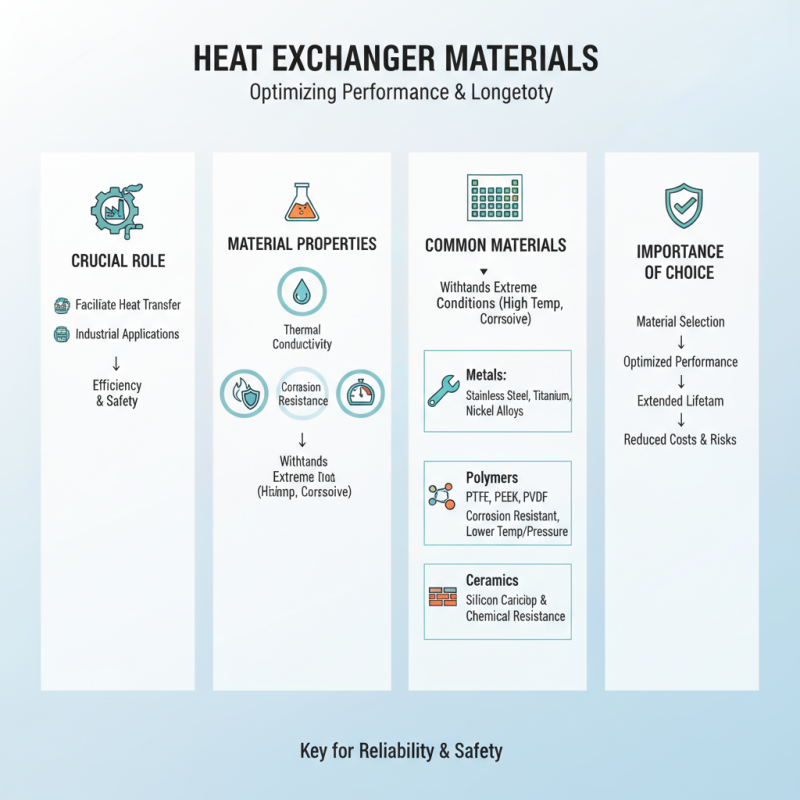
Heat exchangers play a crucial role in various industries, facilitating the transfer of heat between two or more fluids. Understanding the materials used in these devices is essential for optimizing their performance and longevity. The choice of material affects not only efficiency but also safety. A reliable heat exchanger material withstands high temperatures and corrosive conditions. Each material offers distinct properties such as thermal conductivity, corrosion resistance, and pressure tolerance.
Metals like copper and aluminum are commonly used due to their excellent thermal properties. However, they may not always be the best option in chemically aggressive environments. On the other hand, stainless steel provides good strength and corrosion resistance, making it a popular choice in diverse applications. Some situations might benefit from using specialized alloys or composite materials. These can offer improved performance under specific conditions but may be more costly.
Engineers must weigh the advantages and drawbacks of each material. This process can be complex. A material that works perfectly in one scenario may fail in another. It is vital to conduct thorough research and testing before making a decision. Ultimately, selecting the right heat exchanger material is fundamental to achieving efficient, reliable operations in any system.
Common Materials Used in Heat Exchanger Construction
Heat exchangers are essential in various industries, transferring heat between two or more fluids. The choice of material is critical in their construction, impacting efficiency and durability. Common materials include stainless steel, copper, and aluminum. Each has distinct advantages and limitations that affect performance.
Stainless steel is popular due to its excellent corrosion resistance and strength. It works well in high-temperature applications. However, it can be more expensive than other options. Copper, known for its superior thermal conductivity, is often favored for smaller units. Its susceptibility to corrosion in certain environments can be a drawback. Aluminum, lightweight and cost-effective, serves well in air-cooled systems but has less thermal efficiency compared to stainless steel.
These materials require careful consideration. Factors like fluid type, temperature, and pressure must be assessed. Overlooking these aspects can lead to system failures. A deeper understanding of these common materials enhances decision-making for efficient heat exchanger design.
Comparison of Metal and Non-Metal Heat Exchanger Materials
When selecting heat exchanger materials, the choice between metal and non-metal options can significantly impact efficiency and durability.
Metals like stainless steel and copper are widely praised for their excellent thermal conductivity.
According to a recent industry report, stainless steel can achieve thermal conductivities of 15-25 W/m·K.
This enhances heat transfer but comes with a higher cost.
On the other hand, non-metal materials such as ceramics and polymers exhibit corrosion resistance, making them suitable for specific applications.
For instance, ceramic heat exchangers can withstand extreme temperatures, where metals may fail.
Tips: Consider the environmental conditions in application settings.
Corrosion-prone environments may favor non-metal options.
However, evaluate the cost versus performance trade-off carefully.
Non-metals generally have lower thermal conductivity, which can impact efficiency.
Evaluating your heat exchanger material choice involves practicality.
Many engineers face challenges in balancing performance and cost.
Metals offer a proven track record, but the risk of corrosion remains.
Non-metals may not perform as well thermally but can excel in unique applications.
According to the International Heat Transfer Conference, choosing the right material is crucial for long-term operational success.
Factors Influencing the Selection of Heat Exchanger Materials
When selecting materials for heat exchangers, various factors come into play. The thermal conductivity is essential. It determines how efficiently heat can transfer between fluids. Common choices include metals like copper and aluminum due to their excellent thermal properties. However, metals can corrode, impacting longevity.
Another critical factor is resistance to temperature and pressure. Materials must withstand the environment's demands without losing structural integrity. Some applications might require materials that handle extreme temperatures. Often, engineers must balance performance with cost.
**Tip:** Consider the specific application when selecting materials. For environments prone to corrosion, stainless steel or specialized alloys may be beneficial.
Finally, the fluid type plays a crucial role. Some fluids can be corrosive or abrasive, necessitating careful material selection. Not every material will suit every application, leading to possible failures.
**Tip:** Conduct thorough tests and simulations. This helps identify material performance before making a final choice. Choose wisely to avoid costly repairs later.
Top 10 Heat Exchanger Materials You Need to Know
| Material |
Thermal Conductivity (W/m·K) |
Corrosion Resistance |
Cost ($/kg) |
Common Applications |
| Copper |
385 |
Good |
6.00 |
HVAC, Refrigeration |
| Aluminum |
235 |
Moderate |
3.00 |
Automotive, Air Conditioning |
| Stainless Steel |
16 |
Excellent |
2.00 |
Food Processing, Chemical Industry |
| Titanium |
16 |
Outstanding |
30.00 |
Marine, Aerospace |
| Carbon Steel |
50 |
Fair |
0.90 |
Power Generation |
| Nickel Alloys |
60 |
Very Good |
25.00 |
Petrochemical, Oil and Gas |
| Brass |
120 |
Good |
8.00 |
Plumbing, Heat Exchangers |
| Graphite |
483 |
Excellent |
4.50 |
High-Temperature Applications |
| Polymer Composites |
0.25 |
Good |
12.00 |
Automotive, Electronics |
| Ceramics |
20 |
Good |
15.00 |
High-Temperature Processes |
Innovative Materials in Heat Exchanger Technology
Heat exchangers play a crucial role in numerous industries. The materials used in their construction significantly affect their efficiency and durability. Recently, innovative materials have emerged, transforming heat exchanger technology. For instance, titanium alloys are becoming popular due to their excellent corrosion resistance and strength-to-weight ratio. They can withstand harsh environments, making them ideal for chemical processing.
Furthermore, advanced composites are gaining traction. These materials combine lightweight properties with high thermal conductivity. This unique blend allows for enhanced performance without adding significant weight. Researchers are exploring new metals and hybrid materials to improve heat transfer rates. Each material presents unique challenges. For example, while composites offer durability, they can also be more expensive to manufacture. Continuous evaluation is essential for selecting the right material for specific applications.
In addition to these advancements, ceramic materials are being tested. Their high-temperature resistance could lead to significant energy savings. However, the brittleness of ceramics poses challenges for practical use. Balancing performance with practicality is key. The evolution in material science continues to shape heat exchanger technology, driving the industry forward.
Top 10 Heat Exchanger Materials You Need to Know