2026 How to Choose the Right Industrial Heat Exchanger?
Choosing the right Industrial Heat Exchanger is a critical decision for many industries. According to Dr. Emily Roberts, a renowned expert in thermal engineering, "The efficiency of your heat exchanger can make or break your entire process." The right selection impacts energy consumption, operational efficiency, and even environmental footprint.
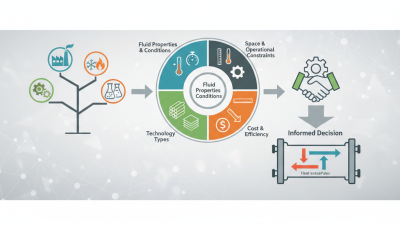
Each application has unique requirements. For instance, some scenarios demand resistance to corrosive fluids. Others require high thermal performance. Understanding these needs is essential yet challenging. Many overlook factors like maintenance frequency or pressure drop, which can lead to significant problems later on.
In the evolving landscape of industrial processes, the importance of an optimal Industrial Heat Exchanger is often underestimated. Companies must reassess their choices and continuously adapt to new technologies. The path to the perfect heat exchanger is not straightforward. Finding the right balance between cost and performance is often elusive.

Understanding the Basics of Industrial Heat Exchangers
Industrial heat exchangers are vital in various processes. They facilitate the transfer of heat between two or more fluids. Understanding how they function is essential for selection. Each application has unique requirements. Factors such as flow rate, temperature range, and pressure drop must be considered.
When choosing a heat exchanger, assess the type of fluids involved. Different fluids may react differently under heat. Pay attention to corrosion and fouling. This can impact efficiency. Regular maintenance checks are vital. Without proper care, performance may decline over time.
Tips: Select the right materials to avoid corrosion. Consider using monitoring tools for performance evaluation. Effective selection often requires trial and error. Don't rush the process. Analyze failures to make better choices in the future.
Types of Industrial Heat Exchangers and Their Applications
Choosing the right industrial heat exchanger involves understanding the different types available.
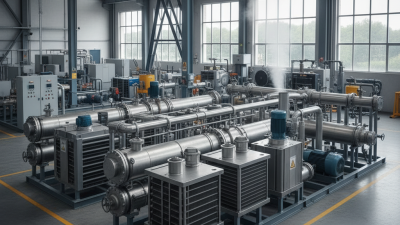
Shell and tube heat exchangers are common. They consist of a series of tubes, with one set carrying fluid and the other set circulating a different fluid. They are effective for high-pressure applications. However, they may require more space than other types.
Plate heat exchangers are another option. They use thin plates to transfer heat. This design allows for greater heat transfer efficiency in a compact design. They are often used in food processing and HVAC systems. But, their maintenance can be challenging due to the potential for fouling.
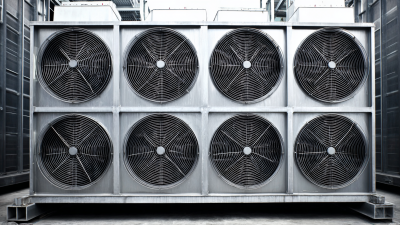
Air-cooled heat exchangers utilize air to cool fluids. They are popular in places with limited water resources. While they save water, they might not be as efficient in extremely hot climates. Each type has limitations, making careful consideration essential. Choosing incorrectly could lead to inefficiency and higher costs.
Assessing Efficiency and Performance Criteria for Heat Exchangers
When selecting an industrial heat exchanger, efficiency is crucial. Consider the type of fluids involved. Some heat exchangers work better with specific fluids. For example, a plate heat exchanger might suit liquids well but struggle with gases. Pay attention to the temperature range too. A unit with a high-temperature tolerance may be necessary for certain processes.
Performance criteria differ among heat exchangers. Analyze the pressure drop. A significant drop can reduce overall system efficiency. Look at the heat transfer area. More surface area often leads to better performance. However, larger units may take up more space and cost more. Sometimes bigger is not better. Evaluate the space available in your facility.
Don’t overlook maintenance needs, either. Some designs are easier to clean than others. This can impact long-term efficiency. A complex design might be hard to service. Consider how often maintenance will occur. Reflect on these factors carefully before deciding. A thorough analysis can prevent costly mistakes in the future.
2026 How to Choose the Right Industrial Heat Exchanger? - Assessing Efficiency and Performance Criteria for Heat Exchangers
| Heat Exchanger Type |
Efficiency (%) |
Pressure Drop (kPa) |
Materials |
Applications |
| Shell and Tube |
85 |
10 |
Carbon Steel |
Chemical Processing |
| Plate |
90 |
5 |
Stainless Steel |
Food and Beverage |
| Air-Cooled |
80 |
15 |
Aluminum |
HVAC |
| Double-Pipe |
75 |
20 |
Copper |
Power Generation |
Maintenance and Longevity Considerations for Heat Exchangers
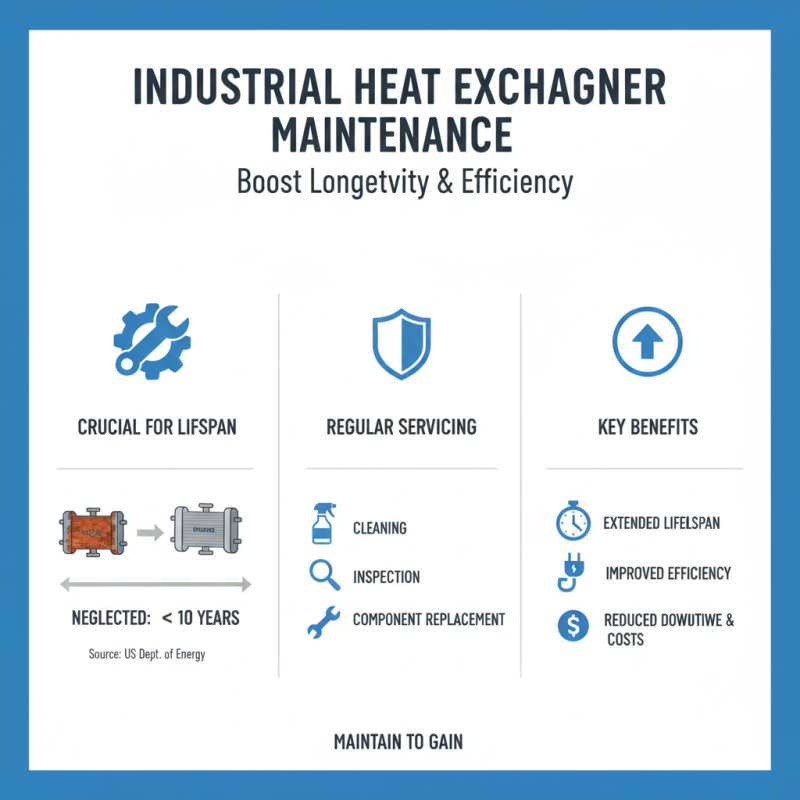
Maintaining industrial heat exchangers is crucial for their longevity and efficiency. Regular servicing can extend their lifespan significantly. A study by the U.S. Department of Energy shows that well-maintained heat exchangers can last up to 25 years, while those neglected may fail within 10 years. Maintenance tasks often include cleaning, inspection, and replacing worn-out components.
Choosing the right materials can also impact durability. Corrosion and scaling are common issues that can lead to inefficiencies. For instance, carbon steel is prone to rust, while stainless steel offers better resistance. Industry reports indicate that 30% of heat exchanger failures are due to corrosion-related problems. Monitoring operating conditions can prevent many of these issues.
Operators should also consider the installation environment. High vibrations and temperatures can stress components. A lack of proper insulation might lead to energy losses. Research shows that poorly insulated systems can waste over 20% of energy. Continuous evaluation of system performance is vital. Small issues can grow if not addressed promptly. Prioritizing maintenance can save costs in the long run.