Essential Heat Exchanger Tips for Better Efficiency?
In the world of industrial applications, heat exchangers play a crucial role in enhancing energy efficiency. According to Dr. Emily Taylor, a renowned expert in thermal engineering, "Optimizing heat exchanger performance can significantly lower operational costs." Her insight underscores the need for effective strategies.
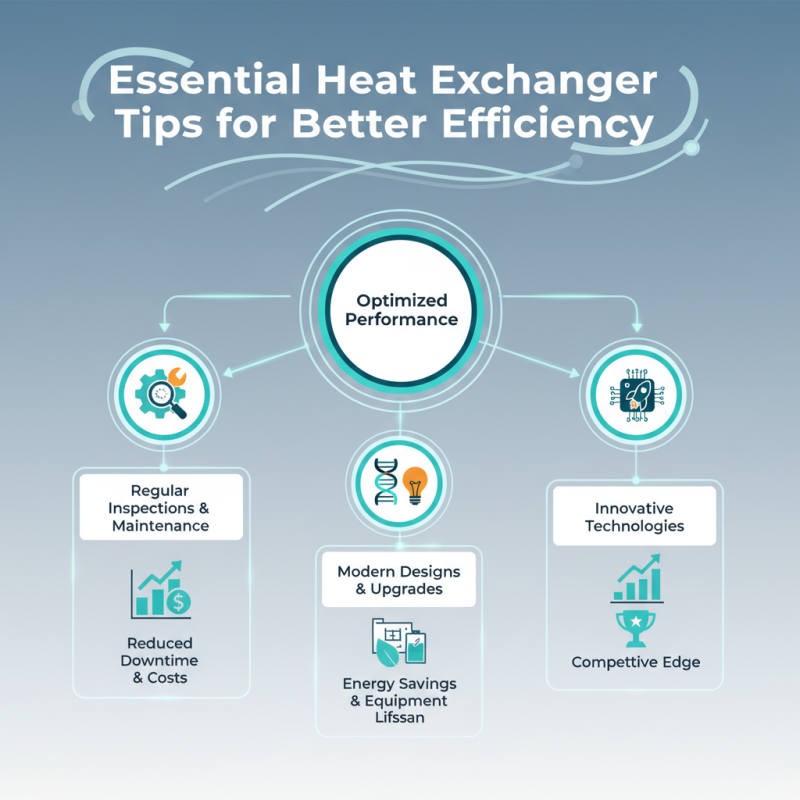
Many facilities struggle with heat exchanger efficiency. Common issues arise from improper maintenance and outdated designs. Regular inspections can prevent costly downtime and enhance overall system performance. An efficient heat exchanger not only saves energy but also extends equipment lifespan.
Despite the importance of these systems, many businesses overlook best practices. Simple adjustments can lead to substantial improvements. Failing to embrace innovative technologies may hinder a company's competitive edge. In this article, we will explore essential tips that can transform your heat exchanger efficiency.
Understanding Heat Exchangers and Their Importance in Efficiency
Heat exchangers play a vital role in numerous industries. They facilitate energy transfer between fluids, improving overall system efficiency. According to the U.S. Department of Energy, heat exchangers account for approximately 30% of the energy consumed in industrial processes. This statistic highlights their significance and the potential for efficiency improvements.
Understanding the types of heat exchangers is crucial. Shell-and-tube, plate, and air-cooled designs each have unique advantages and drawbacks. For instance, while shell-and-tube exchangers are robust, they can be bulky. Plate exchangers are compact but may require more maintenance. Projects sometimes overlook these important distinctions, leading to inefficiencies.
Regular maintenance is essential for optimal heat exchanger performance. Failing to clean or inspect these systems can result in fouling. This buildup can reduce heat transfer efficiency by 15% or more. Such inefficiencies not only increase energy costs but also carbon emissions. As industries push for sustainability, neglecting heat exchanger care is a missed opportunity for improvement.
Essential Heat Exchanger Efficiency Data
This bar chart demonstrates the thermal conductivity of different materials commonly used in heat exchangers. Higher thermal conductivity values indicate better efficiency in heat transfer, which is crucial for maximizing the performance of heat exchangers.
Key Factors Affecting Heat Exchanger Performance and Efficiency
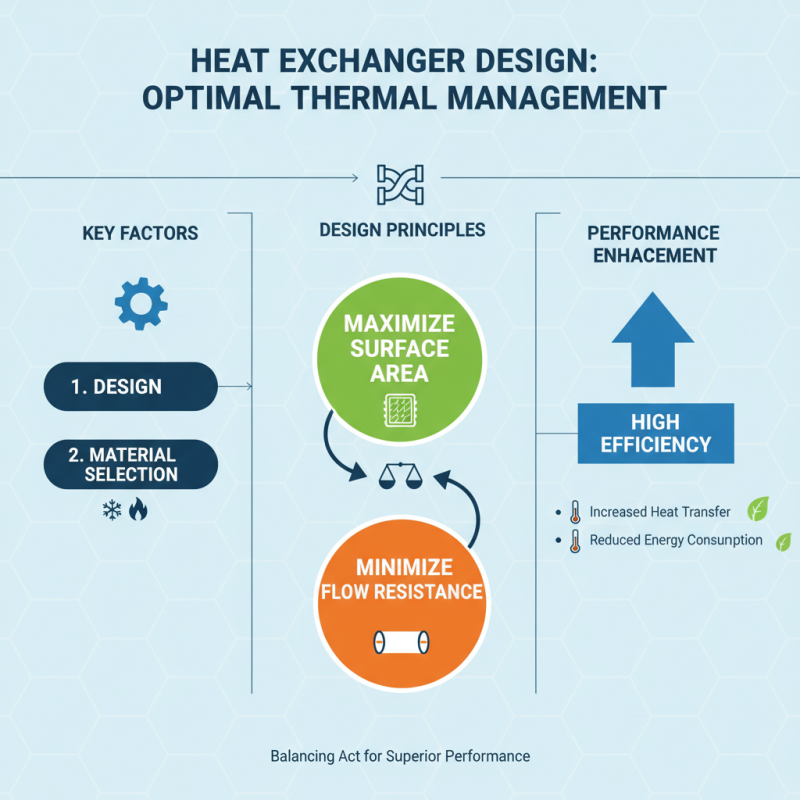
Heat exchangers are crucial for efficient thermal management. Understanding key factors can significantly enhance their performance. One major aspect is the design. A well-designed heat exchanger maximizes surface area while minimizing flow resistance. This balance is vital for achieving high efficiency.
Another important factor is fluid properties. The type of fluids used affects heat transfer capabilities. Viscosity, density, and specific heat all play roles in performance. For instance, a fluid that flows too slowly may lead to inadequate heat exchange. On the other hand, highly viscous fluids can increase pump energy consumption.
Maintenance also cannot be overlooked. Regular cleaning prevents fouling, which can decrease efficiency. A dirty heat exchanger struggles to perform effectively. Operators often overlook this, thinking it won't impact performance. However, neglect can lead to significant energy losses. Monitoring performance metrics regularly is essential for identifying potential issues.
Regular Maintenance Practices for Optimal Heat Exchanger Function
Regular maintenance of heat exchangers can significantly enhance their efficiency. Periodic inspections help identify potential issues early. Simple tasks like cleaning the surfaces can improve heat transfer rates. Dust and debris can accumulate quickly, hindering performance. Scheduling routine cleaning every few months is advisable.
Monitoring the condition of seals and gaskets is crucial. Worn-out components can lead to leaks, affecting efficiency. Replacing these parts on a timely basis can prevent larger problems. Additionally, checking fluid levels and temperatures is essential. Anomalies in these metrics might indicate underlying issues needing attention. This can save costs associated with emergency repairs later.
It’s also important to keep a maintenance log. Documenting all activities helps track patterns over time. However, many forget this step. This can lead to oversights that could have been avoided. Reflecting on past maintenance efforts can uncover areas for improvement. Small adjustments can make a big difference in overall efficiency. Regular commitment to these practices is key to optimal functioning of heat exchangers.
Essential Heat Exchanger Tips for Better Efficiency - Regular Maintenance Practices for Optimal Heat Exchanger Function
| Maintenance Activity |
Frequency |
Expected Benefit |
Notes |
| Visual Inspections |
Monthly |
Early detection of issues |
Check for leaks, corrosion, and wear |
| Cleaning |
Quarterly |
Improved heat transfer efficiency |
Remove fouling and scaling |
| Thermal Performance Testing |
Semi-Annually |
Optimal heat transfer rates |
Identify performance degradation |
| Gasket and Seal Inspection |
Annually |
Prevent leaks |
Replace worn gaskets |
| System Check-Up |
Annually |
Enhance overall system reliability |
Review entire heat exchange system |
Identifying and Resolving Common Heat Exchanger Issues
Heat exchangers are vital for optimal performance in various industries. Common issues can lead to reduced efficiency. Identifying these problems early saves time and resources. Leaks, fouling, and scaling are frequent culprits. They can disrupt the flow and lead to energy losses.
Regular maintenance is key to preventing issues. Inspecting the heat exchanger regularly can uncover hidden problems. For instance, corrosion might not be immediately visible. A small leak can develop into a major issue. Ignoring it can cause even greater inefficiencies. Cleaning the surfaces periodically helps maintain optimal heat transfer.
Monitoring temperature and pressure can provide insights into performance. Sudden changes may indicate an underlying issue. Simple adjustments can improve efficiency dramatically. However, it’s also essential to review your maintenance schedule. Sometimes, a new approach is necessary if persistent problems occur. Always reflect on the performance and consider necessary upgrades or changes.
Innovations and Technologies for Enhanced Heat Exchanger Efficiency
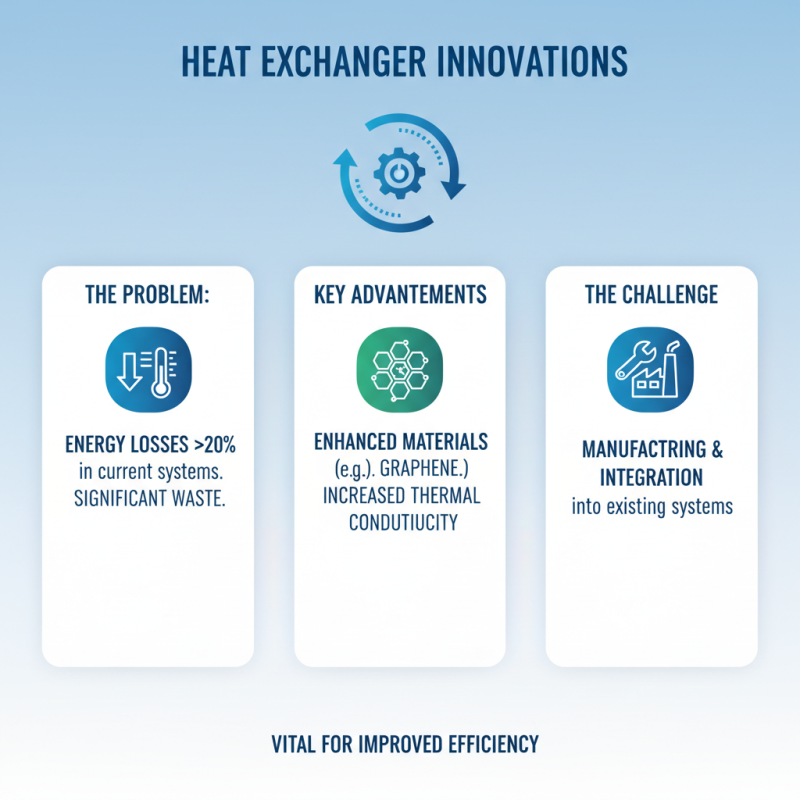
Innovations in heat exchanger technology are vital for improving efficiency. Recent studies indicate that energy losses in heat exchangers can exceed 20%. This significant waste calls for advanced designs. Enhanced heat transfer materials, like graphene, are emerging. They promise increased thermal conductivity. The challenge lies in manufacturing and integrating these materials into existing systems.
Adaptive control systems are another breakthrough. They optimize flow rates and temperatures in real-time. A report from the International Energy Agency highlights that implementing such technologies can cut energy consumption by up to 30%. Yet, many facilities still rely on outdated controls, missing out on better efficiency.
While these innovations are promising, they require investment and training. Existing staff may resist changes to long-standing processes. Companies must engage employees, fostering a culture of improvement. It’s a delicate balance between innovation and operational comfort. Heat exchangers have immense potential, but realizing it demands careful consideration and effort.