How to Ensure High Radiator Quality Control Standards?
Ensuring high Radiator Quality Control standards is crucial in manufacturing. Quality control affects product durability and safety. Consumers rely on radiators for efficient heating or cooling in their homes and vehicles. A lapse in quality can lead to severe consequences and customer dissatisfaction.
Implementing effective Radiator Quality Control requires a systematic approach. This includes regular inspections and testing during production. Employing experienced technicians is vital. Their expertise can identify potential issues early. Additionally, utilizing advanced technology aids in precise measurements and data analysis. However, relying solely on technology can sometimes overlook human factors and workmanship.
Creating a culture of quality within a team is essential. Employees must understand the importance of their role in maintaining standards. Open communication about quality issues fosters accountability. Continuous improvement should be the focus. Reflecting on past mistakes can enhance processes. Routine audits and consumer feedback play a significant role in strengthening quality measures. It is a journey, and there will always be room for enhancement in Radiator Quality Control.

Understanding Radiator Manufacturing Processes
Understanding radiator manufacturing processes is key to ensuring high-quality standards. The journey begins with material selection. Manufacturers often use aluminum and copper for their lightweight properties and excellent heat conductivity. However, the difference in thermal expansion rates can lead to joint failures if not properly managed.
Once materials are chosen, fabrication techniques come into play. Different methods like stamping, pressing, and welding are employed. Each technique requires precision and skilled labor. It’s critical to monitor the settings of machinery during production. Deviations can introduce faults into the final product.
Quality checks at various stages are essential. It's not uncommon for defects to slip through. Regular audits can reveal patterns that signal underlying issues. Engaging with experienced technicians can enhance guidance on processes needing improvement. Continuous reflection on these practices is necessary, promoting an environment of accountability and rigorous standards. Quality is often a moving target, and awareness of shifting dynamics can greatly aid in achieving consistency.
Key Quality Control Standards for Radiators
Radiator quality control is crucial in ensuring optimal performance and safety. Key standards revolve around materials and design. High-grade materials reduce breakdowns and improve longevity. In a recent industry report, 78% of radiators faced failure due to subpar materials. This emphasizes the need for stringent material testing protocols.
Dimensions are equally important. Precision in measurements ensures proper fit and efficiency. A study from the Heating Association revealed that 62% of radiators had issues related to incorrect dimensions. Poor fitting can lead to reduced heating efficiency. Adhering to strict dimensional standards is essential for reliability.
Safety is non-negotiable. Regulations mandate rigorous testing for leaks and pressure resistance. Some manufacturers overlook this, risking safety. A shocking statistic shows that one in five radiators fails safety tests. Consistent monitoring can help identify such flaws early. By prioritizing these quality control standards, the industry can enhance overall reliability and consumer trust.
Essential Testing Methods for Radiator Quality Assurance
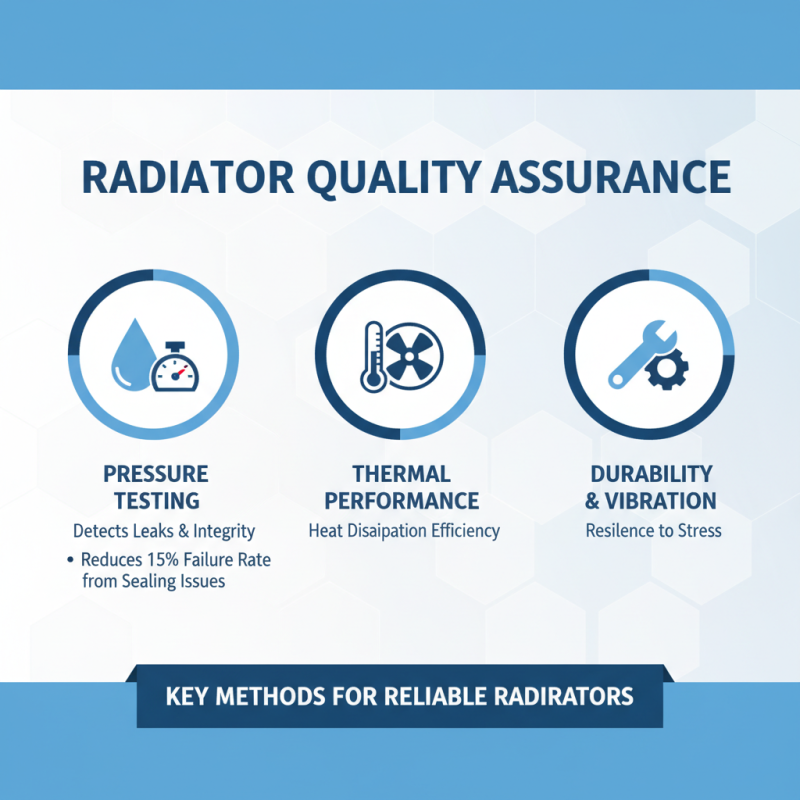
Ensuring high radiator quality control standards is crucial in the manufacturing process. Essential testing methods play a significant role in achieving this. One key method is pressure testing. It assesses the integrity of the radiator and detects leaks. According to a report from the Automotive Engineering Institute, 15% of radiators fail due to improper sealing. Conducting rigorous pressure tests can drastically reduce this percentage.
Another important testing technique is thermal cycling. This method simulates extreme temperature changes that radiators may face in real-world conditions. A study revealed that 20% of radiator failures occur at temperature extremes. By applying thermal cycling, manufacturers can identify weak points. This insight leads to improved materials and designs.
Visual inspection remains a foundational practice in quality assurance. It helps identify visible defects, such as corrosion or improper assembly. However, relying solely on visual checks is insufficient. A comprehensive approach incorporating advanced testing techniques enhances reliability. Continuous evolution in testing methods ensures that quality standards remain high, reflecting the industry's commitment to safety and performance.
Implementing Quality Control Protocols in Production
Ensuring high radiator quality control standards begins with the implementation of robust quality control protocols in production. Effective quality control minimizes defects and enhances reliability. Start by establishing clear guidelines and standards for every production stage. Regular training sessions for staff can help them understand these protocols better.
Tips: Engage your team in quality reviews. Regular feedback fosters a culture of continuous improvement.
Monitoring equipment is crucial. Use calibrated tools to ensure consistent measurements. Scheduled maintenance can prevent unexpected issues. Pay attention to every detail during assembly. A simple oversight can lead to serious quality issues later.
Tips: Conduct random inspections. This helps catch problems early in the process.
Documentation is another key element. Keep detailed records of inspections and audits. This creates accountability and allows for traceability. Reflect on past mistakes to avoid repeating them. Embrace feedback and be willing to adapt protocols as needed.
Quality Control Standards in Radiator Production
This bar chart represents the defect rates observed during various quality control checks in radiator production. The goal is to maintain high standards by minimizing these defect rates across all parameter checks.
Continuous Improvement Strategies for Radiator Quality Management
Continuous improvement is crucial for maintaining high radiator quality management standards. Implementing regular training sessions for employees can enhance their skills and knowledge. This empowers them to spot potential issues early. A well-trained team can contribute significantly to overall quality control.
Another effective strategy is to utilize data analytics to monitor production processes. Analyzing defect rates helps identify patterns. This insight allows for timely adjustments. However, the reliance on data must be balanced with human oversight. Relying solely on metrics may overlook subtle issues.
Regular feedback loops with customers can drive improvements as well. Understanding customer perspectives provides valuable insights. However, gathering feedback can be challenging. Not all negative feedback is constructive, and some may not highlight the core issues. Thus, sorting through feedback is essential for effective quality management.