How to Choose the Best Compressors Cooler for Your Needs: A Complete Guide
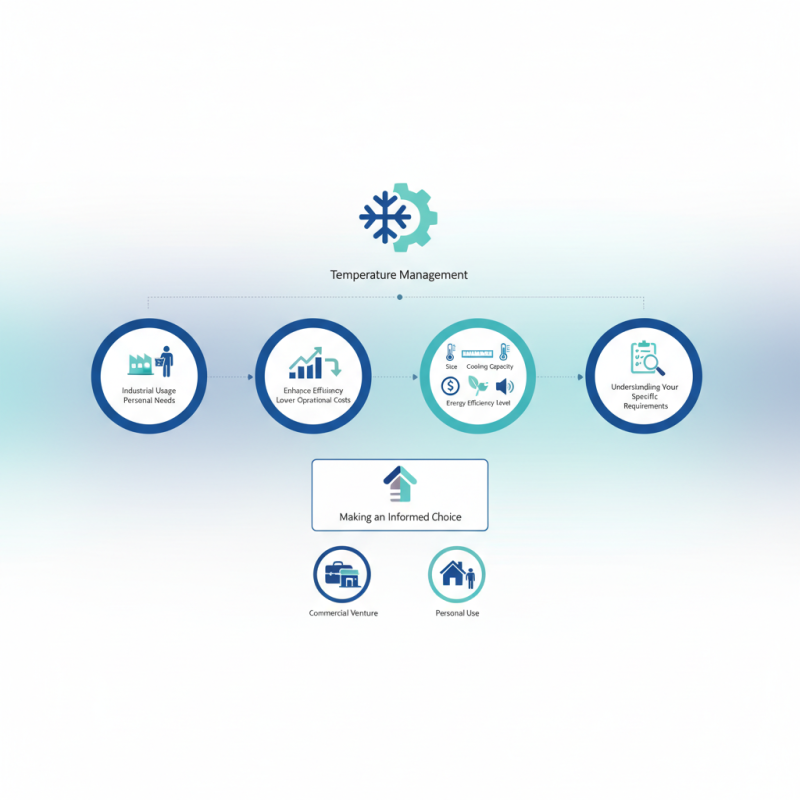
In the world of temperature management, choosing the right compressors cooler is crucial for a variety of applications, ranging from industrial usage to personal needs. As experts in the field emphasize, "A well-selected compressors cooler can significantly enhance efficiency and lower operational costs." This insight from Dr. Emily Thompson, a renowned specialist in thermal engineering, highlights the importance of understanding your specific requirements before making a decision.
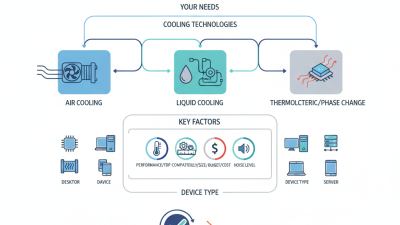
Navigating the myriad of options available can be daunting; however, knowing what to look for in a compressors cooler can make the process smoother. Factors such as size, cooling capacity, energy efficiency, and noise level all play a significant role in determining the best fit for your environment. As the demand for effective cooling solutions continues to rise, making an informed choice has never been more vital.
Whether you're seeking a compressors cooler for a commercial venture or for personal use, this complete guide aims to provide you with the necessary information. By considering the key aspects outlined, you will be better equipped to select a unit that meets your needs while maximizing performance and sustainability.
Understanding the Different Types of Compressor Coolers Available
When choosing a compressor cooler, it’s essential to understand the various types available, as each serves distinct purposes and comes with unique features. The most common types include portable compressor coolers and built-in models.
Portable compressor coolers are ideal for outdoor activities like camping or picnics, offering convenience with their lightweight and mobility. They often come with a robust insulation system, allowing them to maintain low temperatures even in warm environments. Built-in compressor coolers, on the other hand, are designed for permanent installation in spaces like kitchens or outdoor kitchens. These models typically provide larger storage capacities and can blend seamlessly with cabinetry.
Another important type of compressor cooler is the dual-zone cooler, which offers separate compartments for different temperature settings. This versatility is particularly beneficial for those who need to store various items at specific temperatures, such as beverages and perishable foods. Furthermore, some compressor coolers come with energy-efficient settings, optimizing power consumption without sacrificing performance. Understanding these types allows users to better assess their specific needs and make an informed choice based on lifestyle, intended use, and available space.
Key Features to Consider When Choosing a Compressor Cooler
When selecting a compressor cooler, it’s essential to consider a few key features that can significantly affect your experience. First and foremost, the capacity of the cooler plays a crucial role—choose one that meets your storage needs without being excessively bulky. If you plan to use it for long trips, a model with a higher capacity is ideal to accommodate food and beverages for several days.
Another important feature is the cooling range. Ensure the compressor cooler can achieve the temperatures you require, especially if you intend to store items that need to be kept significantly colder than the ambient temperature. Additionally, look for coolers that offer adjustable temperature settings for more versatility in usage.
**Tips:** Opt for models with energy-efficient designs to prolong battery life, particularly if you’ll be using the cooler in a remote area without a power source. Also, consider weight and portability; if you anticipate moving the cooler frequently, a lighter model with sturdy handles will be beneficial. Lastly, investigate the noise levels of the compressor, especially if you need a quieter operation for camping or overnight stays.
How to Choose the Best Compressors Cooler for Your Needs: A Complete Guide - Key Features to Consider When Choosing a Compressor Cooler
| Feature |
Description |
Importance |
| Cooling Capacity |
Measured in BTUs, this indicates how quickly the cooler can lower the temperature. |
High importance for efficiency. |
| Energy Efficiency Rating |
Displays the coolers' energy consumption and environmental impact. |
Critical for reducing electricity bills. |
| Portability |
Ease of movement; important for outdoor and travel use. |
Moderate importance based on user needs. |
| Size and Capacity |
Volume contained in quarts or liters; affects how much can be stored. |
Important for adequate space management. |
| Temperature Range |
Range of temperatures that can be maintained; crucial for various applications. |
High importance for specific cooling needs. |
| Build Quality |
Material and construction influence longevity and durability. |
Very important for long-term use. |
| Noise Level |
Operation noise; key for comfort, especially in quiet environments. |
Moderate importance based on application. |
Assessing Size and Portability for Your Specific Needs
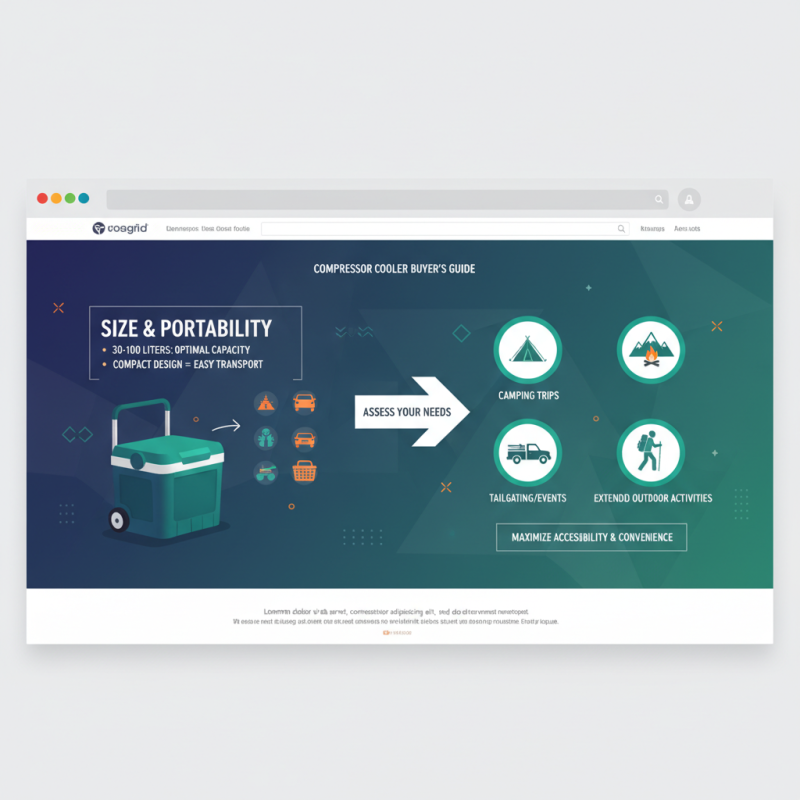
When choosing a compressor cooler, assessing size and portability is crucial to match your specific needs. According to industry reports, the optimal size of a cooler typically ranges from 30 to 100 liters, providing adequate space for food and beverages without being cumbersome. It's essential to evaluate the intended use—whether for camping trips, tailgating, or extended outdoor activities. A cooler with a compact design can often be integrated more easily into various vehicles and settings, ensuring you maximize your accessibility and convenience.
Portability is another critical consideration. A lightweight cooler with integrated wheels and a sturdy handle can make transport effortless, especially in rugged terrains. Research shows that consumers favor coolers weighing below 30 pounds for day trips, while larger models are better suited for longer excursions. Investing in a cooler that balances size and weight will enhance your overall experience, making it easy to carry without sacrificing storage capacity.
Tips: When evaluating the size of your compressor cooler, visualize how many items you typically store and consider a slightly larger model to accommodate unexpected needs. Additionally, opt for models with quick-release straps or latching mechanisms for easy access during outings, reducing hassle and enhancing convenience at your destination.
Evaluating Power Efficiency and Performance Ratings
When selecting a compressor cooler, power efficiency and performance ratings are crucial factors to consider. A compressor cooler that operates efficiently can significantly reduce energy costs over time, making it an economically viable choice for both home and commercial use. Look for models with high Energy Efficiency Ratios (EER) or Seasonal Energy Efficiency Ratios (SEER), as these metrics indicate how efficiently the cooler converts electricity into cooling power. An efficient unit not only saves money but also contributes to environmentally friendly practices by reducing energy consumption.
Performance ratings provide insight into the cooler's effectiveness in different conditions. Consider the cooler's cooling capacity measured in BTUs (British Thermal Units), which reflects its ability to cool a space accurately. Higher BTU ratings typically correlate with more extensive cooling coverage, but they must match the size of the area being cooled. Additionally, check the noise levels specified in decibels (dB) to ensure that the operation of the cooler aligns with your comfort level, especially if it will be used in quieter environments.
Balancing power efficiency with performance ratings can help you choose a compressor cooler that meets your specific cooling needs effectively.
Budgeting for Quality: Price Ranges and Best Value Options
When considering a compressor cooler, budgeting effectively is essential to ensure you achieve the best value for your investment. Prices for these coolers can vary widely based on factors such as size, features, and cooling capacity. Generally, you can find entry-level models starting around a few hundred dollars, while high-end or larger capacity units can reach into the thousands. It’s important to assess your specific needs and intended usage before diving into your budget.
To get the best value, focus on the features that matter most to you. For instance, if portability is crucial, investing a bit more in a lightweight option with robust cooling capabilities may be wise. Conversely, for stationary use, you might prioritize larger cooling capacities or additional functionalities like dual-zone temperature control. Researching and comparing options within your budget will help you find a compressor cooler that strikes a balance between affordability and quality, ensuring it meets your requirements without breaking the bank.
Budget-Friendly Compressor Coolers: Price Range Analysis