What is the Best Heat Exchanger Materials for Optimal Performance?
Choosing the right Heat Exchanger Materials is crucial for efficiency. According to Dr. Emily Carter, a renowned materials scientist, “The performance of heat exchangers relies heavily on material selection.” This highlights the significance of understanding material properties and application contexts.
Heat exchangers operate under various conditions. They encounter extreme temperatures and pressures. This makes material choice vital in ensuring durability and performance. Common materials include stainless steel, copper, and aluminum. Each has its strengths and weaknesses. For example, stainless steel offers corrosion resistance but may be heavy.
One challenge is balancing cost and performance. Many industries seek budget-friendly options yet desire high efficiency. It’s not easy to find the ideal mix. Continuous research is necessary to improve existing materials. Innovative solutions often require revisiting traditional choices. In the end, companies must carefully analyze their specific needs before deciding on Heat Exchanger Materials.

Types of Heat Exchangers and Their Material Requirements
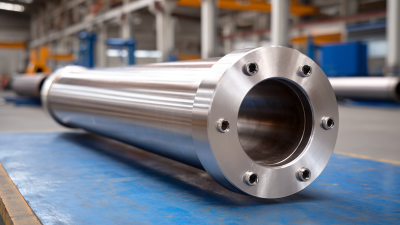
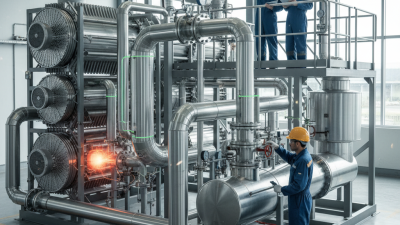
Heat exchangers play a vital role in various industries, from power generation to chemical processing. The choice of material is crucial. Different types of heat exchangers have distinct needs based on their operating conditions. For instance, shell-and-tube heat exchangers often use stainless steel. This material resists corrosion while offering strength. However, it may not be the best choice for all applications.
Plate heat exchangers, on the other hand, typically utilize materials such as titanium or nickel alloys. These materials enhance heat transfer efficiency. Yet, they can be costly. It’s essential to weigh the benefits against the budget. Sometimes, a more affordable option like carbon steel might suffice. But, carbon steel may not withstand corrosive environments. Each type of heat exchanger has unique demands.
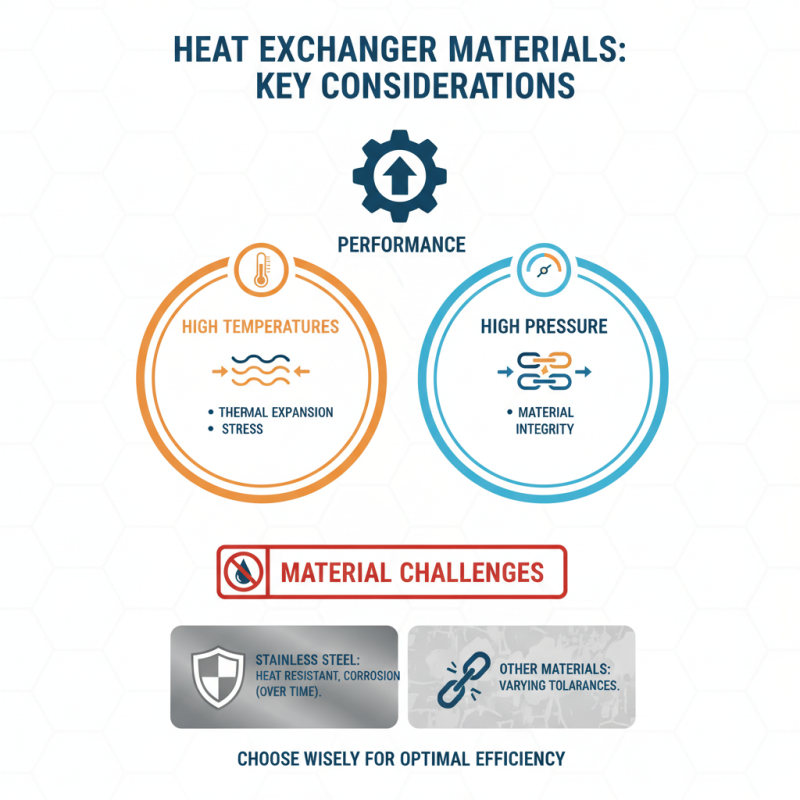
Material selection should consider not just cost but also durability and heat transfer capability. Factors like temperature and pressure further complicate the decision. Choices made without thorough analysis can lead to inefficiencies. For instance, using a less durable material could lead to leaks. Regular maintenance checks can prevent this, but they add complexity. Balancing performance with cost and durability is key.
Key Properties of Materials Suitable for Heat Exchangers
When selecting materials for heat exchangers, several key properties define optimal performance. Thermal conductivity is paramount. Copper and aluminum are often favored for their high conductivity, enabling effective heat transfer. Yet, both materials can be prone to corrosion in certain environments. Stainless steel is a strong contender as it balances thermal efficiency with corrosion resistance. According to a 2022 industry report, materials with lower thermal conductivity can lead to a 15% drop in efficiency.
Another crucial property is mechanical strength. Heat exchangers face pressure and thermal stress, especially in industrial settings. Materials must withstand these challenges over time. Titanium is a solid option due to its strength and lightweight nature. However, its high cost can be a barrier. A recent study highlighted that using cheaper alternatives without proper performance evaluation may lead to premature failures, resulting in costly downtime.
Corrosion resistance is often overlooked. Even minor corrosion can reduce lifespan significantly. For example, nickel alloys perform well in aggressive environments. However, their cost might deter some applications. A balance between cost and performance is necessary. Researchers indicate that choosing the right alloys can improve service life by up to 40%. Proper selection of heat exchanger materials is crucial for operational efficiency.
What is the Best Heat Exchanger Materials for Optimal Performance?
| Material |
Thermal Conductivity (W/m·K) |
Corrosion Resistance |
Cost ($/kg) |
Common Applications |
| Copper |
401 |
Moderate |
6.0 |
Domestic water heating, HVAC |
| Aluminum |
205 |
Good |
3.0 |
Compact heat exchangers, automotive |
| Stainless Steel |
16 |
Excellent |
2.0 |
Food processing, chemical plants |
| Titanium |
22 |
Very Good |
12.0 |
Marine applications, chemical processing |
| Brass |
109 |
Moderate |
8.0 |
Plumbing, heat exchangers |
Common Materials Used in Heat Exchanger Construction
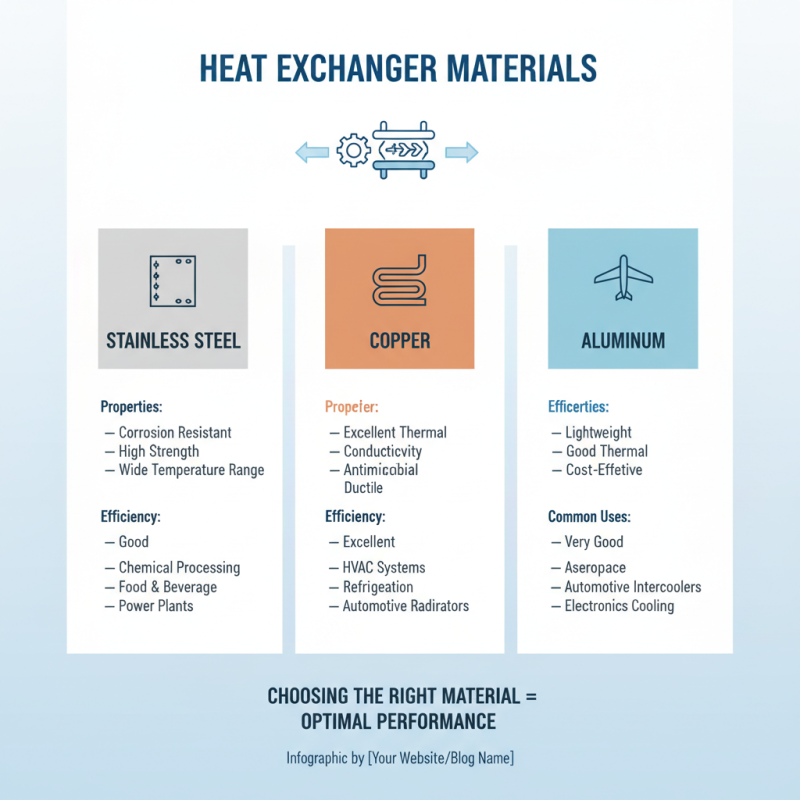
Heat exchangers are essential in many industries. Choosing the right material is crucial for performance. Commonly used materials include stainless steel, copper, and aluminum. Each one has distinct properties that affect heat transfer efficiency.
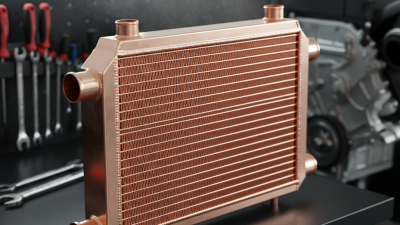
Stainless steel is known for its corrosion resistance. This makes it suitable for high-temperature applications. However, it can be expensive and may not be the best choice for every budget. Copper, on the other hand, offers excellent thermal conductivity. It transfers heat quickly but may corrode over time when exposed to certain elements. Aluminum is lightweight and cost-effective. Yet, its corrosion resistance is lower than stainless steel, which can lead to durability concerns.
Choosing the right material requires careful consideration. Factors like temperature, pressure, and the working environment play a significant role. It's also important to think about maintenance requirements. Balancing performance with cost can be challenging. Understanding the strengths and weaknesses of each material aids better decision-making.
Corrosion Resistance: A Critical Factor in Material Choice
Corrosion resistance is crucial when selecting heat exchanger materials. Corrosion can significantly impact performance and longevity. For instance, carbon steel can corrode rapidly in acidic or chloride-rich environments. A study found that carbon steel might lose up to 50% of its thickness in just a few years under harsh conditions.
In contrast, stainless steel offers enhanced corrosion resistance, yet it is not immune. Even types like 316 stainless steel can experience pitting in seawater. According to industry reports, nearly 30% of heat exchangers fail prematurely due to corrosion-related issues. This statistic raises concerns about maintenance and replacement costs.
Moreover, copper alloys show good thermal conductivity. However, they also face corrosion challenges, particularly in brine solutions. The balance between thermal performance and material durability remains a critical decision. Many facilities still rely on outdated materials without considering the long-term effects. Inadequate selection compromises efficiency. Investing time in material research could prevent future failures and enhance system reliability.
What is the Best Heat Exchanger Materials for Optimal Performance?
Corrosion resistance is a critical factor when selecting materials for heat exchangers. The bar chart below showcases the corrosion resistance ratings of various materials commonly used in heat exchangers.